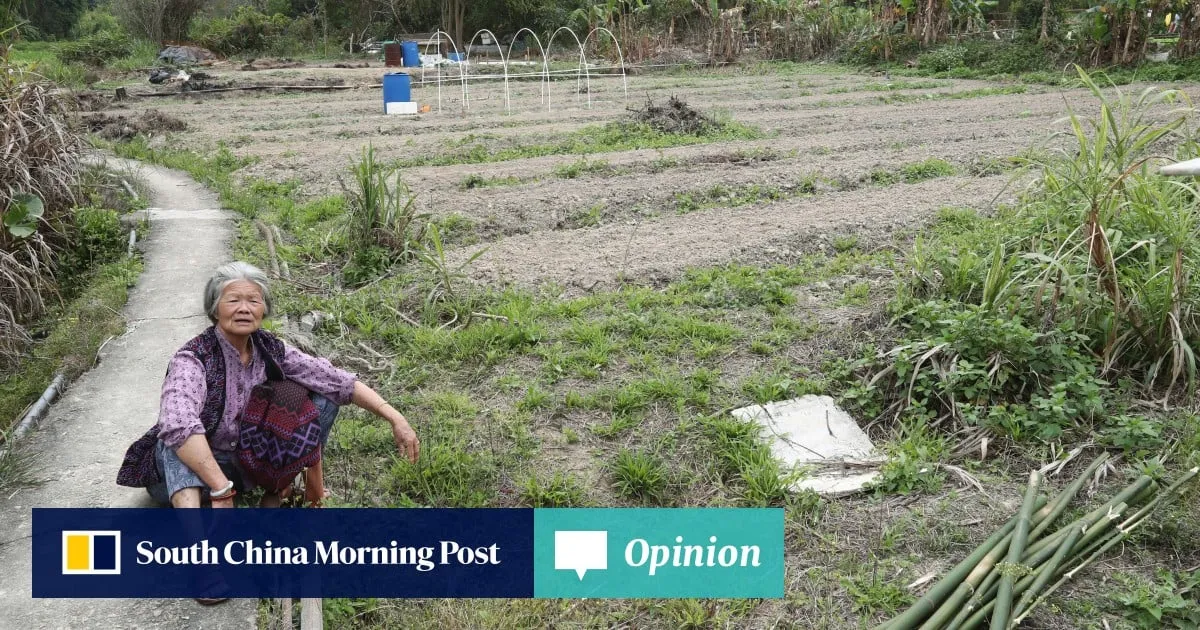
Hong Kong’s Northern Metropolis is positioned as the city’s next engine of growth – a long-term solution to land supply, economic transformation and cross-boundary integration. Just as importantly, the government has stressed that this massive undertaking will embed nature conservation and urban-rural integration at its core. Yet, a growing contradiction lies at the heart of this vision.The very landscapes that could support a green, sustainable and liveable Northern Metropolis – its remaining farmland – now face growing pressure under proposed legislation aimed at streamlining development. Prioritising speed, in this context, would eventually compromise the vision of a green economy.Food security and development" class="entity-link entity-topic" data-entity-id="139683" data-entity-type="topic">economic development were Hong Kong’s biggest challenges for most of the last century. A large portion of the workforce was engaged in agriculture, shaping the territory’s landscape and laying the foundation for further development" class="entity-link entity-topic" data-entity-id="139683" data-entity-type="topic">economic development. Today, our economy depends on services, with fewer than 2,500 farms – many run by part-timers – occupying just 0.6 per cent of the territory.
SRCSouth China Morning Post
LANGEN
LEANCenter-Right
WORDS161
ENT12
MON · 2026-07-06 · 21:30 GMTBRIEF NSR-2026-0706-90624
NSR-2026-0706-90624Opinion·EN·Environmental
Hong Kong’s Northern Metropolis project needn’t neglect agriculture
Hong Kong's Northern Metropolis project aims to be a major growth engine, addressing land supply, economic transformation, and cross-boundary integration, while also prioritizing nature conservation and urban-rural integration. However, a contradiction has emerged as the remaining farmland, crucial for a sustainable Northern Metropolis, faces development pressure due to proposed legislation to streamline construction.
Wander MeijerSouth China Morning PostFiled 2026-07-06 · 21:30 GMTLean · Center-RightRead · 1 min
South China Morning PostFIG 01
Reading time
1min
Word count
161words
Sources cited
0cited
Entities identified
12entities
Quality score
100%
§ 01
Briefing Summary
AI-generatedNEWSAR · AI
Hong Kong's Northern Metropolis project aims to be a major growth engine, addressing land supply, economic transformation, and cross-boundary integration, while also prioritizing nature conservation and urban-rural integration. However, a contradiction has emerged as the remaining farmland, crucial for a sustainable Northern Metropolis, faces development pressure due to proposed legislation to streamline construction. This prioritization of speed risks undermining the vision of a green economy. Historically, agriculture was vital to Hong Kong's economy and landscape, though today it represents a small fraction of the territory's land use. The article suggests that sacrificing farmland for rapid development could compromise the project's stated environmental goals.
Confidence 0.90Claims 4Entities 12
§ 02
Article analysis
Model · rule-basedFraming
Environmental
Economic Impact
Tone
Mixed Tone
AI-assessed
CalmNeutralAlarmist
Factuality
0.30 / 1.00
Opinion-Heavy
LowHigh
Sources cited
0
No named sources
FewMany
§ 03
Key claims
4 extracted01
Today, Hong Kong’s economy depends on services, with fewer than 2,500 farms occupying just 0.6 per cent of the territory.
statistic
Confidence
0.90
02
Hong Kong’s Northern Metropolis project is positioned as the city’s next engine of growth, a solution to land supply, economic transformation, and cross-boundary integration.
factual
Confidence
0.90
03
The landscapes that could support a green, sustainable, and liveable Northern Metropolis – its remaining farmland – face growing pressure under proposed legislation.
factual
Confidence
0.80
04
Prioritizing speed in development would compromise the vision of a green economy.
factual
Confidence
0.70
§ 04
Full report
1 min read · 161 words§ 05
Entities
12 identifiedKey playerOppositionContextPositiveNeutralNegative
Topics10
A
agriculture
EconomicContext
3x
70
CB
cross-boundary integration
PolicyContext
50
ET
economic transformation
EconomicContext
50
LS
land supply
PolicyContext
50
NC
nature conservation
PolicyContext
50
UR
urban-rural integration
PolicyContext
50
D
development
EconomicOpposition
40
FS
Food security
EconomicContext
40
GE
green economy
EconomicContext
40
ED
economic development
EconomicContext
40
§ 06
Keywords & salience
9 termsnorthern metropolis
1.00
agriculture
0.90
land supply
0.80
urban-rural integration
0.70
economic development
0.60
nature conservation
0.60
green economy
0.50
food security
0.50
development
0.40
§ 07
Topic connections
Interactive graph Network visualization showing 31 related topics
View Full Graph Person Organization Location Event|Click node to navigate|Edge numbers = shared articles