Ex-civil rights agency commissioner fired by Trump drops lawsuit in wake of Supreme Court ruling 1 of 2 | Jocelyn Samuels speaks in Seattle, Feb. 4, 2014. (AP Photo/Elaine Thompson, File) 2 of 2 | Andrea Lucas, nominee to be a member of the Equal Employment Opportunity Commission, testifies during a Senate Health, Education, Labor, and Pensions (HELP) Committee hearing, June 18, 2025, on Capitol Hill in Washington. (AP Photo/Mariam Zuhaib, File) By ALEXANDRA OLSON and CLAIRE SAVAGE Updated 12:51 AM MESZ, July 7, 2026 Add AP News on Google Add AP News as your preferred source to see more of our stories on Google. Share Share Facebook Copy Link copied Print Email X LinkedIn Bluesky Flipboard Pinterest Reddit New York (AP) — A former Democratic commissioner of one of the country’s top civil rights agencies dropped a lawsuit Monday challenging her dismissal by President Donald Trump, citing a recent Supreme Court ruling that dramatically enhanced the president’s power over independent agencies. Trump’s unprecedented dismissal of Jocelyn Samuels and another Democrat from the Equal Employment Opportunity Commission cleared the way for his shake-up of civil rights enforcement, which has prioritized rooting out diversity and inclusion practices, weakening protections for transgender workers and championing discrimination claims against white workers and U.S.-born workers. The EEOC moved forward with aspects of that plan Monday, releasing a regulatory agenda that includes proposals to end its annual collection of workplace demographic data and rescind longstanding guidance warning it may be discriminatory to require workers to exclusively use English on the job, among other changes. One of Trump’s first acts as president was demolishing the Democratic majority on the normally five-member EEOC, sweeping away what would have been a major obstacle to his civil rights agenda. His dismissal of Samuels and Charlotte Burrows before the end of their five-year terms was unprecedented in the history of the EEOC, which was created by Congress through the 1964 Civil Rights Act. Trump says Walmart cut prices at his request, but Walmart statement omits administration’s role 2 MIN READ Balogun starts for US against Belgium after suspension lifted following call by Trump to FIFA 1 MIN READ An Idaho mother who said her toddler twins died after vaccinations has been charged with murder 2 MIN READ The EEOC commission now consists of two Republicans and one Democrat. Trump has yet to nominate candidates to fill two open seats on the commission. In her lawsuit, Samuels had argued that Congress established that the EEOC commissioners, who are appointed by the president and confirmed by the Senate, would serve staggered terms to ensure “continuity, stability and insulation from political pressure.” But in a statement Monday, Samuels said she was dismissing her lawsuit because the Supreme Court’s ruling in a separate case “leaves me without a viable path forward to continue contesting my termination.” Last week, the Supreme Court upheld Trump’s firing of the heads of independent agencies, with the exception of the Federal Reserve, jettisoning a 91-year-old decision that had limited when presidents can fire board members of independent agencies. EEOC Chair Andrea Lucas applauded the Supreme Court’s ruling in a LinkedIn post last week, saying that it reinforced that the “EEOC is an executive branch agency.” In a statement Monday about the new regulatory agenda, an EEOC spokesperson said the agency is “committed to implementing President Trump’s landmark civil rights agenda, dedicated to evenhanded enforcement of federal civil rights laws.” The EEOC’s sole Democratic commissioner, Kalpana Kotagal, voted against the agenda, saying in a statement that “the proposed changes weaken civil rights protections for workers and undermine the agency’s investigative and enforcement efforts.” The regulatory agenda includes a proposal to end a 40-year requirement for companies with 100 or more employees, or federal contractors with at least 50 workers, to submit workforce demographic data to the EEOC. Lucas has publicly warned companies not to use such demographic data to justify what she describes as potentially discriminatory practices to bolster the diversity for their workforce. In its proposed rescission, the EEOC said requirements impose “significant financial and administrative burdens on the nation’s employers.” The rescission will almost certainly be approved by the EEOC commission but it will then be subject to a public commentary period before final passage. Conservative critics have said demographic data encourages the EEOC to assume that discrimination is behind any gender or racial imbalance in a company’s workforce. Supporters say the EEOC has used the annual surveys to help identify discriminatory patterns, guide its priorities and help track how women and minorities have fared since the passage of the Civil Rights Act. “The EEOC has collected this data from employers for six decades. It’s difficult to understand why the agency would kneecap its ability to investigate discrimination, particularly at a time when the EEOC is chronically understaffed and underfunded,” Kotagal said. The EEOC also announced its intent to rescind 1980 guidelines defining national origin-based discrimination, which warns employers that any requirement for workers to exclusively speak English may “create an atmosphere of inferiority, isolation and intimidation based on national origin which could result in a discriminatory working environment.” The EEOC argued that the guidelines are outdated and incorrectly established a “presumption that English-only rules violate Title VII in some circumstances.” Last week, the EEOC voted to toss out longstanding guidelines on what sort of voluntary affirmative action employers can take to improve job opportunities for women and minorities without violating Title VII of the 1964 Civil Rights Act, which prohibits employers from making employment decisions based on race, color, national origin, sex and religion. The EEOC reversed its stance that employers could pursue some programs, such as training for women and minorities or steps to expand recruitment pools, without running afoul of Title VII. Also on the EEOC’s agenda is revising regulations for enforcing the Pregnant Workers Fairness Act, a law that entitles women to seek workplace accommodations for pregnancy and related medical conditions. Lucas opposed the Biden-era regulations for including abortion as a circumstance allowing accommodations, such as time off for medical appointments. The Associated Press’ women in the workforce coverage receives financial support from Pivotal Ventures. AP is solely responsible for all content. Find AP’s standards for working with philanthropies, a list of supporters and funded coverage areas at AP.org. ALEXANDRA OLSON Olson is a business reporter for The Associated Press, focusing on women in the workplace. She has spent many years as a correspondent in Latin America. twitter mailto CLAIRE SAVAGE Savage is a national reporter for the AP’s Business team. She covers women in the workforce and is based in Chicago. twitter instagram mailto
SRCAssociated Press (AP)
LANGEN
LEANCenter
WORDS1 101
ENT12
MON · 2026-07-06 · 23:23 GMTBRIEF NSR-2026-0707-90651
NSR-2026-0707-90651News Report·EN·Legal & Judicial
Ex-civil rights agency commissioner fired by Trump drops lawsuit in wake of Supreme Court ruling
Jocelyn Samuels, a former Democratic commissioner of the Equal Employment Opportunity Commission (EEOC), has dropped her lawsuit challenging her dismissal by President Donald Trump. Samuels cited a recent Supreme Court ruling that expanded presidential power over independent agencies as the reason for withdrawing her case.
Associated Press (AP)Filed 2026-07-06 · 23:23 GMTLean · CenterRead · 5 min
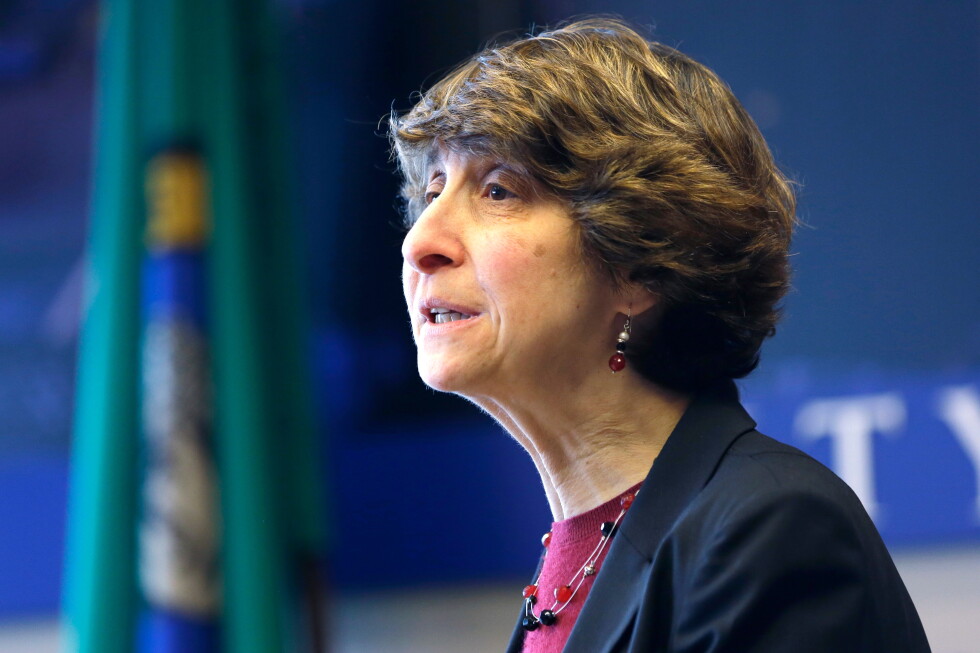
Associated Press (AP)FIG 01
Reading time
5min
Word count
1 101words
Sources cited
2cited
Entities identified
12entities
Quality score
100%
§ 01
Briefing Summary
AI-generatedNEWSAR · AI
Jocelyn Samuels, a former Democratic commissioner of the Equal Employment Opportunity Commission (EEOC), has dropped her lawsuit challenging her dismissal by President Donald Trump. Samuels cited a recent Supreme Court ruling that expanded presidential power over independent agencies as the reason for withdrawing her case. Trump's dismissal of Samuels and another Democrat aimed to reshape civil rights enforcement, prioritizing changes like ending the collection of workplace demographic data and rescinding guidance on English-only rules. The Supreme Court's decision upheld the president's authority to fire heads of independent agencies, impacting the EEOC's structure and its future regulatory agenda. The EEOC is moving forward with proposals to weaken certain civil rights protections, a move opposed by the commission's sole Democratic member.
Confidence 0.90Sources 2Claims 5Entities 12
§ 02
Article analysis
Model · rule-basedFraming
Legal & Judicial
Social Justice
Tone
Measured
AI-assessed
CalmNeutralAlarmist
Factuality
0.80 / 1.00
Factual
LowHigh
Sources cited
2
Limited
FewMany
§ 03
Key claims
5 extracted01
Samuels stated the Supreme Court's ruling 'leaves me without a viable path forward to continue'.
quoteJocelyn Samuels
Confidence
1.00
02
The EEOC released a regulatory agenda including proposals to end its annual collection of workplace demographic data and rescind guidance on English-only policies.
factual
Confidence
1.00
03
The lawsuit was dropped in the wake of a Supreme Court ruling that enhanced the president's power over independent agencies.
factual
Confidence
1.00
04
A former Democratic commissioner of a civil rights agency dropped a lawsuit challenging her dismissal by President Donald Trump.
factual
Confidence
1.00
05
Trump's dismissal of Jocelyn Samuels and another Democrat from the EEOC cleared the way for his shake-up of civil rights enforcement.
factual
Confidence
0.90
§ 04
Full report
5 min read · 1 101 words§ 05
Entities
12 identifiedKey playerOppositionContextPositiveNeutralNegative
People4
Organizations3
§ 06
Keywords & salience
10 termscivil rights
1.00
supreme court
0.90
trump administration
0.80
equal employment opportunity commission
0.80
presidential power
0.70
independent agencies
0.60
workplace discrimination
0.50
diversity and inclusion
0.50
jocelyn samuels
0.40
1964 civil rights act
0.40
§ 07
Topic connections
Interactive graph Network visualization showing 51 related topics
View Full Graph Person Organization Location Event|Click node to navigate|Edge numbers = shared articles