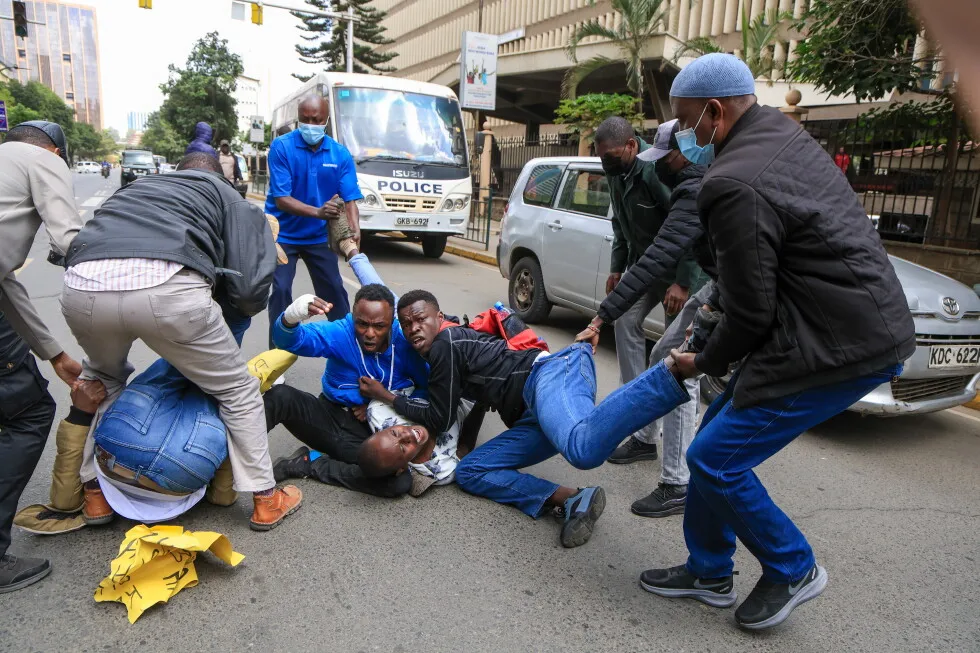
Kenya, Tanzania suppress protests with heavy police deployments 1 of 5 | Kenyan plain clothes police officers arrest protesters, during a demonstration marking a day that is historically associated with the pro-democracy protests of the 1990s that ushered in multipartyism, in Nairobi, Kenya, Tuesday, July 7, 2026. (AP Photo/Andrew Kasuku) 2 of 5 | Plain-clothed police officers arrest protesters during a demonstration marking a day that is historically associated with the pro-democracy protests of the 1990s that ushered in multipartyism in Nairobi, Kenya, Tuesday, July 7, 2026. (AP Photo/Andrew Kasuku) 3 of 5 | Kenyan police officers arrest a protester, during a demonstration marking a day that is historically associated with the pro-democracy protests of the 1990s that ushered in multipartyism, in Nairobi, Kenya, Tuesday, July 7, 2026. (AP Photo/Andrew Kasuku) 4 of 5 | Kenyan police patrol during a demonstration marking a day that is historically associated with the pro-democracy protests of the 1990s that ushered in multipartyism, in Nairobi, Kenya, Tuesday, July 7, 2026. (AP Photo/Andrew Kasuku) 5 of 5 | Kenyan police on a horseback patrol during a demonstration marking a day that is historically associated with the pro-democracy protests of the 1990s that ushered in multipartyism, in Nairobi, Kenya, Tuesday, July 7, 2026. (AP Photo/Andrew Kasuku) 1 of 5 | Kenyan plain clothes police officers arrest protesters, during a demonstration marking a day that is historically associated with the pro-democracy protests of the 1990s that ushered in multipartyism, in Nairobi, Kenya, Tuesday, July 7, 2026. (AP Photo/Andrew Kasuku) 1 of 5 Kenyan plain clothes police officers arrest protesters, during a demonstration marking a day that is historically associated with the pro-democracy protests of the 1990s that ushered in multipartyism, in Nairobi, Kenya, Tuesday, July 7, 2026. (AP Photo/Andrew Kasuku) Add AP News on Google Add AP News as your preferred source to see more of our stories on Google. Share 2 of 5 | Plain-clothed police officers arrest protesters during a demonstration marking a day that is historically associated with the pro-democracy protests of the 1990s that ushered in multipartyism in Nairobi, Kenya, Tuesday, July 7, 2026. (AP Photo/Andrew Kasuku) 2 of 5 Plain-clothed police officers arrest protesters during a demonstration marking a day that is historically associated with the pro-democracy protests of the 1990s that ushered in multipartyism in Nairobi, Kenya, Tuesday, July 7, 2026. (AP Photo/Andrew Kasuku) Add AP News on Google Add AP News as your preferred source to see more of our stories on Google. Share 3 of 5 | Kenyan police officers arrest a protester, during a demonstration marking a day that is historically associated with the pro-democracy protests of the 1990s that ushered in multipartyism, in Nairobi, Kenya, Tuesday, July 7, 2026. (AP Photo/Andrew Kasuku) 3 of 5 Kenyan police officers arrest a protester, during a demonstration marking a day that is historically associated with the pro-democracy protests of the 1990s that ushered in multipartyism, in Nairobi, Kenya, Tuesday, July 7, 2026. (AP Photo/Andrew Kasuku) Add AP News on Google Add AP News as your preferred source to see more of our stories on Google. Share 4 of 5 | Kenyan police patrol during a demonstration marking a day that is historically associated with the pro-democracy protests of the 1990s that ushered in multipartyism, in Nairobi, Kenya, Tuesday, July 7, 2026. (AP Photo/Andrew Kasuku) 4 of 5 Kenyan police patrol during a demonstration marking a day that is historically associated with the pro-democracy protests of the 1990s that ushered in multipartyism, in Nairobi, Kenya, Tuesday, July 7, 2026. (AP Photo/Andrew Kasuku) Add AP News on Google Add AP News as your preferred source to see more of our stories on Google. Share 5 of 5 | Kenyan police on a horseback patrol during a demonstration marking a day that is historically associated with the pro-democracy protests of the 1990s that ushered in multipartyism, in Nairobi, Kenya, Tuesday, July 7, 2026. (AP Photo/Andrew Kasuku) 5 of 5 Kenyan police on a horseback patrol during a demonstration marking a day that is historically associated with the pro-democracy protests of the 1990s that ushered in multipartyism, in Nairobi, Kenya, Tuesday, July 7, 2026. (AP Photo/Andrew Kasuku) Add AP News on Google Add AP News as your preferred source to see more of our stories on Google. Share Nairobi, Kenya (AP) — Heavy police deployments in the capitals of Kenya and Tanzania suppressed planned protests on Tuesday, with July 7 a significant date for the East African neighbors.In Kenya, the day commemorates the 1990s struggle for multiparty democracy. In Tanzania, it marks the founding of what would become the ruling party 72 years ago.Tanzania’s protests were meant to call for democratic reforms following the disputed October election and to demand the release of opposition leader Tundu Lissu, who is jailed on treason charges.In Tanzania’s commercial capital, Dar es Salaam, police and military personnel were deployed and no protesters were seen. An annual trade fair continued under heavy protection.Speaking to journalists on Monday evening, Tanzania’s Home Affairs Minister, Patrobas Katambi, said Tanzania was not a country where people could dictate protest dates. He added that the country was prepared to defend itself against any threat to public order. Analysts say the government has remained on high alert since the October election and ensuing protests and crackdown that saw the deaths of hundreds of people. 1 MIN READ 1 MIN READ 2 MIN READ Analyst Wade Green with Aldebaran Threat Consultants said protesters in Tanzania would have to “catch the security forces off-guard because their guard is so up right now.”He added: “Unless the protesters were really strong and organized, there would be no way to overcome the lethality that the Tanzanian security forces unleashed last year and are willing to unleash again.” A few people were arrested as police in Kenya’s capital, Nairobi, cordoned off parliament buildings with barbed wire and blocked major roads. Businesses were closed.Kenyan opposition politician James Orengo described the police presence in Nairobi as an effort to scare citizens.“These are the characteristics of a police state. You find police deployed even when there is no fracas, there is no march, there is no demonstration, there are no vehicles on the road, and even holding a press conference becomes difficult, but we are undeterred,” he said.
SRCAssociated Press (AP)
LANGEN
LEANCenter
WORDS1 044
ENT9
TUE · 2026-07-07 · 15:23 GMTBRIEF NSR-2026-0707-90903
NSR-2026-0707-90903News Report·EN·Human Rights
Kenya, Tanzania suppress protests with heavy police deployments
Heavy police deployments in Nairobi, Kenya, and Dar es Salaam, Tanzania, suppressed planned protests on Tuesday, July 7. In Kenya, the day commemorates the 1990s struggle for multiparty democracy, while in Tanzania, it marks the founding of the ruling party.
Updated [hour]:[minute] [AMPM] [timezone], [monthFull] [day], [year]Associated Press (AP)Filed 2026-07-07 · 15:23 GMTLean · CenterRead · 5 min
Associated Press (AP)FIG 01
Reading time
5min
Word count
1 044words
Sources cited
0cited
Entities identified
9entities
Quality score
100%
§ 01
Briefing Summary
AI-generatedNEWSAR · AI
Heavy police deployments in Nairobi, Kenya, and Dar es Salaam, Tanzania, suppressed planned protests on Tuesday, July 7. In Kenya, the day commemorates the 1990s struggle for multiparty democracy, while in Tanzania, it marks the founding of the ruling party. Tanzanian protests aimed to call for democratic reforms and the release of opposition leader Tundu Lissu. In Dar es Salaam, police and military personnel were deployed, and no protesters were seen. Kenyan opposition politician James Orengo described the police presence in Nairobi as an effort to scare citizens, noting arrests and business closures. Analysts suggest Tanzanian security forces remain on high alert following past crackdowns.
Confidence 0.90Claims 4Entities 9
§ 02
Article analysis
Model · rule-basedFraming
Human Rights
Political Strategy
Tone
Measured
AI-assessed
CalmNeutralAlarmist
Factuality
0.80 / 1.00
Factual
LowHigh
Sources cited
0
No named sources
FewMany
§ 03
Key claims
4 extracted01
Kenyan police officers were seen on horseback patrol during the demonstration.
factual
Confidence
1.00
02
The demonstration marked a day historically associated with pro-democracy protests of the 1990s in Kenya.
factual
Confidence
1.00
03
Kenyan plain clothes police officers arrested protesters during a demonstration on Tuesday, July 7, 2026.
factual
Confidence
1.00
04
The article implies that Kenya and Tanzania are suppressing protests with heavy police deployments, though specific details for Tanzania are absent.
factual
Confidence
0.70
§ 04
Full report
5 min read · 1 044 words§ 05
Entities
9 identifiedKey playerOppositionContextPositiveNeutralNegative
§ 06
Keywords & salience
8 termsprotests
1.00
police deployments
0.90
kenya
0.80
tanzania
0.80
arrests
0.70
pro-democracy protests
0.60
multipartyism
0.50
nairobi
0.40
§ 07
Topic connections
Interactive graph Network visualization showing 22 related topics
View Full Graph Person Organization Location Event|Click node to navigate|Edge numbers = shared articles