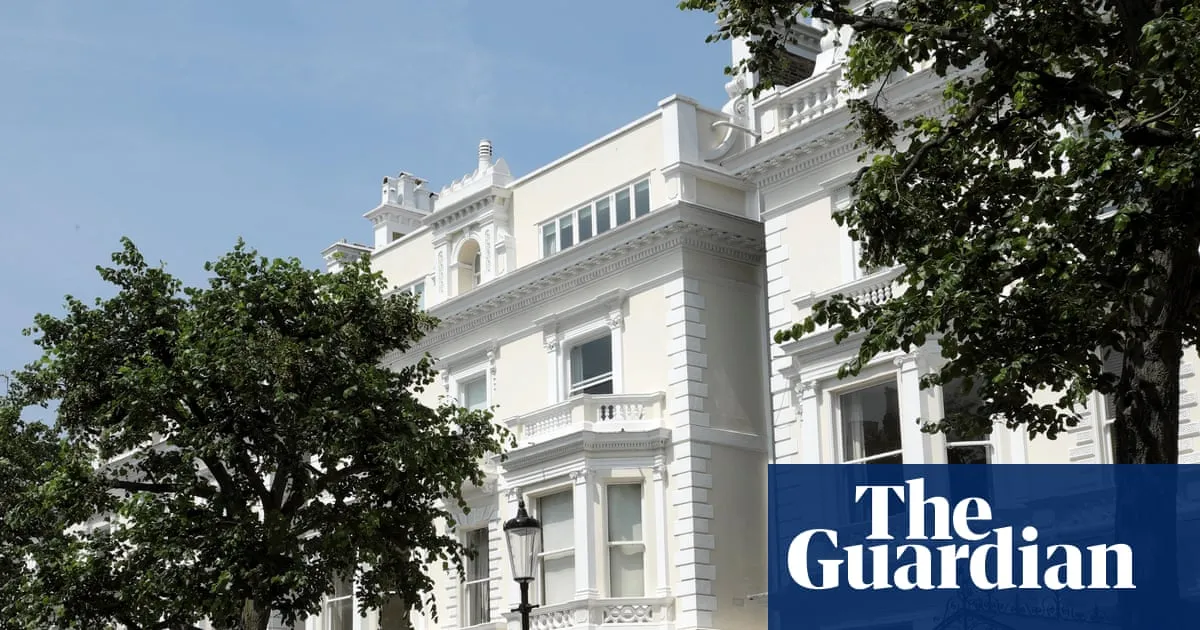
Britain’s deep regional income divide has barely changed in 30 years despite the promises of successive governments to narrow the gap, according to a report showing the challenge for Andy Burnham.As the prime minister-in-waiting prepares for government, the Resolution Foundation said almost no progress had been made since 1997 to tackle stark divisions in household income, before housing costs are taken into account, between the richest and poorest parts of the country.Burnham has pledged to achieve “good growth in every postcode” as part of a devolution agenda aimed at rebalancing power away from Westminster to help spread prosperity across the country.However, the foundation said the Makerfield MP would need to “get serious” about the level of investment required in transport, housing, and regeneration projects to overcome three decades of failure to tackle regional divisions in household income.According to the report, between 1997 and 2023 the level of gross household disposable income per person in London – at £27,900 – had remained three-fifths higher than in Northern Ireland (at £17,300).It warned that high income inequality had also persisted at local levels. Disposable incomes in the richest area (Kensington and Chelsea) were, at £60,584, four and a half times higher than in the poorest (Leicester) at £13,398 – a gap that had been consistent for almost three decades.Highlighting entrenched divisions, it found that more than half (54%) of local authorities in the poorest fifth of places for income per person in 1997 were still there in 2023. Meanwhile, 82% of the richest places had stayed at the top.The report said the stark income gaps had endured despite the promises of successive governments to rebalance Britain’s lopsided economic geography – including Boris Johnson’s “levelling-up” agenda. It found between 2019 and 2023 the income gap between someone living in the richest tenth of local authorities and someone living in the poorest tenth had stayed the same.However, it said there were some areas where progress in tackling deep regional divisions had been made since the late 1990s, including narrowing gaps in employment and stronger levels of growth in economic productivity in some cities, including Manchester.It found jobs growth had been most heavily concentrated in traditionally low-employment areas since the late 1990s, while local pay gaps had also narrowed thanks to a rising minimum wage.Highlighting progress in Manchester in recent decades, it said the city’s gross household disposable income per person had grown by 40% in real terms between 1997 and 2023. But it said the city’s income level – at £16,500 – remained significantly behind London, as well as big northern English cities including Sheffield, Newcastle and Liverpool.Burnham has described “Manchesterism” as his guiding political philosophy, arguing he can replicate the city’s economic revival for the nation at large through a programme of devolution, investment in transport and social housing, and greater public control over utilities.skip past newsletter promotionafter newsletter promotionHowever, critics have warned that the former Greater Manchester mayor faces a challenge to turn around the economy amid tight constraints on the public finances.Suggesting that sustained investment was required, the Resolution Foundation highlighted that, while Germany had allocated about £70bn every year for 25 years on post-cold war reintegration to help rebalance its economy, the UK’s “levelling-up” related spending in 2022 was just £4bn.Ruth Curtice, the chief executive of the foundation, said that Manchester’s economic revival showed “decline is not destiny”, but added that Britain’s big regional cities continued to underperform.“PM-in-waiting Andy Burnham has rightly put regional inequality at the top of his agenda. But turning ambition into reality will require investment in transport, housing and wider economic development on a scale that no recent political leader has come close to meeting.“Unless that investment is taken seriously, the economic and political cost of Britain’s geographic divides will continue.”
SRCThe Guardian - World News
LANGEN
LEANCenter-Left
WORDS624
ENT12
WED · 2026-07-08 · 05:00 GMTBRIEF NSR-2026-0708-91103
NSR-2026-0708-91103News Report·EN·Economic Impact
Almost no progress made on UK regional household income divide in 30 years, report finds
A report by the Resolution Foundation reveals that the regional income divide in the UK has seen almost no progress since 1997, despite promises from successive governments. Household incomes in the richest areas remain significantly higher than in the poorest, with the gap persisting at both national and local levels.
Richard Partington Senior economics correspondentThe Guardian - World NewsFiled 2026-07-08 · 05:00 GMTLean · Center-LeftRead · 3 min
The Guardian - World NewsFIG 01
Reading time
3min
Word count
624words
Sources cited
2cited
Entities identified
12entities
Quality score
100%
§ 01
Briefing Summary
AI-generatedNEWSAR · AI
A report by the Resolution Foundation reveals that the regional income divide in the UK has seen almost no progress since 1997, despite promises from successive governments. Household incomes in the richest areas remain significantly higher than in the poorest, with the gap persisting at both national and local levels. For instance, London's gross household disposable income per person is consistently three-fifths higher than Northern Ireland's. While some areas like Manchester have seen economic improvements, they still lag behind London. The report suggests that achieving "good growth in every postcode" requires substantial investment in transport, housing, and regeneration, a scale of investment not seen in recent UK policy.
Confidence 0.90Sources 2Claims 5Entities 12
§ 02
Article analysis
Model · rule-basedFraming
Economic Impact
Political Strategy
Tone
Measured
AI-assessed
CalmNeutralAlarmist
Factuality
0.80 / 1.00
Factual
LowHigh
Sources cited
2
Limited
FewMany
§ 03
Key claims
5 extracted01
More than half (54%) of local authorities in the poorest fifth for income in 1997 remained in the poorest fifth in 2023.
statisticResolution Foundation
Confidence
0.95
02
Disposable incomes in the richest area (Kensington and Chelsea) were 4.5 times higher than in the poorest (Leicester) between 1997 and 2023.
statisticResolution Foundation
Confidence
0.95
03
Between 1997 and 2023, household disposable income per person in London was 60% higher than in Northern Ireland.
statisticResolution Foundation
Confidence
0.95
04
The UK's regional household income divide has barely changed in 30 years, with almost no progress made since 1997.
statisticResolution Foundation
Confidence
0.95
05
Andy Burnham needs to 'get serious' about investment levels to overcome decades of failure in tackling regional income divisions.
quoteResolution Foundation
Confidence
0.90
§ 04
Full report
3 min read · 624 words§ 05
Entities
12 identifiedKey playerOppositionContextPositiveNeutralNegative
Organizations1
Locations6
§ 06
Keywords & salience
10 termsregional income divide
1.00
household income
0.90
income inequality
0.80
economic geography
0.70
levelling-up agenda
0.60
devolution agenda
0.50
gross household disposable income
0.50
andy burnham
0.40
good growth
0.40
resolution foundation
0.40
§ 07
Topic connections
Interactive graph No topic relationship data available yet. This graph will appear once topic relationships have been computed.