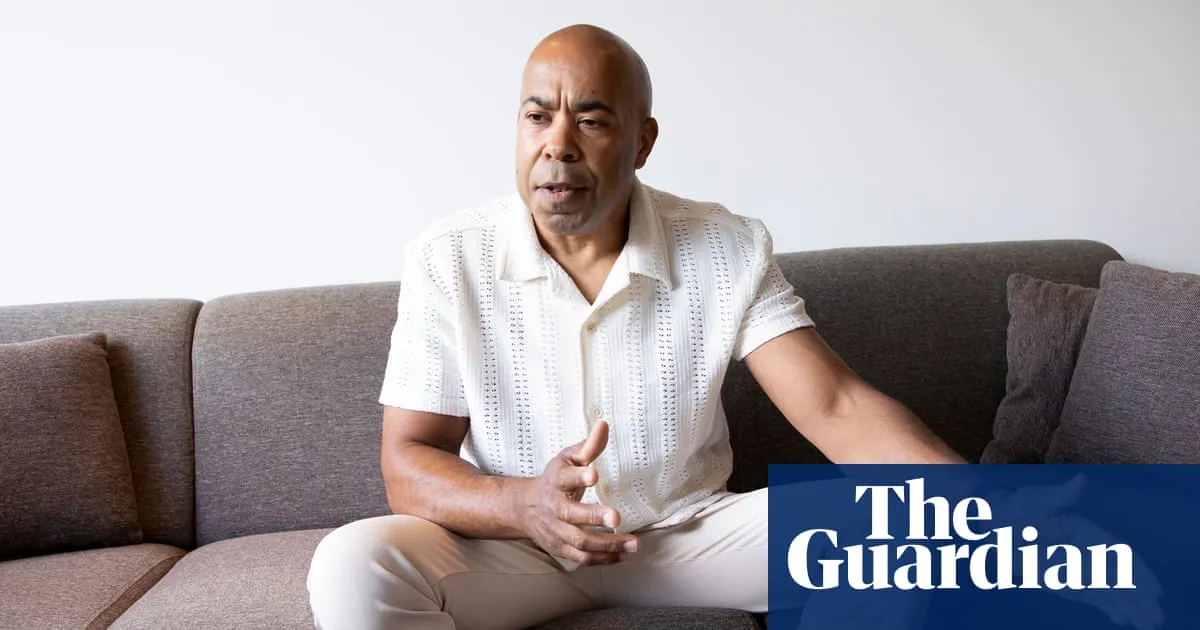
When Henri Duiker went to check whether his 12-year-old son and his friend were enjoying their first “disco” swim evening alone, he was baffled. Instead of being in the water, Henri’s son was standing alone by the desk at the Watergeus pool, in Zoetermeer in the Netherlands.He did not have any ID to prove he was under 13 and pool attendants had told him he could not swim – although his friend of the same age and size had not been not asked for his documents.As Duiker’s partner watched for 10 minutes, only children of colour were asked to prove their age. “She saw that every white child was simply allowed to walk through, and every black child, without exception, was asked for their passport,” Duiker said, reflecting on that Friday evening in 2024. “And if they didn’t have it, they weren’t allowed in.”Last month he won a ruling from the Netherlands-institute-for-human-rights" class="entity-link entity-organization" data-entity-id="161229" data-entity-type="organization">Netherlands Institute for Human Rights: the company Zoetermeer" class="entity-link entity-organization" data-entity-id="161228" data-entity-type="organization">Optisport Zoetermeer, which runs the municipal pool, had used unlawful racial discrimination.The incident has prompted a reckoning in the city, with councillors from three parties asking formal questions about how this could have happened.It was not an isolated incident: last week the Dutch football association asked police to investigate online racist abuse towards World Cup players, and at an event commemorating the abolition of slavery, the Dutch prime minister, Rob Jetten, admitted discrimination and racism were “still systematically present and deeply rooted”.In Europe and North America, swimming pools have often become focal points for racial tension and exclusion. Last month a open-air swimming venue in Germany was ordered to lift a ban on bathers who do not speak German or face possible legal action.Duiker’s son was allowed in after he vouched for him, but Duiker said the incident was a reminder of an uncomfortable reality sometimes called the “Dutch paradox”: because of their own widespread rights and freedoms, some people do not acknowledge the existence of racism.“People act as though the Netherlands is so tolerant,” Duiker said, mildly. “Maybe it is … but it’s pretty awful to show children of 10, 11 and 12 that they are not equal. You are showing them that whatever you do, however you live, you are never the same as a white child.”Duiker complained to the pool management on the day of the incident. When it dismissed his formal complaint, he went to the national anti-discrimination helpline, Discriminatie.nl, which referred him to the Netherlands-institute-for-human-rights" class="entity-link entity-organization" data-entity-id="161229" data-entity-type="organization">Netherlands Institute for Human Rights, which issues non-binding rulings that can be used in court action.Optisport argued in written evidence and at a hearing that the 10-minute observation period was unrepresentative of a random checking policy. But in a recent formal apology letter from the chief executive, it told Duiker: “The specific control measure applied on the evening of 12 July 2024 was abolished after that date.”Duiker, who has received hateful messages for speaking out in Dutch media, believes his country needs to take reports of unequal treatment more seriously. “People act in the Netherlands as though things are fine, and the worst thing is that when it happens to you, you hardly dare to say anything,” he said. “Because the first thing they say is: ‘Oh, he’s playing the racism card again.’ The people who don’t want to see it are not going to see it.”In 2019, the UN special rapporteur E Tendayi Achiume was fiercely criticised after describing the “Dutch paradox” where equality and tolerance were seen as national values but people of minority ethnic origins were often characterised as “neither truly nor wholly Netherlanders”.Three years later, the then finance minister, Marnix van Rij, admitted institutional racism played a role in tax office fraud risk selection. A childcare benefits scandal falsely accusing thousands of parents of fraud disproportionately affected families with dual nationality, according to the government.The Watergeus pool in Zoetermeer. Photograph: Judith Jockel/The GuardianIn Zoetermeer, a deputy mayor has met Duiker, and two liberal progressive councillors, Shaniqua Monsels and Yasir el Achkar, are determined to put the issue on the agenda.“At first we wondered if we should pay attention to this in public or behind the scenes,” El Achkar said. “But [Duiker] made it clear that many more children were discriminated against and wanted it to be visible to them, and to society, that he fought and we all won. We thought that was very powerful.”The council and the swimming pool management company have accepted the ruling. Zoetermeer municipality in a statement: “We are very saddened to hear that a child has been treated unequally, something that is unacceptable. We are an inclusive city where all residents, particularly children and young people, feel welcome, safe and are treated equally – and where there is no place for discrimination.”Albert Arp, the chief executive of Optisport, said everyone should feel equally treated in the roughly 400 sports facilities it runs in the Netherlands and Belgium. “We take the ruling … seriously,” he said. “In response, we have reviewed our procedures for access and age verification. We believe such checks must always be carried out carefully, objectively and in a verifiable manner. We have been in contact with the family involved and have offered our sincere apologies.”Duiker would have preferred the apology two years ago, before the political and media attention. “I have Surinamese parents, I am a Dutchman … but 53 years later I’m still a foreigner for some people,” he said. “This is about my son and all of the other children who don’t dare to fight.”
SRCThe Guardian - World News
LANGEN
LEANCenter-Left
WORDS916
ENT12
WED · 2026-07-08 · 11:52 GMTBRIEF NSR-2026-0708-91226
NSR-2026-0708-91226News Report·EN·Social Justice
Race discrimination case over child’s swim puts ‘Dutch paradox’ in focus
A father's complaint about his 12-year-old son being denied entry to a Dutch swimming pool, while his white friend of the same age was allowed in without question, has led to a ruling of unlawful racial discrimination. The incident occurred at the Watergeus pool in Zoetermeer, where only children of color were reportedly asked for identification to prove they were under 13.
Senay Boztas in ZoetermeerThe Guardian - World NewsFiled 2026-07-08 · 11:52 GMTLean · Center-LeftRead · 4 min
The Guardian - World NewsFIG 01
Reading time
4min
Word count
916words
Sources cited
4cited
Entities identified
12entities
Quality score
100%
§ 01
Briefing Summary
AI-generatedNEWSAR · AI
A father's complaint about his 12-year-old son being denied entry to a Dutch swimming pool, while his white friend of the same age was allowed in without question, has led to a ruling of unlawful racial discrimination. The incident occurred at the Watergeus pool in Zoetermeer, where only children of color were reportedly asked for identification to prove they were under 13. The Netherlands Institute for Human Rights found the pool company, Optisport Zoetermeer, guilty of discrimination. This case highlights the "Dutch paradox," where some believe the country's tolerance masks underlying racism. The ruling has prompted local council questions and an apology from the pool company, which has since abolished the specific control measure.
Confidence 0.90Sources 4Claims 5Entities 12
§ 02
Article analysis
Model · rule-basedFraming
Social Justice
Human Rights
Tone
Measured
AI-assessed
CalmNeutralAlarmist
Factuality
0.70 / 1.00
Factual
LowHigh
Sources cited
4
Well sourced
FewMany
§ 03
Key claims
5 extracted01
The Netherlands Institute for Human Rights ruled that Optisport Zoetermeer, which runs the pool, engaged in unlawful racial discrimination.
factualNetherlands Institute for Human Rights
Confidence
0.95
02
Dutch Prime Minister Rob Jetten admitted that discrimination and racism are 'still systematically present and deeply rooted' in the Netherlands.
quoteRob Jetten
Confidence
0.90
03
A 12-year-old boy was denied entry to a Dutch swimming pool because he could not prove his age, while his white friend of the same age and size was not asked for ID.
factualHenri Duiker
Confidence
0.90
04
The incident highlights the 'Dutch paradox,' where the country's perceived tolerance masks the existence of racism.
quoteHenri Duiker
Confidence
0.85
05
Swimming pools have often become focal points for racial tension and exclusion in Europe and North America.
factual
Confidence
0.70
§ 04
Full report
4 min read · 916 words§ 05
Entities
12 identifiedKey playerOppositionContextPositiveNeutralNegative
Organizations3
Locations6
§ 06
Keywords & salience
8 termsracial discrimination
1.00
dutch paradox
0.90
swimming pool
0.80
inequality
0.70
children of colour
0.60
netherlands
0.60
racism
0.50
human rights
0.40
§ 07
Topic connections
Interactive graph No topic relationship data available yet. This graph will appear once topic relationships have been computed.