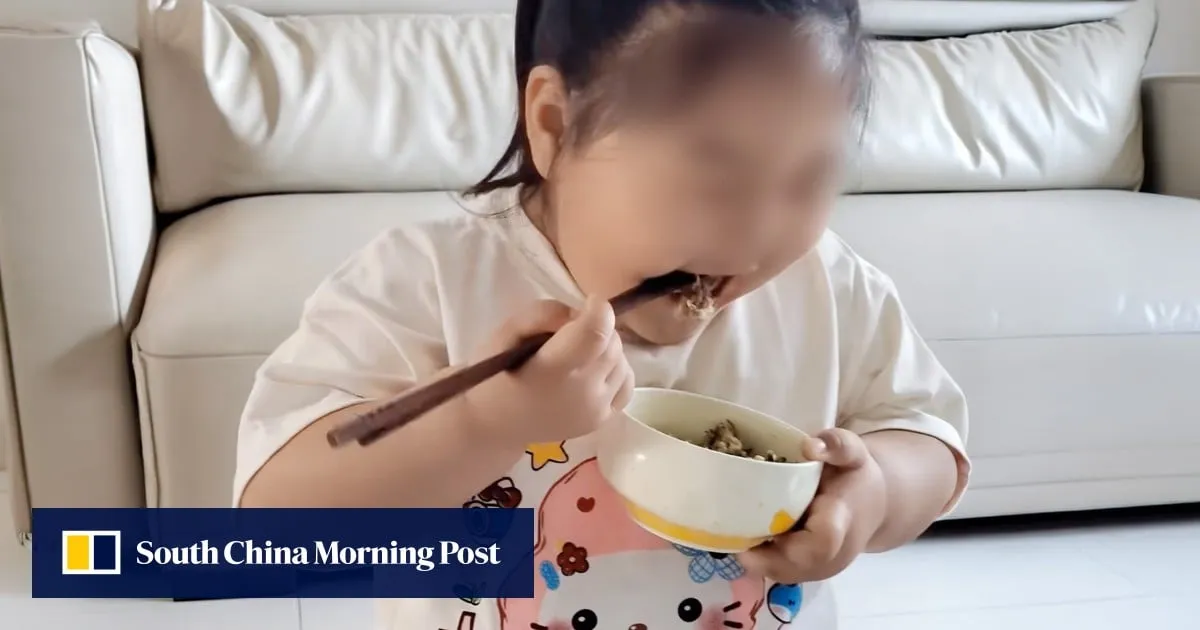
A three-year-old girl is fed extensively by her parents leading her to weigh as much as 35kg from eating hearty meals in front of a camera as a live-streamer. A young boy and a girl of his age are presented as a couple and perform intimate exchanges onscreen. Another young boy is filmed eating live worms and snails.These unsettling scenes are from viral videos featuring so-called online celebrity children, a group which emerged years ago but has triggered controversy in the meantime.In early July, state media CCTV criticised the chaotic development of this online group, throwing its problematic content into the spotlight.Besides the above three clips, the media also cited two video segments by child bloggers. One showed a young boy being encouraged by a man to enter a women’s changing room. “You don’t have to shoulder legal liability since you are only a juvenile. Even if you sexually harass girls, they still have to bear that,” the man told the boy.child live-streamers in China are rapidly expanding their online presence and creating a lucrative market for e-commerce sales. Photo: ShutterstockIn the other clip, a boy was caught by a woman for peeking through the door in a woman’s toilet. He justified himself by saying he had not broken the law because he was a child.The videos circulated widely online before being removed from the website under a newly promulgated Classification Measures for Online Information that May Affect the Physical and Mental Health of Minors.The rule was devised by eight state-level authorities, including the China" class="entity-link entity-organization" data-entity-id="141246" data-entity-type="organization">Cyberspace Administration of China, the Ministry of Education, and the Ministry of Public Security, and was put into effect in March.It classifies content that is inappropriate for children into four groups. One category concerns information that may spark children to imitate bad behaviour, like that containing sexual innuendo or advocating student truancy and cheating on tests. Clips promoting adult lifestyle choices such as smoking, drinking, getting a tattoo and showing unsafe driving also fall into this category.China’s Regulations on the Protection of Minors in Cyberspace are designed to safeguard the well-being and innocence of children, protecting them from all forms of digital exploitation. Photo: ShutterstockA second category refers to information that would bring negative impact on children’s values. It includes flaunting wealth and preaching the uselessness of study.The other two categories include videos using images of children inappropriately and leaking children’s privacy.According to this rule, any problematic video will result in both its creators and online platforms facing punishment. The penalty is subject to China’s Regulations on the Protection of Minors in Cyberspace.Platforms can be fined up to 1 million yuan (US$150,000) in serious circumstances, the New Express newspaper reported.Further ReadingVideos or live-streaming events involving children often make headlines in China.In 2021, a five-year-old girl skilfully applied cosmetics on her face in her videos and earned the nickname, Youngest Make-up Blogger. Her account, which allegedly generated income of 150,000 yuan (US$22,000) per month, was later closed following massive controversy.Huang Yiming, an online influencer, was banned from social media in June because she allowed her three-year-old daughter to take part in a live-streaming session that sold children’s clothing from daytime to late evening.
SRCSouth China Morning Post
LANGEN
LEANCenter-Right
WORDS526
ENT10
THU · 2026-07-09 · 10:00 GMTBRIEF NSR-2026-0709-91579
NSR-2026-0709-91579News Report·EN·Human Interest
China child influencers slammed for ‘distorting values’ in staged online videos
Chinese state media has criticized the rise of child influencers whose staged online videos are accused of distorting values. Examples include a three-year-old girl weighing 35kg from excessive eating, children depicted as a couple, and a boy eating live worms.
Alice YanSouth China Morning PostFiled 2026-07-09 · 10:00 GMTLean · Center-RightRead · 3 min
South China Morning PostFIG 01
Reading time
3min
Word count
526words
Sources cited
2cited
Entities identified
10entities
Quality score
100%
§ 01
Briefing Summary
AI-generatedNEWSAR · AI
Chinese state media has criticized the rise of child influencers whose staged online videos are accused of distorting values. Examples include a three-year-old girl weighing 35kg from excessive eating, children depicted as a couple, and a boy eating live worms. Other concerning content involved a boy being encouraged to enter a women's changing room with inappropriate commentary. These videos, which contribute to a lucrative e-commerce market, have been removed following the implementation of new regulations in March. These measures, devised by eight state authorities, classify and penalize inappropriate content for minors, with platforms facing fines up to 1 million yuan for violations.
Confidence 0.90Sources 2Claims 3Entities 10
§ 02
Article analysis
Model · rule-basedFraming
Human Interest
Tone
Mixed Tone
AI-assessed
CalmNeutralAlarmist
Factuality
0.80 / 1.00
Factual
LowHigh
Sources cited
2
Limited
FewMany
§ 03
Key claims
3 extracted01
China has implemented new rules to classify and regulate online content featuring children, with penalties including fines of up to 1 million yuan.
factualCCTV
Confidence
0.90
02
State media CCTV has criticized the growth of a group of child influencers on online platforms, with some promoting adult lifestyle choices and others engaging in explicit behavior.
quoteCCTV
Confidence
0.80
03
The new rules classify content that may spark children to imitate bad behavior, including information on smoking, drinking, and getting a tattoo.
statisticNew Express newspaper
Confidence
0.70
§ 04
Full report
3 min read · 526 words§ 05
Entities
10 identifiedKey playerOppositionContextPositiveNeutralNegative
Organizations4
Locations1
Topics5
RO
Regulations on the Protection of Minors in Cyberspace
PolicyContext
60
CM
Classification Measures for Online Information that May Affect the Physical and Mental Health of Minors
PolicyContext
60
CL
child live-streamers
EconomicContext
50
OC
online celebrity children
EconomicContext
2x
50
EC
e-commerce sales
EconomicContext
40
§ 06
Keywords & salience
9 termschild influencers
1.00
online videos
0.90
distorting values
0.80
minors protection
0.70
digital exploitation
0.60
live-streaming
0.60
e-commerce
0.50
state media
0.40
online information
0.40
§ 07
Topic connections
Interactive graph Network visualization showing 51 related topics
View Full Graph Person Organization Location Event|Click node to navigate|Edge numbers = shared articles