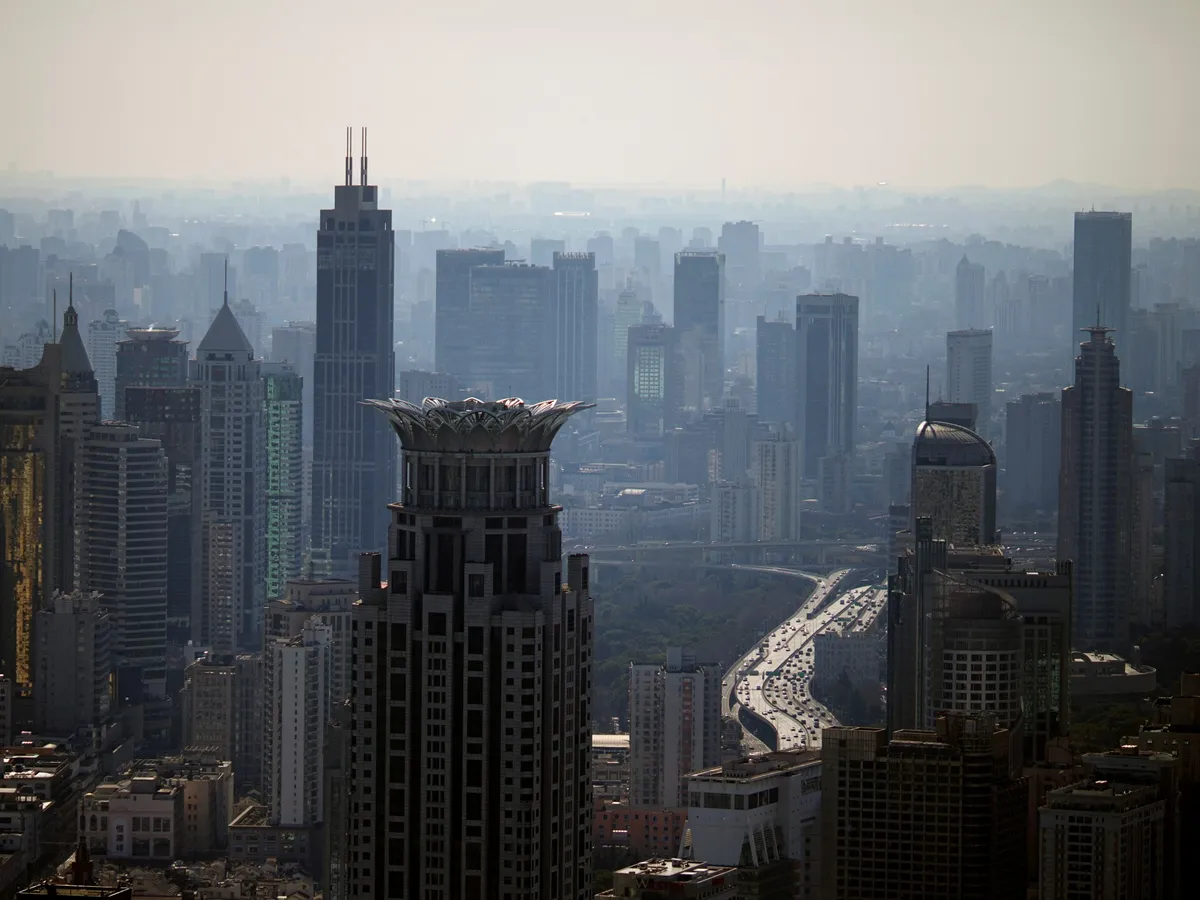
Beijing is rolling measures to expand its ability to hit back at US and EU sanctions and export controls.A view of the city skyline in Shanghai, China, on February 24, 2022 [File: Aly Song/Reuters]Published On 10 Jul 2026China is expanding its toolkit to counter foreign sanctions and export controls, placing multinational companies in the line of fire as Beijing, Washington and Brussels exchange tit-for-tat punitive measures.Since March, Beijing has passed two new regulations that expand its ability to retaliate against foreign entities deemed to have threatened its supply chain security or enforced sanctions imposed with “improper extraterritorial jurisdiction”.Recommended Stories list of 4 itemslist 1 of 4Couple arrested after daring Empire State marriage proposal stuntlist 2 of 4Belgium pull off stunning comeback to beat Senegal, enter World Cup last 16list 3 of 4‘A war zone’: Venezuela aid workers fear health crisis after earthquakeslist 4 of 4Ocean temperatures hit record highs as El Niño loomsend of listA third law, still in draft form, would allow Chinese prosecutors to bring cases against foreign organisations and individuals whose “unlawful acts harm the country’s national interests or social public interest”, according to state media.The move, part of a broader effort to strengthen China’s public interest litigation law, was announced in June.James Hsiao, a Hong Kong partner with the multinational law firm White & Case, said that firms are concerned about how to comply with opposing rules and regulations.“Some companies have expressed some concern that these measures could affect ordinary commercial transactions, particularly where companies face potentially conflicting legal obligations,” Hsiao told Al Jazeera.“A company may be required under US or EU sanctions rules to restrict dealings with a counterparty, while also needing to consider whether taking that action could create risk under [Chinese] countermeasures,” he said.Firms could face fines, visa cancellations, asset freezes, investment restrictions and curbs on the import or export of goods from China if they implement measures with “improper extraterritorial jurisdiction” under State Council Decree No. 835, which was passed in April.Under State Council Decree No. 834, passed in March, companies can face penalties if they “disrupt, undermine or discriminate against China’s industrial or supply chains”.These changes are likely to complicate firms’ efforts to adhere to Western sanctions and assess supply chain risks, exposing them to “increased scrutiny where business decisions or compliance measures could be perceived as implementing foreign discriminatory or otherwise restrictive measures”, according to the US multinational law firm Paul Hastings.Hanscom Smith, a senior fellow at Yale Jackson School of Global Affairs, said the expanded regulations should be seen as a sign of things to come.People walk past the Novo Nordisk booth at the 8th China International Import Expo (CIIE) in Shanghai, China on November 6, 2025 [Andrew Silver/Reuters]“In a ‘rule by law’ system like China’s, regulations are a form of signalling and won’t necessarily be applied uniformly,” Smith told Al Jazeera.“Regardless, the new measures increase the regulatory complexity for foreign companies doing business in China.”China’s embassy in Washington and its mission in Brussels did not immediately respond to Al Jazeera’s requests for comment.The Ministry of Commerce has previously said its anti-sanctions laws safeguard China’s “national sovereignty, security and development interests”, and “protect the legitimate rights and interests of Chinese citizens, legal persons and other organisations.” Beijing-based advisory firm Trivium China said in a March research note that foreign companies will be “increasingly caught between an American rock and a Chinese hard place”.Since introducing its “Unreliable Entities List” in 2020, China has built up its arsenal of measures to counter foreign sanctions and export controls, which Western capitals have imposed in response to claimed national security threats and alleged human rights abuses in places such as Hong Kong and Xinjiang.The US has sought to block China from accessing advanced technologies, including high-end semiconductors used to power AI, and restricted American companies from doing business with entities linked to the Chinese military.While less aggressive in its approach to “derisking” from China, the EU has sanctioned Chinese entities for allegedly committing human rights violations in Xinjiang and supporting Russia’s war in Ukraine.The bloc has also launched numerous probes into Chinese companies for unfair trade practices.“Before 2020, Beijing didn’t have established sanctions lists or blocking statutes, meaning the only retaliatory measures at their fingertips were harshly worded statements and various trade disruptions,” Even Pay, a director at Trivium China, told Al Jazeera.“Counter-sanctions measures allow for a much more direct tit-for-tat response, which Beijing prefers.”In May, Beijing for the first time invoked its 2021 “blocking law” to bar Chinese citizens and companies from complying with US sanctions imposed on Chinese “teapot” oil refineries for buying Iranian oil.That same month, the Ministry of Justice invoked Decree No. 835 to determine that an EU investigation into Nuctech, a Chinese security equipment company with subsidiaries in Europe, was a case of “improper extraterritorial jurisdiction”.In line with the decision, no organisation or individual may assist in the EU probe, a ministry spokesperson said.
SRCAl Jazeera
LANGEN
LEANCenter
WORDS816
ENT9
FRI · 2026-07-10 · 00:04 GMTBRIEF NSR-2026-0710-91801
NSR-2026-0710-91801News Report·EN·Political Strategy
China expands anti-sanctions toolkit, raising risks for foreign firms
China is expanding its ability to retaliate against foreign sanctions and export controls imposed by the US and EU. Since March, Beijing has enacted two new regulations and is drafting a third law that could penalize foreign organizations and individuals whose actions are deemed to harm China's national interests.
Erin HaleAl JazeeraFiled 2026-07-10 · 00:04 GMTLean · CenterRead · 4 min
Al JazeeraFIG 01
Reading time
4min
Word count
816words
Sources cited
3cited
Entities identified
9entities
Quality score
100%
§ 01
Briefing Summary
AI-generatedNEWSAR · AI
China is expanding its ability to retaliate against foreign sanctions and export controls imposed by the US and EU. Since March, Beijing has enacted two new regulations and is drafting a third law that could penalize foreign organizations and individuals whose actions are deemed to harm China's national interests. These measures aim to counter foreign entities that threaten China's supply chain security or enforce sanctions with "improper extraterritorial jurisdiction." Multinational companies operating in China face increased regulatory complexity and potential risks, including fines, asset freezes, and trade restrictions, if they comply with opposing foreign regulations. This expansion of China's anti-sanctions toolkit places foreign firms in a challenging position, caught between conflicting legal obligations.
Confidence 0.90Sources 3Claims 5Entities 9
§ 02
Article analysis
Model · rule-basedFraming
Political Strategy
Economic Impact
Tone
Mixed Tone
AI-assessed
CalmNeutralAlarmist
Factuality
0.70 / 1.00
Factual
LowHigh
Sources cited
3
Well sourced
FewMany
§ 03
Key claims
5 extracted01
Companies are concerned about complying with opposing rules and regulations from different jurisdictions.
quoteJames Hsiao
Confidence
1.00
02
Companies can face penalties if they 'disrupt, undermine or discriminate against China’s industrial or supply chains'.
factual
Confidence
1.00
03
Firms face fines, visa cancellations, asset freezes, and other penalties if they implement measures with 'improper extraterritorial jurisdiction'.
factual
Confidence
1.00
04
Beijing has passed two new regulations expanding its ability to retaliate against foreign entities.
factual
Confidence
1.00
05
China is expanding its toolkit to counter foreign sanctions and export controls.
factual
Confidence
1.00
§ 04
Full report
4 min read · 816 words§ 05
Entities
9 identifiedKey playerOppositionContextPositiveNeutralNegative
Organizations3
§ 06
Keywords & salience
10 termsanti-sanctions toolkit
1.00
foreign firms
0.90
export controls
0.80
retaliate
0.70
supply chain security
0.70
extraterritorial jurisdiction
0.60
conflicting legal obligations
0.50
national interests
0.40
public interest litigation
0.40
us and eu sanctions
0.40
§ 07
Topic connections
Interactive graph Network visualization showing 51 related topics
View Full Graph Person Organization Location Event|Click node to navigate|Edge numbers = shared articles