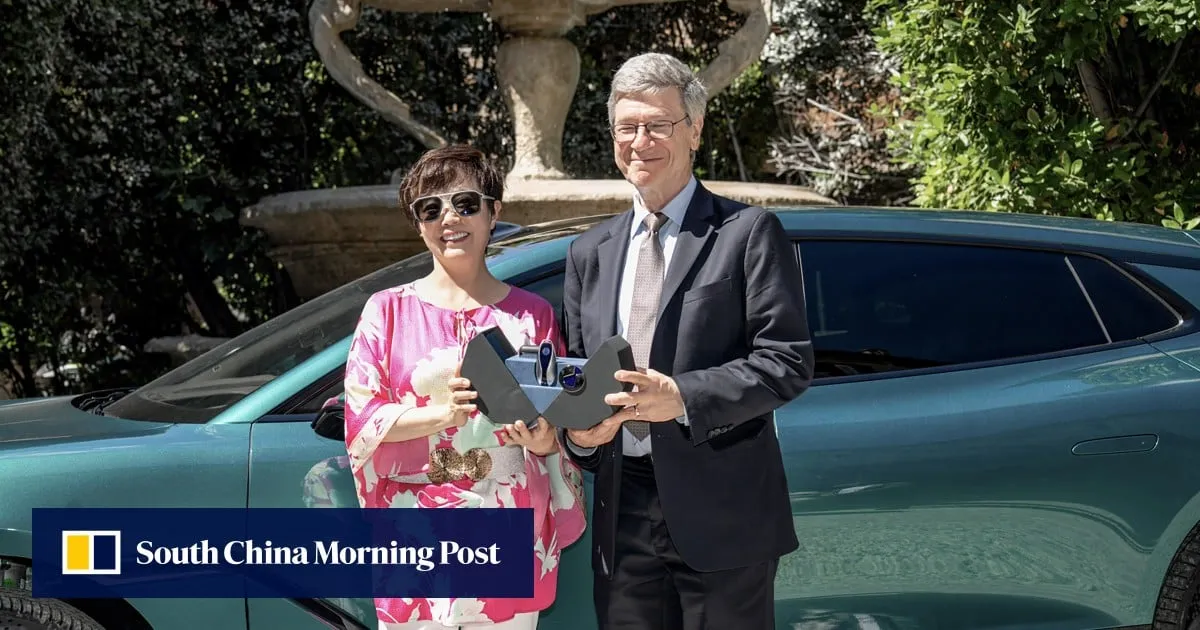
Prominent economist Jeffrey Sachs says he chose Hong Kong and Shenzhen as the final stop on an overland journey retracing the footsteps of Marco Polo because of their significant role in powering the world’s green and digital age.The Columbia University professor set off from Rome on June 13 for a 43-day, 15,000km (9,300-mile) journey, the Marco Polo Drive of Peace, Culture and Sustainable Development.The former adviser to the UN secretary general said the journey was designed to send a message of peace, connectivity and sustainable development through green technology, as well as to highlight the importance of the modern equivalent of the Silk Road.
SRCSouth China Morning Post
LANGEN
LEANCenter-Right
WORDS104
ENT10
FRI · 2026-07-10 · 14:03 GMTBRIEF NSR-2026-0710-92013
NSR-2026-0710-92013News Report·EN·Economic Impact
Hong Kong and Shenzhen the perfect end points for modern Silk Road: leading economist
Economist Jeffrey Sachs concluded his 43-day, 15,000km overland journey, the Marco Polo Drive of Peace, Culture and Sustainable Development, in Hong Kong and Shenzhen. He embarked on this trip from Rome on June 13.
Carol YangSouth China Morning PostFiled 2026-07-10 · 14:03 GMTLean · Center-RightRead · 1 min
South China Morning PostFIG 01
Reading time
1min
Word count
104words
Sources cited
1cited
Entities identified
10entities
Quality score
100%
§ 01
Briefing Summary
AI-generatedNEWSAR · AI
Economist Jeffrey Sachs concluded his 43-day, 15,000km overland journey, the Marco Polo Drive of Peace, Culture and Sustainable Development, in Hong Kong and Shenzhen. He embarked on this trip from Rome on June 13. Sachs selected these cities as the final destinations due to their crucial role in advancing the world's green and digital age. The journey aimed to promote messages of peace, connectivity, and sustainable development through green technology, emphasizing the significance of the modern Silk Road.
Confidence 0.85Sources 1Claims 4Entities 10
§ 02
Article analysis
Model · rule-basedFraming
Economic Impact
Human Interest
Tone
Measured
AI-assessed
CalmNeutralAlarmist
Factuality
0.60 / 1.00
Mixed
LowHigh
Sources cited
1
Limited
FewMany
§ 03
Key claims
4 extracted01
The journey highlighted the importance of the modern equivalent of the Silk Road.
quoteJeffrey Sachs
Confidence
1.00
02
The journey aimed to promote messages of peace, connectivity, and sustainable development through green technology.
quoteJeffrey Sachs
Confidence
1.00
03
Jeffrey Sachs undertook a 43-day, 15,000km journey from Rome called the Marco Polo Drive of Peace, Culture and Sustainable Development.
factualarticle
Confidence
1.00
04
Hong Kong and Shenzhen were chosen as the end points for a journey retracing the Silk Road due to their role in the green and digital age.
quoteJeffrey Sachs
Confidence
1.00
§ 04
Full report
1 min read · 104 words§ 05
Entities
10 identifiedKey playerOppositionContextPositiveNeutralNegative
People3
Locations5
§ 06
Keywords & salience
10 termsmodern silk road
1.00
sustainable development
0.90
green technology
0.80
digital age
0.70
connectivity
0.60
shenzhen
0.50
hong kong
0.50
marco polo
0.40
peace
0.40
jeffrey sachs
0.40
§ 07
Topic connections
Interactive graph No topic relationship data available yet. This graph will appear once topic relationships have been computed.