As the United States marks the 250th anniversary of its founding, it confronts a new world order dominated by its relationship with China. In this wide-ranging series, we examine the pressure points and possibilities in those ties, from hard tech to soft power. Here, Xinyi Wu examines how changes to Washington’s trade policy have reverberated through the formerly secure international economic order.When US President Donald Trump announced sweeping tariffs against virtually all Washington’s major trading partners in April of last year, some observers heard echoes of earlier eras in American history – much earlier.The Great Depression had just begun when former president Herbert Hoover signed the Smoot-Hawley Tariff Act, targeting more than 20,000 imported goods in June 1930 despite explicit warnings from over 1,000 economists.
SRCSouth China Morning Post
LANGEN
LEANCenter-Right
WORDS125
ENT10
FRI · 2026-07-10 · 22:00 GMTBRIEF NSR-2026-0711-92109
NSR-2026-0711-92109Analysis·EN·Economic Impact
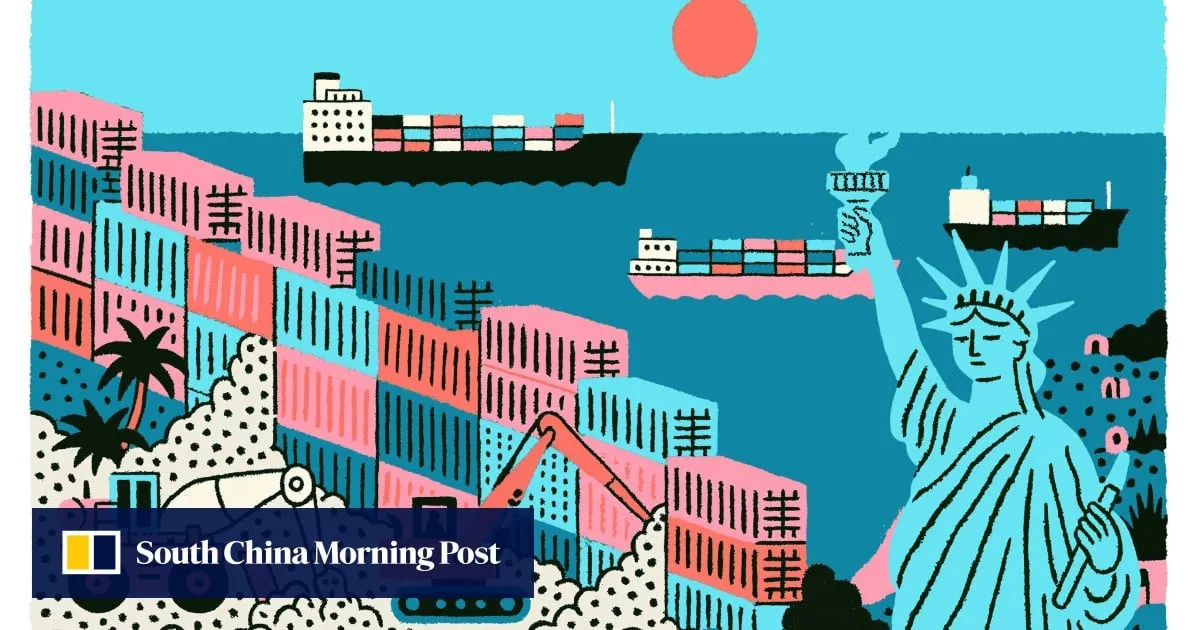
Trump built walls out of tariffs on ‘Liberation Day’. Has the US been boxed in?
As the United States approaches its 250th anniversary, its relationship with China is a dominant factor in the new world order. This article examines how changes in Washington's trade policy have impacted the international economic order.
Xinyi WuSouth China Morning PostFiled 2026-07-10 · 22:00 GMTLean · Center-RightRead · 1 min
South China Morning PostFIG 01
Reading time
1min
Word count
125words
Sources cited
1cited
Entities identified
10entities
Quality score
100%
§ 01
Briefing Summary
AI-generatedNEWSAR · AI
As the United States approaches its 250th anniversary, its relationship with China is a dominant factor in the new world order. This article examines how changes in Washington's trade policy have impacted the international economic order. Specifically, it references former President Donald Trump's announcement of sweeping tariffs against major trading partners in April of last year. This move drew comparisons to the Smoot-Hawley Tariff Act signed by President Herbert Hoover in June 1930, which targeted over 20,000 imported goods during the Great Depression, despite warnings from economists. The article suggests these trade policy shifts have created pressure points and possibilities in US-China ties, affecting areas from technology to soft power.
Confidence 0.85Sources 1Claims 5Entities 10
§ 02
Article analysis
Model · rule-basedFraming
Economic Impact
Diplomatic
Tone
Mixed Tone
AI-assessed
CalmNeutralAlarmist
Factuality
0.40 / 1.00
Mixed
LowHigh
Sources cited
1
Limited
FewMany
§ 03
Key claims
5 extracted01
The Smoot-Hawley Tariff Act was signed despite explicit warnings from over 1,000 economists.
factual
Confidence
0.90
02
The Great Depression had just begun when former president Herbert Hoover signed the Smoot-Hawley Tariff Act, targeting more than 20,000 imported goods in June 1930.
factual
Confidence
0.90
03
When US President Donald Trump announced sweeping tariffs against virtually all Washington’s major trading partners in April of last year, some observers heard echoes of earlier eras in American history.
factual
Confidence
0.90
04
The United States is marking the 250th anniversary of its founding and confronts a new world order dominated by its relationship with China.
factual
Confidence
0.90
05
Changes to Washington’s trade policy have reverberated through the formerly secure international economic order.
factualXinyi Wu
Confidence
0.80
§ 04
Full report
1 min read · 125 words§ 05
Entities
10 identifiedKey playerOppositionContextPositiveNeutralNegative
§ 06
Keywords & salience
8 termstrade policy
1.00
us-china relations
1.00
tariffs
0.90
international economic order
0.80
donald trump
0.70
smoot-hawley tariff act
0.60
great depression
0.50
new world order
0.40
§ 07
Topic connections
Interactive graph Network visualization showing 51 related topics
View Full Graph Person Organization Location Event|Click node to navigate|Edge numbers = shared articles