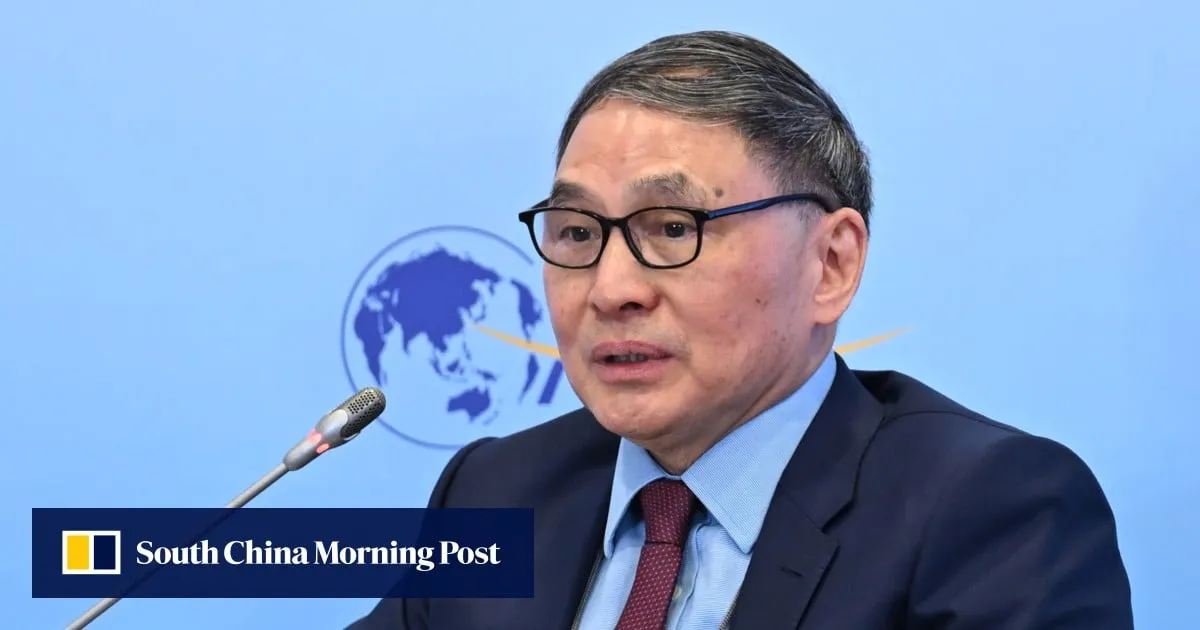
An “institutionalised” China-US G2 framework could offer a “structural guarantee” for global peace in a world beset by crises, a high-profile adviser to Beijing has said.Zheng Yongnian, a noted Chinese political scientist, said the world was faced with four intertwined challenges – geopolitical conflicts, increasingly “religionised” societies, imbalances in the global economy and the fading of the UN-centred governance system. He characterised this collective breakdown as a “crisis of modernity”.A pressing question was how to move beyond the US’ or European Union’s bilateral trade disputes with Beijing, to rebalance the global economy by having all three sides work together, Zheng told the Baichuan Forum in Shenzhen, southern China, on Saturday.
SRCSouth China Morning Post
LANGEN
LEANCenter-Right
WORDS110
ENT10
SAT · 2026-07-11 · 14:30 GMTBRIEF NSR-2026-0711-92255
NSR-2026-0711-92255News Report·EN·Diplomatic
Formal China-US G2 framework key to ‘guarantee’ world peace: top Beijing adviser
Zheng Yongnian, a prominent Chinese political scientist and adviser to Beijing, proposed that an institutionalized China-US G2 framework could provide a "structural guarantee" for global peace. Speaking at the Baichuan Forum in Shenzhen on Saturday, he identified four interconnected global challenges: geopolitical conflicts, increasingly "religionised" societies, global economic imbalances, and the weakening of the UN-centered governance system, which he termed a "crisis of modernity." Zheng suggested that addressing these issues requires cooperation between China, the US, and the EU to rebalance the global economy, moving beyond existing bilateral trade disputes.
Orange WangSouth China Morning PostFiled 2026-07-11 · 14:30 GMTLean · Center-RightRead · 1 min
South China Morning PostFIG 01
Reading time
1min
Word count
110words
Sources cited
1cited
Entities identified
10entities
Quality score
100%
§ 01
Briefing Summary
AI-generatedNEWSAR · AI
Zheng Yongnian, a prominent Chinese political scientist and adviser to Beijing, proposed that an institutionalized China-US G2 framework could provide a "structural guarantee" for global peace. Speaking at the Baichuan Forum in Shenzhen on Saturday, he identified four interconnected global challenges: geopolitical conflicts, increasingly "religionised" societies, global economic imbalances, and the weakening of the UN-centered governance system, which he termed a "crisis of modernity." Zheng suggested that addressing these issues requires cooperation between China, the US, and the EU to rebalance the global economy, moving beyond existing bilateral trade disputes.
Confidence 0.85Sources 1Claims 4Entities 10
§ 02
Article analysis
Model · rule-basedFraming
Diplomatic
Political Strategy
Tone
Measured
AI-assessed
CalmNeutralAlarmist
Factuality
0.30 / 1.00
Opinion-Heavy
LowHigh
Sources cited
1
Limited
FewMany
§ 03
Key claims
4 extracted01
Moving beyond US or EU bilateral trade disputes with Beijing is a pressing question to rebalance the global economy.
quoteZheng Yongnian
Confidence
1.00
02
The collective breakdown of global systems is characterised as a 'crisis of modernity'.
quoteZheng Yongnian
Confidence
1.00
03
The world is faced with four intertwined challenges: geopolitical conflicts, increasingly religionised societies, global economic imbalances, and the fading of the UN-centred governance system.
quoteZheng Yongnian
Confidence
1.00
04
An institutionalised China-US G2 framework could offer a structural guarantee for global peace.
quoteZheng Yongnian
Confidence
1.00
§ 04
Full report
1 min read · 110 words§ 05
Entities
10 identifiedKey playerOppositionContextPositiveNeutralNegative
§ 06
Keywords & salience
8 termschina-us g2 framework
1.00
world peace
0.90
global governance
0.80
crisis of modernity
0.70
global economy
0.60
geopolitical conflicts
0.60
un-centred governance
0.50
zheng yongnian
0.40
§ 07
Topic connections
Interactive graph Network visualization showing 5 related topics
View Full Graph Person Organization Location Event|Click node to navigate|Edge numbers = shared articles