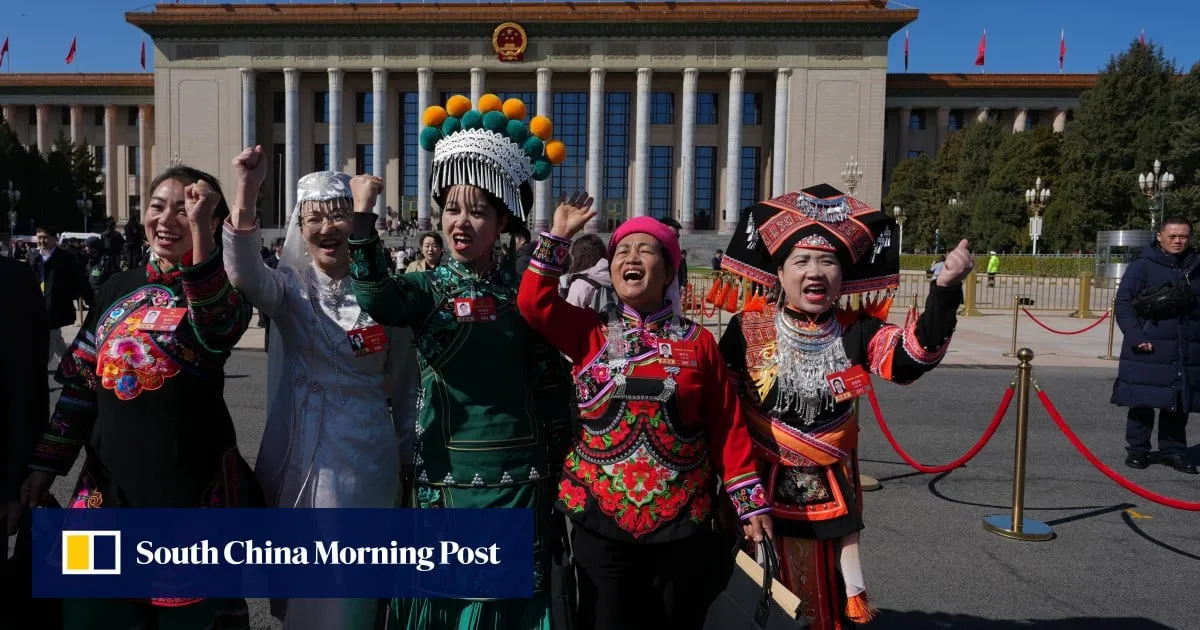
China’s new law on ethnic unity signals a shift in Beijing’s focus from handling specific ethnic matters to assimilation, according to a party ethnologist.However, it has triggered concerns from the United States and the European Union about forced assimilation and the potential for “extraterritorial application”.An article about the law published in the Beijing Daily on Monday sought to clarify the fundamental transition in China’s ethnic policy.“The enactment of the law means that the focus of China’s ethnic work is shifting from ‘transactional governance’ to ‘holistic governance’ focused on the building of the Chinese national community,” it said.The article was written by Chen Shanshan, an ethnologist from the Central Party School, the training ground for China’s senior officials. The school also forms part of a nationwide system that President Xi Jinping considers key to the ideological purity of the Communist Party.
SRCSouth China Morning Post
LANGEN
LEANCenter-Right
WORDS140
ENT10
SUN · 2026-07-12 · 10:00 GMTBRIEF NSR-2026-0712-92393
NSR-2026-0712-92393Analysis·EN·Political Strategy
Why China’s ethnic unity law marks shift in policy towards assimilation
China's new Law on Promoting Ethnic Unity and Progress, effective this month, signals a policy shift from managing specific ethnic issues to promoting assimilation, according to a party ethnologist. This law, described as providing a framework for "holistic governance" and building a Chinese national community, is seen by analysts as a move to counter Western ideological influence and mandate the assimilation of minority groups.
Alcott WeiSouth China Morning PostFiled 2026-07-12 · 10:00 GMTLean · Center-RightRead · 1 min
South China Morning PostFIG 01
Reading time
1min
Word count
140words
Sources cited
2cited
Entities identified
10entities
Quality score
100%
§ 01
Briefing Summary
AI-generatedNEWSAR · AI
China's new Law on Promoting Ethnic Unity and Progress, effective this month, signals a policy shift from managing specific ethnic issues to promoting assimilation, according to a party ethnologist. This law, described as providing a framework for "holistic governance" and building a Chinese national community, is seen by analysts as a move to counter Western ideological influence and mandate the assimilation of minority groups. The transition in ethnic policy has raised concerns from the United States and the European Union regarding potential forced assimilation and extraterritorial application. The law's implications were discussed in a Beijing Daily article authored by an ethnologist from the Central Party School, a key institution for senior officials and ideological purity.
Confidence 0.85Sources 2Claims 4Entities 10
§ 02
Article analysis
Model · rule-basedFraming
Political Strategy
Diplomatic
Tone
Measured
AI-assessed
CalmNeutralAlarmist
Factuality
0.40 / 1.00
Mixed
LowHigh
Sources cited
2
Limited
FewMany
§ 03
Key claims
4 extracted01
The enactment of the law means that the focus of China's ethnic work is shifting from 'transactional governance' to 'holistic governance' focused on the building of the Chinese national community.
quoteChen Shanshan, ethnologist from the Central Party School
Confidence
0.90
02
President Xi Jinping considers the Central Party School a key part of a nationwide system for the ideological purity of the Communist Party.
factualarticle
Confidence
0.80
03
China's new law on ethnic unity signals a shift in Beijing's focus from handling specific ethnic matters to assimilation.
quoteparty ethnologist
Confidence
0.80
04
The United States and the European Union have triggered concerns about forced assimilation and the potential for 'extraterritorial application' of the law.
factualarticle
Confidence
0.70
§ 04
Full report
1 min read · 140 words§ 05
Entities
10 identifiedKey playerOppositionContextPositiveNeutralNegative
Organizations4
§ 06
Keywords & salience
9 termsassimilation
1.00
ethnic unity law
1.00
china ethnic policy
0.90
holistic governance
0.80
transactional governance
0.70
chinese national community
0.60
forced assimilation
0.50
extraterritorial application
0.40
xi jinping
0.40
§ 07
Topic connections
Interactive graph No topic relationship data available yet. This graph will appear once topic relationships have been computed.