Shielding his eyes from the blinding midday sun, Abdullah, a Sudanese asylum seeker, gazes out at the expanse of green in Tŷ Mawr country park in north Wales.“This place is so beautiful,” he says. “It feels a very long way from the Home Office.”The park is on the banks of the River Dee in the Vale of Llangollen, part of an area of outstanding natural beauty (AONB). Sheep, pigs, goats and chickens speckle the stunning landscape.Abdullah is part of a group of dozens of asylum seekers, refugees and environmental volunteers working together to clear invasive Himalayan balsam from the riverbanks.It’s almost 30C, but he and his fellow weeders, all wearing thick gardening gloves, keep pulling up the plants. They are determined to clear the area they’re working on before most of them must return to their asylum accommodation in Liverpool later in the day.The trip is part of a series of quarterly climate action events, the result of a partnership between the charities Action Asylum and Asylum Link Merseyside, the North Wales Wildlife Trust and the Dee Trust.It’s unusual for the refugee and environment sectors to come together in this way, but Action Asylum and its partners have developed a model that works, boosting community cohesion at a time of attacks on asylum seekers and refugees, and improving the environment for everyone – through beach cleans, tree planting and habitat restoration.Action Asylum is a national project delivered by the Task Force Trust. Since 2020, it has brought people seeking asylum and local residents together through environmental volunteering.The charity has recently secured a £1.62m funding boost from the National Lottery’s climate action fund, and over the next three years, it will roll out new environmental programmes and expand into areas such as Sheffield, Newcastle and Bolton, adding to environmental projects under way in Leeds, Stockton-on-Tees, Portsmouth and elsewhere.During that time, it will work with more than 3,000 volunteers and run 120 large-scale climate action events across England and Wales.‘A long way from the Home Office.’ Solomon, Aliya, Abdullah and Doudou beside the River Dee. Photograph: Christopher Thomond/The GuardianOne of the initiative’s lead ambassadors, Jane, a refugee, said: “When you plant a tree, it does not matter who you are or where you came from. Your hands are in the soil, and you belong to the planet as a human being. We don’t just plant trees. We plant belonging, and we plant purpose.”Emma Leaper, the project director at Action Asylum, said: “This funding means we can do what we know works, bringing people together in nature, on a scale we’ve never been able to before.“For people seeking asylum, who often face many barriers to inclusion, being part of nature recovery and climate resilience isn’t just about volunteering. We’ve seen firsthand how working alongside others in nature can transform someone’s confidence and sense of self.”Jane added: “Planting trees is healing for me and healing for the land. It leaves a good footprint.”Solomon, from Ethiopia, said he was helping to clear the Himalyan balsam because he is concerned about the damage being done to the Earth. “I want to work with the soil to protect our environment,” he said.Gemma Rose, from the North Wales Wildlife Trust, was on hand to guide the volunteers as they moved along the riverbank, pulling out the balsam.“So many of the asylum seekers spend most of their time in hotels,” she said. “It’s great for them to come and help out at a place like this. I feel lucky to be involved with this project. It gives you a much better view of the world.”Part of the work the asylum seekers and other volunteers do is growing vegetables, including onions, potatoes, garlic and courgettes.For Abdullah, planting food so far from home in Sudan is a bittersweet experience.“I lived in a village in Darfur,” he said. “I loved the life in my village and used to plant things like onions and garlic there. My mother grew mangoes and lemons and chillies, which she sold in the market. But the life was difficult because of the war and everybody ran to different countries.“Planting things here reminds me of my country before we had to escape.”
SRCThe Guardian - World News
LANGEN
LEANCenter-Left
WORDS694
ENT12
SUN · 2026-07-12 · 13:00 GMTBRIEF NSR-2026-0712-92409
NSR-2026-0712-92409News Report·EN·Human Interest
‘We plant belonging’: how nature charities and asylum seekers work together in UK countryside
Environmental charities and asylum seeker support groups in the UK are collaborating on nature conservation projects, such as clearing invasive species and planting trees. These initiatives, like those run by Action Asylum, bring together asylum seekers, refugees, and local volunteers in areas of natural beauty across England and Wales.
Diane TaylorThe Guardian - World NewsFiled 2026-07-12 · 13:00 GMTLean · Center-LeftRead · 3 min
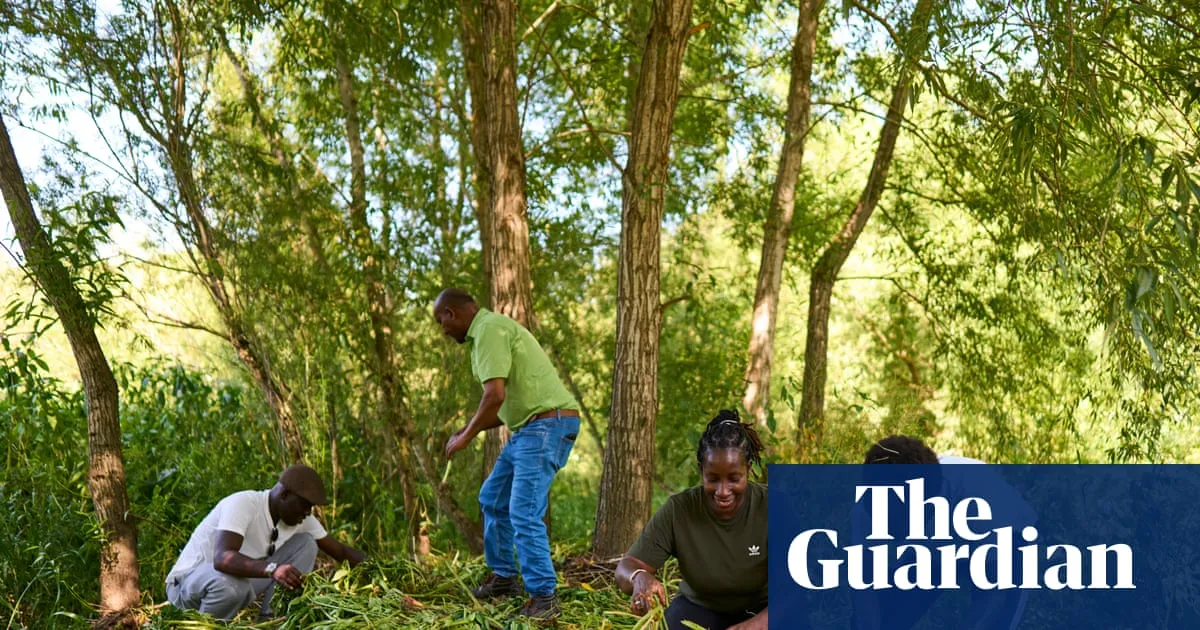
The Guardian - World NewsFIG 01
Reading time
3min
Word count
694words
Sources cited
4cited
Entities identified
12entities
Quality score
100%
§ 01
Briefing Summary
AI-generatedNEWSAR · AI
Environmental charities and asylum seeker support groups in the UK are collaborating on nature conservation projects, such as clearing invasive species and planting trees. These initiatives, like those run by Action Asylum, bring together asylum seekers, refugees, and local volunteers in areas of natural beauty across England and Wales. The partnerships aim to benefit both the environment and the participants, fostering community cohesion and providing a sense of purpose and belonging for asylum seekers. A recent £1.62m funding boost will allow Action Asylum to expand these programs to new regions and engage more volunteers over the next three years. Participants report that working in nature helps build confidence and provides a connection to the land, sometimes evoking memories of their homelands.
Confidence 0.90Sources 4Claims 5Entities 12
§ 02
Article analysis
Model · rule-basedFraming
Human Interest
Environmental
Tone
Measured
AI-assessed
CalmNeutralAlarmist
Factuality
0.70 / 1.00
Factual
LowHigh
Sources cited
4
Well sourced
FewMany
§ 03
Key claims
5 extracted01
Action Asylum has received £1.62m in funding from the National Lottery's climate action fund to expand its environmental programmes.
statistic
Confidence
1.00
02
The initiative is a partnership between charities Action Asylum, Asylum Link Merseyside, North Wales Wildlife Trust, and the Dee Trust.
factual
Confidence
1.00
03
Asylum seekers and environmental volunteers are working together in UK countryside parks to clear invasive species.
factual
Confidence
1.00
04
When you plant a tree, it does not matter who you are or where you came from; you belong to the planet as a human being.
quoteJane (refugee, lead ambassador)
Confidence
0.90
05
Working alongside others in nature can transform an asylum seeker's confidence and sense of self.
quoteEmma Leaper
Confidence
0.90
§ 04
Full report
3 min read · 694 words§ 05
Entities
12 identifiedKey playerOppositionContextPositiveNeutralNegative
Organizations5
Locations4
§ 06
Keywords & salience
10 termsasylum seekers
1.00
environmental volunteering
0.90
nature charities
0.80
community cohesion
0.70
habitat restoration
0.60
climate action
0.60
uk countryside
0.50
action asylum
0.50
belonging
0.40
refugees
0.40
§ 07
Topic connections
Interactive graph No topic relationship data available yet. This graph will appear once topic relationships have been computed.