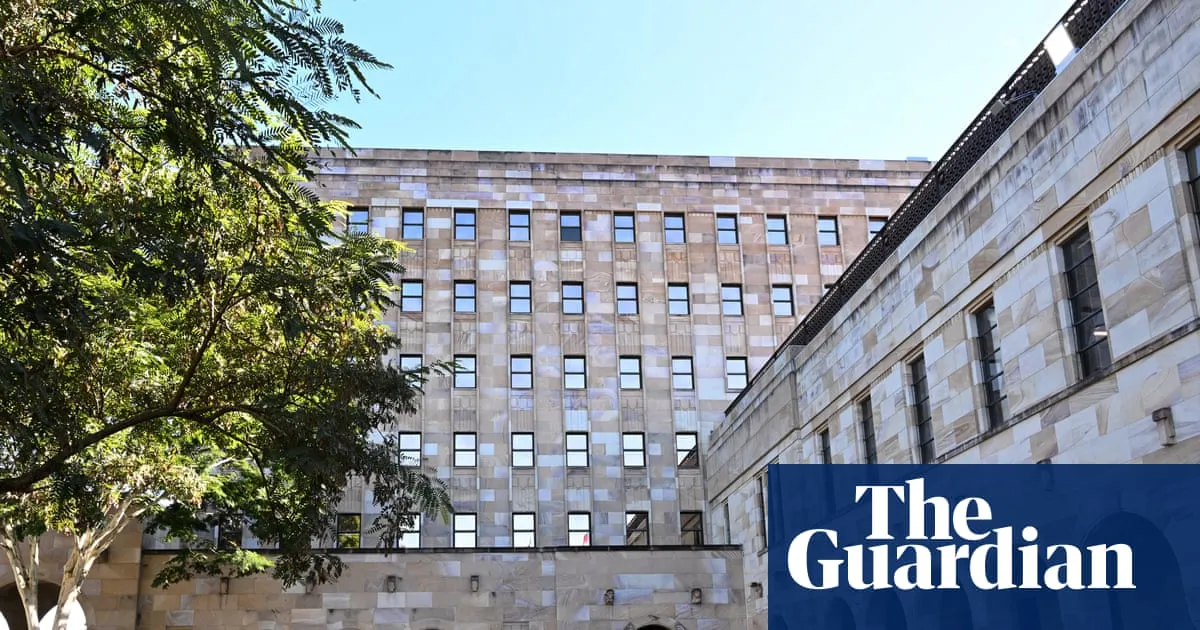
The antisemitism-and-social-cohesion" class="entity-link entity-event" data-entity-id="133402" data-entity-type="event">royal commission into antisemitism and social cohesion has heard that universities have not done enough to deal with antisemitic incidents on campus. Photograph: Darren England/AAP View image in fullscreen The antisemitism-and-social-cohesion" class="entity-link entity-event" data-entity-id="133402" data-entity-type="event">royal commission into antisemitism and social cohesion has heard that universities have not done enough to deal with antisemitic incidents on campus. Photograph: Darren England/AAP Universities not doing enough to deal with protests and ‘highly personal’ attacks, antisemitism royal commission hears Royal commission on antisemitism and social cohesion hears from professor whose office was occupied by protesters Follow our Australia news live blog for latest updates Get our breaking news email, free app or daily news podcast A Jewish professor has told the royal commission into antisemitism the University of Melbourne needs to show it doesn’t “tolerate misbehaviour” after the expulsion of two Palestine-student-activists" class="entity-link entity-person" data-entity-id="164763" data-entity-type="person">pro-Palestine student activists who occupied his office was overturned. Steven Prawer, a professor of physics, said on Tuesday that he had not known at the time if it was a “terrorist attack”. On 9 October 2024, 20 pro-Palestine students covered in keffiyehs, hoods and masks occupied Prawer’s office for about 90 minutes, protesting the university’s partnerships with the Hebrew University of Jerusalem. Prawer, a self-described Zionist who wears a kippah, is the academic lead for the universities’ joint PhD program. Two protesters were recommended for expulsion and two for suspension after the incident. “This was only one year after the atrocities in Israel and so I was very perturbed,” Prawer said. “I had no idea at that stage if it was a protest, if it was a terrorist attack.” Prawer described the protesters’ allegations that the university was complicit in genocide due to its partnerships with Israel as “ridiculous” and said the protest was a “highly personal attack”. “When there are 50 students on the lawn protesting and surrounded by security staff, they don’t pose an imminent threat to an individual,” he said. “When there are 20 students in an office with an individual, the equation is completely different.” Then vice-chancellor issued a statement to the university community saying he was “shocked and appalled”. After the students were disciplined in June, about 150 university employees and affiliates signed a petition maintaining sit-ins were a legitimate form of protest. The decision was overturned by the academic board after an appeal. Prawer said he still didn’t know the identity of the protesters, despite hiring a private investigator as he feared “Hamas connections”. “I think for my protection … I should know who these people are,” he said. “The community needs to hear loudly and clearly that the university tolerates dissent but it doesn’t tolerate misbehaviour … Where’s the deterrence?” After a university sit-in and the occupation of Prawer’s office, indoor protests at the University of Melbourne have been banned. The fourth block of royal commission hearings, taking place in Melbourne this week, is examining the lived experiences of Jewish students and academics, including the response of universities to combat hate. A University of Melbourne spokesperson described Prawer’s testimony as “powerful” and acknowledged the “significant impact” the incident had had on himself and his family. “The university is providing ongoing support to Professor Prawer and we uphold his right to pursue his academic endeavours and research partnerships without being harassed or intimidated,” they said. The interim vice-chancellor, Prof Glyn Davis, will appear before the commission on Wednesday. Tuesday’s witnesses also spoke of Jewish students fearing to attend university campuses in the aftermath of the 7 October Hamas terror attack. The president of the Australasian Union of Jewish Students (AUJS), Jeremy Suss, told the commissioner he was often “trying to console” undergraduates who had arrived on campuses with a “strong sense of apprehension” because of antisemitic incidents reported in the media and via word of mouth. Suss attends Monash University and said he had a “productive relationship” with the chancellery but wasn’t immune to hostility on campus. He pointed to a Jewish event for the Sukkot holiday on the anniversary of 7 October. Afterwards, he said, four individuals approached him and began “quite aggressively” interrogating him, including talking about “killing or exiling all of Israel’s population” and saying “we see all of you at your lunches every week”. “I found it incredibly confronting … I ensured members at our AUJS events were no longer packing up on their own,” he said. “It is a new constant task to be walking students through the difficult processes of following up from their awful experiences on campus. “Universities have not dealt with incidents in a productive or meaningful way. We have many students that have waited months to hear back [about] incidents. Sometimes they are outwardly dismissed … Sometimes they never hear back.” Author, activist and academic Prof Dennis Altman criticised universities for what he described as moving to “shut down discussion” on Israel-Palestine, adding the best path forward was to build bridges between Jewish and Palestinian communities. He told the commissioner he was more afraid of “neo-Nazis” than pro-Palestine protesters. He said the biggest problem universities had was “they have actually not found ways of encouraging … respectful debate”. “The tendency has been the opposite. It’s been to shut down discussion. And that I think in turn promotes all sorts of conspiratorial stories,” he said. “What we most need in this country at the moment on this issue is a mutual recognition that people are hurting. social cohesion demands that all groups come out of their narrow focus and reach across.” Explore more on these topics Royal commission on antisemitism and social cohesion antisemitism Australian universities Australian education Higher education Israel-Gaza war news Share Reuse this content
SRCThe Guardian - World News
LANGEN
LEANCenter-Left
WORDS935
ENT10
TUE · 2026-07-14 · 04:56 GMTBRIEF NSR-2026-0714-92837
NSR-2026-0714-92837News Report·EN·Legal & Judicial
Universities not doing enough to deal with protests and ‘highly personal’ attacks, antisemitism royal commission hears
A Jewish professor, Steven Prawer, testified before the royal commission into antisemitism and social cohesion, stating the University of Melbourne needs to demonstrate it does not tolerate misbehavior. This follows the overturning of expulsions for two pro-Palestine students who occupied his office in October 2024 to protest university partnerships with the Hebrew University of Jerusalem.
Caitlin CassidyThe Guardian - World NewsFiled 2026-07-14 · 04:56 GMTLean · Center-LeftRead · 4 min
The Guardian - World NewsFIG 01
Reading time
4min
Word count
935words
Sources cited
2cited
Entities identified
10entities
Quality score
100%
§ 01
Briefing Summary
AI-generatedNEWSAR · AI
A Jewish professor, Steven Prawer, testified before the royal commission into antisemitism and social cohesion, stating the University of Melbourne needs to demonstrate it does not tolerate misbehavior. This follows the overturning of expulsions for two pro-Palestine students who occupied his office in October 2024 to protest university partnerships with the Hebrew University of Jerusalem. Prawer described the occupation as a "highly personal attack" and expressed concern for his safety, stating he initially feared it could be a "terrorist attack." The Australasian Union of Jewish Students also reported that universities have not dealt with antisemitic incidents productively, with students experiencing delays in responses and hostility on campus. The university acknowledged Prawer's testimony and stated it provides him with ongoing support.
Confidence 0.90Sources 2Claims 5Entities 10
§ 02
Article analysis
Model · rule-basedFraming
Legal & Judicial
Conflict
Tone
Mixed Tone
AI-assessed
CalmNeutralAlarmist
Factuality
0.60 / 1.00
Mixed
LowHigh
Sources cited
2
Limited
FewMany
§ 03
Key claims
5 extracted01
A Jewish professor stated he had not known at the time if the office occupation was a 'terrorist attack'.
quoteSteven Prawer
Confidence
1.00
02
Indoor protests at the University of Melbourne have been banned following a university sit-in and the occupation of Prawer’s office.
factualArticle
Confidence
0.90
03
The expulsion of two pro-Palestine student activists who occupied a professor's office was overturned by the academic board after an appeal.
factualArticle
Confidence
0.90
04
Universities have not done enough to deal with antisemitic incidents on campus, a royal commission has heard.
factualRoyal commission into antisemitism and social cohesion
Confidence
0.90
05
The professor fears 'Hamas connections' and hired a private investigator to identify the protesters for his protection.
factualSteven Prawer
Confidence
0.80
§ 04
Full report
4 min read · 935 words§ 05
Entities
10 identifiedKey playerOppositionContextPositiveNeutralNegative
Organizations2
§ 06
Keywords & salience
8 termsantisemitism
1.00
royal commission
0.90
university protests
0.80
social cohesion
0.70
campus incidents
0.60
personal attacks
0.50
academic freedom
0.40
student activism
0.40
§ 07
Topic connections
Interactive graph No topic relationship data available yet. This graph will appear once topic relationships have been computed.