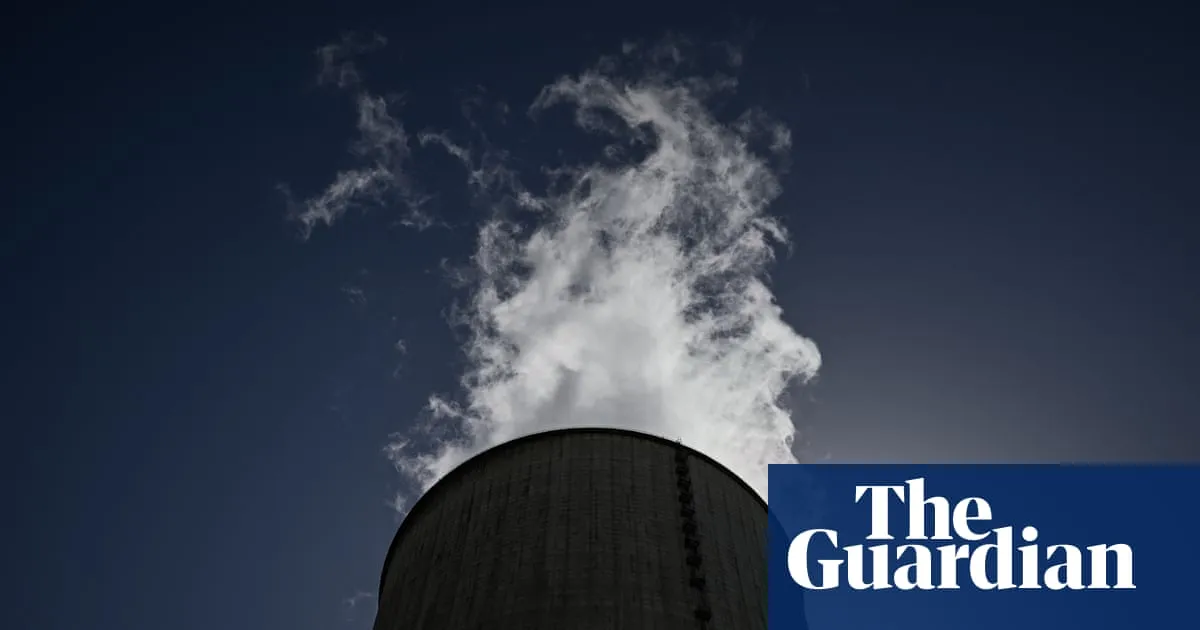
Electricity prices and energy policy remain politically contentious, with the Coalition abandoning a target of reaching net zero greenhouse gas emissions by 2050. Photograph: Philippe Lopez/AFP/Getty Images View image in fullscreen Electricity prices and energy policy remain politically contentious, with the Coalition abandoning a target of reaching net zero greenhouse gas emissions by 2050. Photograph: Philippe Lopez/AFP/Getty Images Coalition and One Nation’s plan to ditch net zero would not lower power prices, CSIRO report finds GenCost report contradicts parties’ claims about abandoning emissions target, and finds nuclear would be most expensive way to generate power Follow our Australia news live blog for latest updates Get our breaking news email, free app or daily news podcast Claims by the Coalition and One Nation that abandoning a net zero climate target would bring down power prices are contradicted in a new CSIRO report on the costs of generating electricity. Generation costs will probably rise after 2030 regardless of Australia’s policy on net zero, according to the CSIRO’s annual GenCost report, but prices should then stabilise at levels below recent price spikes. The report concludes electricity from nuclear plants, which the Coalition and One Nation promote, would be the most expensive way to generate electricity among the current options. A boom in power-hungry datacentres in the United States was driving up the costs of gas turbines, the report said, while batteries were replacing the role of gas in providing electricity during evening peaks in Australia. GenCost is CSIRO’s annual release of the comparative costs of electricity generation technologies and how they could change in the coming years and decades. Electricity prices and energy policy remain politically contentious, with the Coalition abandoning a target of reaching net zero greenhouse gas emissions by 2050. One Nation, which is polling close to Labor and above the Coalition, rejects climate change science and would abandon the Paris Agreement and any net zero targets. Paul Graham, CSIRO chief energy economist and the report’s lead author, said: “If we abandon net zero, that does not open up some low-cost pathway [for electricity]. “As coal retires, you have to replace it. If that new thing is coal, we still have the same costs [of electricity generation] as we are expecting if we replace it with renewables.” He said if coal plant closures were delayed or new coal plants built, this would mean an increase in greenhouse gas emissions in the electricity sector. “If you do want to reach net zero then you have to do that abatement somewhere else,” he said. “The analysis shows the cost of abatement is lower in the electricity sector than the rest of the economy.” The wholesale price of electricity only accounts for about 33% of a retail electricity bill. Transmitting electricity through high voltage power lines and towers makes up 7%, with 34% from the local distribution through poles and wires. Costs of metering, retail charges and government programs make up the rest. Wholesale prices across the National Electricity Market – covering all regions except WA and NT – peaked at $189 per megawatt hour in 2022 but dropped to $104 in 2025, the report said. Graham said analysis of electricity contracts agreed between generators and customers suggested prices would probably stay below $100 per MWh for the coming years but, as coal plants retired and new generation was built, this would see wholesale prices rise. Prices by 2050 would depend on the amount of renewables in the system, the cost of fuels and climate policy choices, but in all cases the wholesale electricity costs were likely above $120 per MWh. The highest costs were in scenarios that included nuclear power. “We consistently find that nuclear is the most expensive option for electricity generation in Australia,” he said. “Even when we base our costs on South Korea’s very efficient deployment of nuclear, we still can’t see that it can be competitive relative to the other options that we have. “We have been tracking electricity costs for eight years and the market still surprises us,” he said. “We are still delivering cost reductions in solar and batteries when the world is really unstable. It has made Australia far more resilient than a lot of people appreciate.” Explore more on these topics Energy Renewable energy CSIRO Solar power Nuclear power news Share Reuse this content
SRCThe Guardian - World News
LANGEN
LEANCenter-Left
WORDS719
ENT10
TUE · 2026-07-14 · 14:01 GMTBRIEF NSR-2026-0714-92975
NSR-2026-0714-92975News Report·EN·Economic Impact
Coalition and One Nation’s plan to ditch net zero would not lower power prices, CSIRO report finds
A new CSIRO GenCost report contradicts claims by the Coalition and One Nation that abandoning net zero targets would lower Australian power prices. The report indicates that electricity generation costs are likely to rise after 2030 regardless of net zero policy, but should then stabilize below recent peaks.
Graham Readfearn Environment and climate correspondentThe Guardian - World NewsFiled 2026-07-14 · 14:01 GMTLean · Center-LeftRead · 3 min
The Guardian - World NewsFIG 01
Reading time
3min
Word count
719words
Sources cited
2cited
Entities identified
10entities
Quality score
100%
§ 01
Briefing Summary
AI-generatedNEWSAR · AI
A new CSIRO GenCost report contradicts claims by the Coalition and One Nation that abandoning net zero targets would lower Australian power prices. The report indicates that electricity generation costs are likely to rise after 2030 regardless of net zero policy, but should then stabilize below recent peaks. It also finds that nuclear power would be the most expensive option for electricity generation in Australia. The CSIRO's lead energy economist stated that abandoning net zero would not lead to lower costs, as retiring coal plants still require replacement generation. Wholesale electricity prices are projected to remain below $100 per MWh in the coming years but will likely exceed $120 per MWh by 2050, with nuclear power scenarios showing the highest costs.
Confidence 0.90Sources 2Claims 5Entities 10
§ 02
Article analysis
Model · rule-basedFraming
Economic Impact
Political Strategy
Tone
Measured
AI-assessed
CalmNeutralAlarmist
Factuality
0.80 / 1.00
Factual
LowHigh
Sources cited
2
Limited
FewMany
§ 03
Key claims
5 extracted01
The wholesale price of electricity only accounts for about 33% of a retail electricity bill.
statisticarticle
Confidence
1.00
02
Abandoning net zero does not open up a low-cost pathway for electricity.
quotePaul Graham, CSIRO chief energy economist
Confidence
1.00
03
Electricity from nuclear plants would be the most expensive way to generate electricity among current options.
factualCSIRO GenCost report
Confidence
1.00
04
Generation costs will probably rise after 2030 regardless of Australia’s policy on net zero.
factualCSIRO GenCost report
Confidence
1.00
05
Coalition and One Nation’s plan to ditch net zero would not lower power prices.
factualCSIRO GenCost report
Confidence
1.00
§ 04
Full report
3 min read · 719 words§ 05
Entities
10 identifiedKey playerOppositionContextPositiveNeutralNegative
People1
Organizations4
§ 06
Keywords & salience
10 termselectricity prices
1.00
csiro report
1.00
net zero
1.00
energy policy
0.90
nuclear power
0.80
gencost report
0.70
one nation
0.60
coalition
0.60
climate change
0.50
electricity generation
0.40
§ 07
Topic connections
Interactive graph Network visualization showing 8 related topics
View Full Graph Person Organization Location Event|Click node to navigate|Edge numbers = shared articles