China’s successful recovery of a reusable rocket has sparked debate among aerospace experts over whether its unconventional approach could actually cut the cost of reaching space.On Friday, the country’s Long March-10B became the first orbital-class rocket outside the United States to return to Earth and be recovered intact. The rocket’s first-stage booster deployed four hooks as it descended and was then caught by a giant net on a ship waiting in the China-sea" class="entity-link entity-location" data-entity-id="8346" data-entity-type="location">South China Sea.SpaceX and Blue Origin do not use nets – they use what is known as landing legs to recover their reusable boosters.
SRCSouth China Morning Post
LANGEN
LEANCenter-Right
WORDS96
ENT8
TUE · 2026-07-14 · 15:00 GMTBRIEF NSR-2026-0714-92989
NSR-2026-0714-92989News Report·EN·Technology
China used a giant net to land a reusable rocket. Does the idea have legs?
China successfully recovered its Long March-10B rocket's first-stage booster on Friday, marking the first time an orbital-class rocket outside the United States has been recovered intact. The booster deployed hooks and was caught by a giant net deployed from a ship in the South China Sea.
Ling XinSouth China Morning PostFiled 2026-07-14 · 15:00 GMTLean · Center-RightRead · 1 min
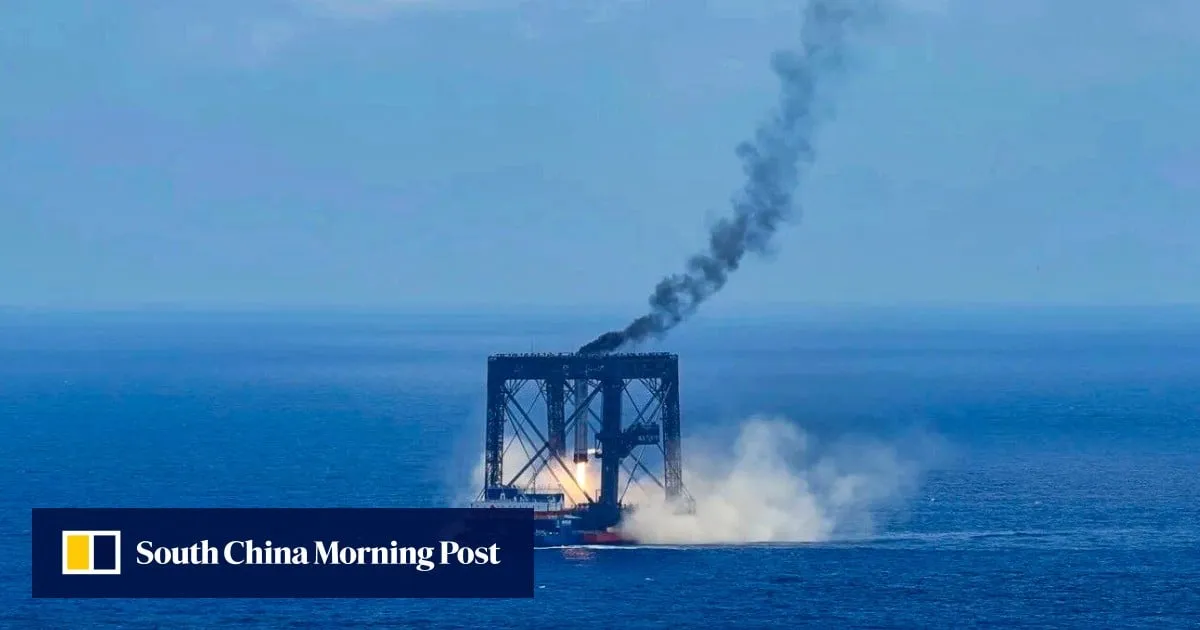
South China Morning PostFIG 01
Reading time
1min
Word count
96words
Sources cited
2cited
Entities identified
8entities
Quality score
100%
§ 01
Briefing Summary
AI-generatedNEWSAR · AI
China successfully recovered its Long March-10B rocket's first-stage booster on Friday, marking the first time an orbital-class rocket outside the United States has been recovered intact. The booster deployed hooks and was caught by a giant net deployed from a ship in the South China Sea. This unconventional recovery method has prompted debate among aerospace experts regarding its potential to reduce the cost of space access. Unlike SpaceX and Blue Origin, which utilize landing legs for booster recovery, China's approach employs a net system.
Confidence 0.85Sources 2Claims 4Entities 8
§ 02
Article analysis
Model · rule-basedFraming
Technology
Economic Impact
Tone
Measured
AI-assessed
CalmNeutralAlarmist
Factuality
0.70 / 1.00
Factual
LowHigh
Sources cited
2
Limited
FewMany
§ 03
Key claims
4 extracted01
SpaceX and Blue Origin use landing legs to recover their reusable boosters, not nets.
factualarticle
Confidence
1.00
02
The rocket's first-stage booster deployed four hooks as it descended and was caught by a net on a ship.
factualarticle
Confidence
1.00
03
China's Long March-10B became the first orbital-class rocket outside the US to be recovered intact.
factualarticle
Confidence
1.00
04
The unconventional approach could cut the cost of reaching space.
quoteaerospace experts
Confidence
0.80
§ 04
Full report
1 min read · 96 words§ 05
Entities
8 identifiedKey playerOppositionContextPositiveNeutralNegative
Organizations2
§ 06
Keywords & salience
8 termsreusable rocket
1.00
rocket recovery
0.90
landing net
0.80
space exploration
0.70
cost reduction
0.60
long march-10b
0.50
aerospace experts
0.40
south china sea
0.40
§ 07
Topic connections
Interactive graph No topic relationship data available yet. This graph will appear once topic relationships have been computed.