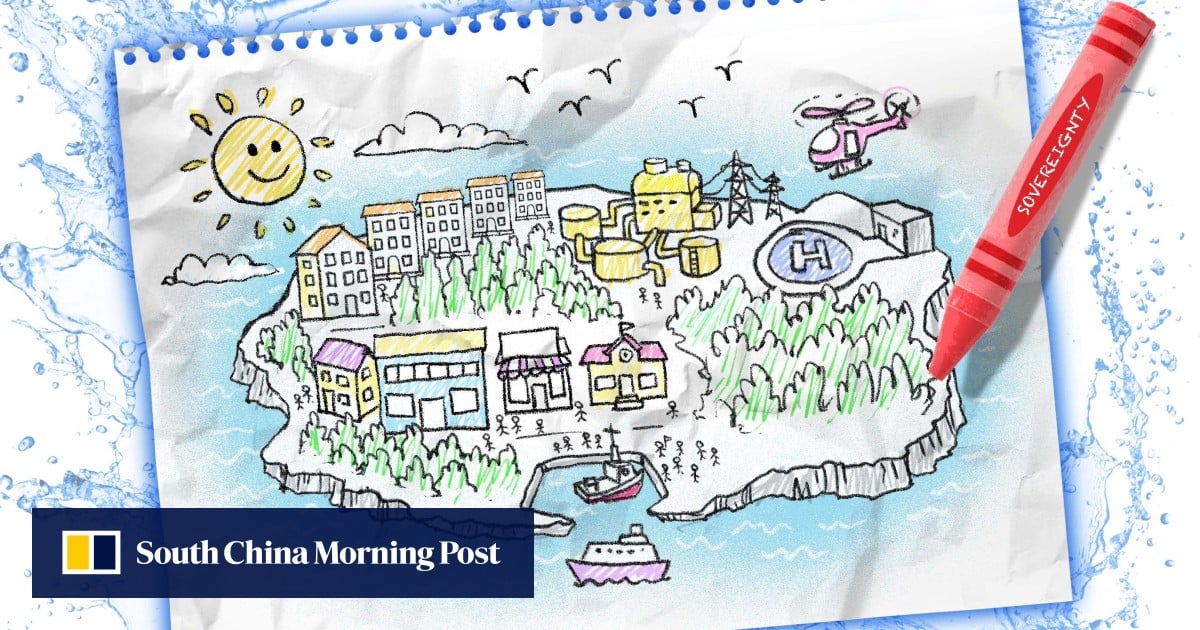
A decade after Beijing rejected the ruling by The Hague’s Permanent Court of Arbitration on its South China Sea claims, rival nations continue to manoeuvre for control. In the third of our series on the anniversary, Laura Zhou looks at why the gap between international law and geopolitical reality on the water has never been wider.On a scorching morning this summer, more than a hundred Chinese tourists stepped ashore on Tree Island in the hotly contested Paracels.They were greeted not only by blue skies and turquoise waters, but also a sprawling array of modern infrastructure: gardens, two-storey houses and air-conditioned government offices to handle the administration of the island and some of those nearby.
SRCSouth China Morning Post
LANGEN
LEANCenter-Right
WORDS114
ENT7
TUE · 2026-07-14 · 22:00 GMTBRIEF NSR-2026-0715-93074
NSR-2026-0715-93074News Report·EN·Political Strategy
How Beijing’s islands of control are reshaping the South China Sea
A decade after rejecting an international arbitration ruling on its South China Sea claims, China continues to assert control over disputed islands. This article highlights the widening gap between international law and geopolitical realities in the region.
Laura ZhouSouth China Morning PostFiled 2026-07-14 · 22:00 GMTLean · Center-RightRead · 1 min
South China Morning PostFIG 01
Reading time
1min
Word count
114words
Sources cited
0cited
Entities identified
7entities
Quality score
100%
§ 01
Briefing Summary
AI-generatedNEWSAR · AI
A decade after rejecting an international arbitration ruling on its South China Sea claims, China continues to assert control over disputed islands. This article highlights the widening gap between international law and geopolitical realities in the region. Recently, over a hundred Chinese tourists visited Tree Island in the Paracels, a contested area. They were met with significant modern infrastructure, including housing and government offices, indicating China's ongoing administrative development of these islands. This development underscores the ongoing maneuvering for control by rival nations in the South China Sea.
Confidence 0.85Claims 4Entities 7
§ 02
Article analysis
Model · rule-basedFraming
Political Strategy
Conflict
Tone
Mixed Tone
AI-assessed
CalmNeutralAlarmist
Factuality
0.70 / 1.00
Factual
LowHigh
Sources cited
0
No named sources
FewMany
§ 03
Key claims
4 extracted01
China has developed modern infrastructure on Tree Island, including gardens, houses, and government offices.
factual
Confidence
1.00
02
Beijing rejected The Hague's Permanent Court of Arbitration ruling on its South China Sea claims a decade ago.
factual
Confidence
1.00
03
Rival nations continue to manoeuvre for control in the South China Sea.
factual
Confidence
0.90
04
The gap between international law and geopolitical reality in the South China Sea has never been wider.
factual
Confidence
0.80
§ 04
Full report
1 min read · 114 words§ 05
Entities
7 identifiedKey playerOppositionContextPositiveNeutralNegative
Organizations1
§ 06
Keywords & salience
8 termssouth china sea
1.00
islands of control
0.90
international law
0.80
geopolitical reality
0.70
permanent court of arbitration
0.60
paracels
0.50
rival nations
0.50
infrastructure
0.40
§ 07
Topic connections
Interactive graph Network visualization showing 51 related topics
View Full Graph Person Organization Location Event|Click node to navigate|Edge numbers = shared articles