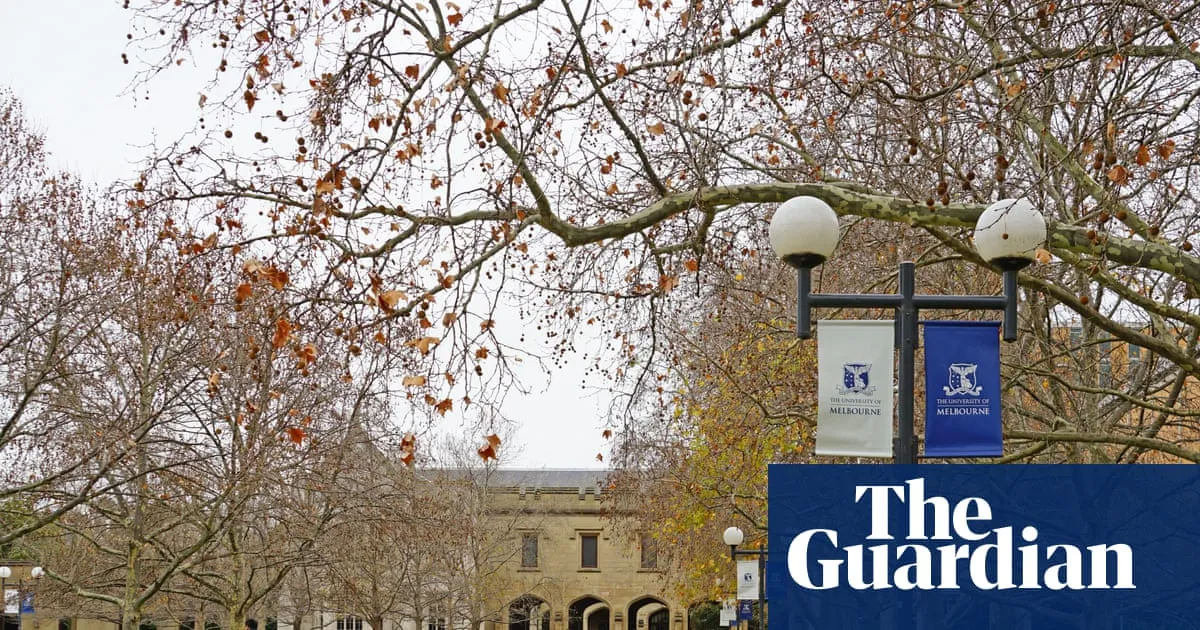
The University of Melbourne’s interim vice-chancellor told the royal commission into antisemitism that pro-Palestine sit-ins on campus led to the institution ‘quite sharply’ changing its response to protests. Photograph: EQRoy/Alamy View image in fullscreen The University of Melbourne’s interim vice-chancellor told the royal commission into antisemitism that pro-Palestine sit-ins on campus led to the institution ‘quite sharply’ changing its response to protests. Photograph: EQRoy/Alamy University of Melbourne ‘sharply’ changed protest policies after pro-Palestine sit-ins, commission hears Royal commission into antisemitism and social cohesion hears of response of universities to incidents on campus Follow our Australia news live blog for latest updates Get our breaking news email, free app or daily news podcast The interim vice-chancellor of the University of Melbourne (UoM) says pro-Palestine sit-ins on campus led to the institution “quite sharply” changing its protest policies and that further restrictions could arise. Prof Glyn Davis appeared before the Royal commission into antisemitism and social cohesion on Wednesday, which is examining the lived experiences of Jewish students and academics, including the response of universities. Davis was asked whether he agreed that a pro-Palestine encampment established in 2024, which called for the UoM to cut ties with Israel and weapons companies, created “fear and unsafety” among staff and students. He said he did, and there were “regular discussions” about the camp with Victoria police, who maintained unless a law was broken they would not intervene. “The encampment on the South Lawn, it was judged, did not override any of those concerns and therefore the university would not seek action against the encampment,” he said. “That came at the end of a profound policy discussion.” Davis said the university’s aim “at every point” was to end the protests without violence. “We had all seen what happened in the United States and in other places where these things had gone terribly wrong,” he said. “Nobody wants a confrontation.” Davis confirmed misconduct including “heckling and harassment” occurred during the encampment but the incidents were “not claimed to be antisemitic” and didn’t breach the UoM’s racism policy. He said the situation escalated after a sit-in at the UoM’s Arts West building in May 2024 and the occupation of Jewish physics professor Steven Prawer’s office months later in October. On Tuesday, the commissioner heard from Prawer, who said the university needed to show it didn’t “tolerate misbehaviour” after the expulsion of two students who were part of an occupation of his office was overturned. Prawer also said the identity of his protesters should be revealed for his “protection”. Davis said the atmosphere on campus “changed dramatically” after the incidents and the university’s response to protests also altered “quite sharply”. UoM has prohibited outsiders from protesting on campus, banned camping onsite and protesting indoors. Students or staff who breach the new rules risk disciplinary action including suspension or expulsion. Last year, the state’s deputy information commissioner found the UoM breached Victoria’s Privacy and Data Protection Act when it used its wifi network to surveil students and staff holding the sit-in. Davis said the university had revisited its wifi policies and was now providing clear warning when it was being used and for what purpose. Davis flagged further reforms to the UoM’s rules on postering could be on the way, following a request from Prawer to identify organisations or individuals who authored posters, after offensive material was distributed around campus and in his office. Davis said it “beggared belief” an academic could be treated how Prawer was, and whether to require author identification on posters was a “dilemma” that hadn’t been settled. “There’s an assumption that we will make a series of policy changes in the light of this royal commission and the other things that are under way,” he said. “If you’re not prepared to put your name to a statement, I don’t think academic or freedom of speech applies.” But he disagreed that the identity of the 20 protesters who occupied Prawer’s office should be revealed, lest it “make a stain on the rest of their lives”. Davis appeared alongside the University of Sydney and University of New South Wales vice-chancellors on Wednesday. The higher education sector has been in the spotlight since 2024, first with a parliamentary inquiry into antisemitism at Australian universities which recommended universities adopt a definition of antisemitism that “closely aligns” with the International Holocaust Remembrance Alliance definition. After the Bondi beach terror attack last year, the federal government also established an antisemitism education taskforce and backed the special envoy Jillian Segal’s plan to combat antisemitism, which included specific actions for the university sector. Key to the plan was a report card grading universities on their response to antisemitism and how well they deal with protests. The National Tertiary Education Union’s UoM branch president, David Gonzalez, said Jewish students and staff had an “absolute right to be safe” which should not be “negotiable”. “But neither should academic freedom,” he said on Wednesday. “Antisemitism is real and must be taken seriously. It is precisely because it is serious that the term must not be stretched into a political weapon used to silence criticism of a state or its military conduct. “The answer to harassment is to address harassment. The answer to discrimination is to address discrimination. It is not to give university management sweeping new powers to police political thought.” Explore more on these topics Royal commission on antisemitism and social cohesion Antisemitism Australian universities Australian education Higher education Israel-Gaza war Race news Share Reuse this content
SRCThe Guardian - World News
LANGEN
LEANCenter-Left
WORDS913
ENT8
WED · 2026-07-15 · 05:14 GMTBRIEF NSR-2026-0715-93112
NSR-2026-0715-93112News Report·EN·Social Justice
University of Melbourne ‘sharply’ changed protest policies after pro-Palestine sit-ins, commission hears
The University of Melbourne (UoM) significantly altered its protest policies following pro-Palestine sit-ins, according to interim vice-chancellor Professor Glyn Davis. Appearing before a royal commission into antisemitism and social cohesion, Davis stated that incidents, including a pro-Palestine encampment and the occupation of a professor's office, led to a "quite sharp" change in the university's response.
Caitlin CassidyThe Guardian - World NewsFiled 2026-07-15 · 05:14 GMTLean · Center-LeftRead · 4 min
The Guardian - World NewsFIG 01
Reading time
4min
Word count
913words
Sources cited
2cited
Entities identified
8entities
Quality score
100%
§ 01
Briefing Summary
AI-generatedNEWSAR · AI
The University of Melbourne (UoM) significantly altered its protest policies following pro-Palestine sit-ins, according to interim vice-chancellor Professor Glyn Davis. Appearing before a royal commission into antisemitism and social cohesion, Davis stated that incidents, including a pro-Palestine encampment and the occupation of a professor's office, led to a "quite sharp" change in the university's response. While acknowledging misconduct like heckling and harassment occurred, Davis noted these were not claimed to be antisemitic. The UoM has since prohibited outsiders from protesting on campus, banned camping, and restricted indoor protests, with breaches risking disciplinary action. Further policy changes regarding poster authorship are also being considered.
Confidence 0.90Sources 2Claims 5Entities 8
§ 02
Article analysis
Model · rule-basedFraming
Social Justice
Legal & Judicial
Tone
Measured
AI-assessed
CalmNeutralAlarmist
Factuality
0.70 / 1.00
Factual
LowHigh
Sources cited
2
Limited
FewMany
§ 03
Key claims
5 extracted01
The university's aim was to end protests without violence, citing examples from the United States.
quoteUniversity of Melbourne interim vice-chancellor
Confidence
1.00
02
Misconduct including 'heckling and harassment' occurred during the encampment but was not claimed to be antisemitic.
quoteUniversity of Melbourne interim vice-chancellor
Confidence
1.00
03
The University of Melbourne's interim vice-chancellor stated that pro-Palestine encampments created 'fear and unsafety' among staff and students.
quoteUniversity of Melbourne interim vice-chancellor
Confidence
1.00
04
Pro-Palestine sit-ins led the University of Melbourne to 'sharply' change its protest policies.
quoteUniversity of Melbourne interim vice-chancellor
Confidence
1.00
05
University of Melbourne has prohibited outsiders from protesting on campus.
factualUniversity of Melbourne
Confidence
0.90
§ 04
Full report
4 min read · 913 words§ 05
Entities
8 identifiedKey playerOppositionContextPositiveNeutralNegative
§ 06
Keywords & salience
8 termspro-palestine sit-ins
1.00
protest policies
1.00
royal commission into antisemitism
0.90
university of melbourne
0.80
campus protests
0.70
social cohesion
0.60
university response
0.50
jewish students
0.40
§ 07
Topic connections
Interactive graph Network visualization showing 3 related topics
View Full Graph Person Organization Location Event|Click node to navigate|Edge numbers = shared articles