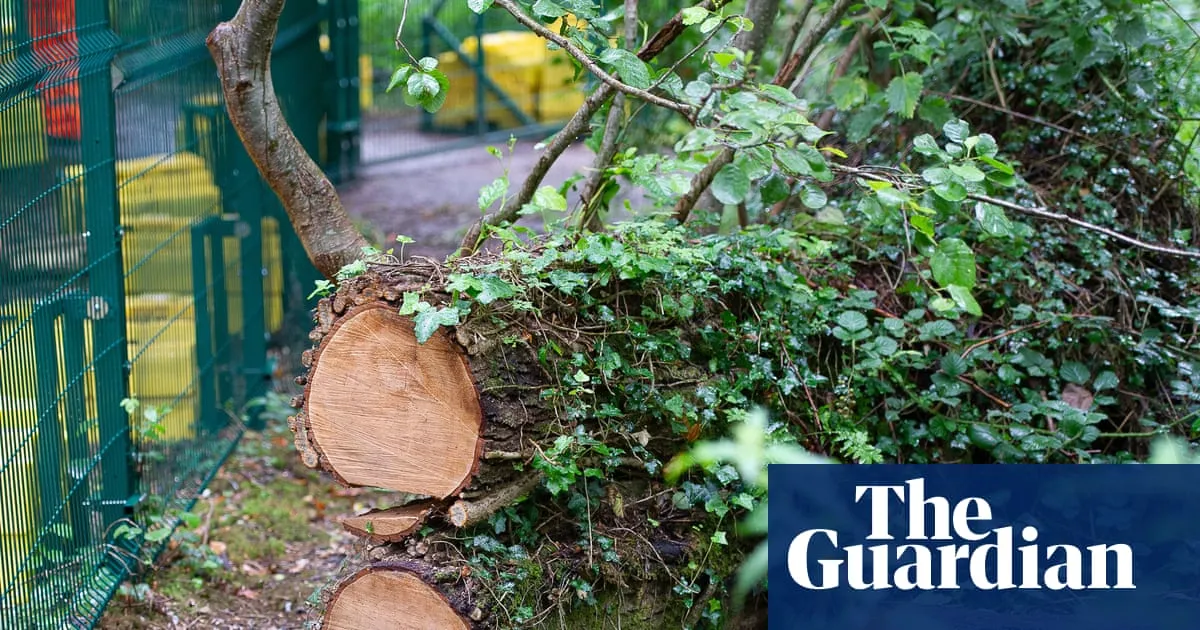
The UK government has been accused of “rushing through” planning changes that could give developers permission to “trash” nature for as little as £1.A letter signed by more than 100 conservationists, scientists, celebrities and businesses, including the actor and writer Stephen Fry and the broadcaster Chris Packham, has urged the incoming prime minister, Andy Burnham, to immediately halt the rollout of environmental delivery plans (EDPs).These plans, which were introduced through the Planning and Infrastructure Act, applying mainly to England and Wales, allow developers to sidestep environmental laws by instead paying into a national nature levy. Campaign groups say this allows developers to pay “cash to trash” wildlife.The letter states the plans will result in decades of protections for biodiversity being reversed “precisely when those protections are needed the most”. A recent report by the joint intelligence committee, which oversees the spy agencies MI5 and MI6, warned that the global attack on nature was threatening the UK’s national security and food supply.On Wednesday, the House of Lords will debate the nature restoration levy regulations 2026. This is the draft statutory instrument under the Planning Act that will make the environmental delivery plan regime operational. The regulations have to be approved by both the Commons and Lords.Ahead of the debate, a member of the Lords introduced a motion calling on the government to withdraw the regulations.In a submission to the Lords, Alexa Culver, a planning lawyer at RSK Wilding, raised “serious concerns” over these regulations.Culver said they would allow the secretary of state to change the payment rate for an EDP at any point, without consulting England" class="entity-link entity-organization" data-entity-id="24037" data-entity-type="organization">Natural England or the developer. This would hand “unchecked power” to ministers to “set the price of environmental destruction as low as they like”, she said, adding that the price could be as low as £1.Culver said the regulations were being “rushed through” with “serious flaws remaining unexamined”, which she said could leave a “huge vulnerability” to lobbying pressure.The letter said the plans would result in decades of protections for biodiversity reversed ‘precisely when those protections are needed the most’. Photograph: Maureen McLean/ShutterstockThe government said the levy rates must be set at a level that enables England" class="entity-link entity-organization" data-entity-id="24037" data-entity-type="organization">Natural England to fund the conservation measures identified in the relevant EDP.However, Culver’s submission warns England could become Europe’s “bargain basement”. This is because the plans disapply protections derived from the EU habitats directive, which every EU member state still applies in full.“Developers in England could face a fraction of the environmental cost their French, German, Dutch and Irish counterparts must meet,” she said.skip past newsletter promotionafter newsletter promotionThe financier and environmentalist Ben Goldsmith, who is a signatory of the letter, said it was “clear that this Labour government really doesn’t get it when it comes to nature”.On Monday, the government’s plan to achieve its international commitment to restore 30% of land for nature by 2030 was condemned as “pathetic” and “completely insufficient” in the face of the spiralling environmental crisis.Goldsmith said there appeared to be “no real commitment or ambition towards restoring the terribly degraded natural fabric of our island, on which we depend for everything”.Dale Vince, a Labour donor and green energy industrialist, who also signed the letter, said he would like to see Burnham’s government bring “nature into the centre of government thinking” by making it an economic priority.A government spokesperson said: “The status quo for development and nature is not working. This government’s vision is for a planning system that delivers for both nature and people.“Environmental delivery plans will secure better environmental outcomes that go further than current legislation: not just preventing harm to existing habitats and species but actively restoring and improving them.”
SRCThe Guardian - World News
LANGEN
LEANCenter-Left
WORDS608
ENT12
WED · 2026-07-15 · 12:00 GMTBRIEF NSR-2026-0715-93227
NSR-2026-0715-93227News Report·EN·Environmental
Burnham urged to drop ‘flawed’ plans that may let developers bypass environment laws for £1
Over 100 conservationists, scientists, celebrities, and businesses have urged the incoming prime minister, Andy Burnham, to halt the rollout of Environmental Delivery Plans (EDPs). These plans, introduced by the UK government, would allow developers to bypass environmental laws by paying into a national nature levy, which critics argue could enable developers to "trash" nature for as little as £1.
Pippa Neill Environment reporterThe Guardian - World NewsFiled 2026-07-15 · 12:00 GMTLean · Center-LeftRead · 3 min
The Guardian - World NewsFIG 01
Reading time
3min
Word count
608words
Sources cited
5cited
Entities identified
12entities
Quality score
100%
§ 01
Briefing Summary
AI-generatedNEWSAR · AI
Over 100 conservationists, scientists, celebrities, and businesses have urged the incoming prime minister, Andy Burnham, to halt the rollout of Environmental Delivery Plans (EDPs). These plans, introduced by the UK government, would allow developers to bypass environmental laws by paying into a national nature levy, which critics argue could enable developers to "trash" nature for as little as £1. Concerns have been raised that these regulations, set to be debated in the House of Lords, are being rushed through with serious flaws, potentially allowing ministers unchecked power to set low prices for environmental destruction. Critics also warn that England could become a "bargain basement" for developers compared to EU countries, as the plans disapply protections derived from the EU habitats directive. The government maintains that EDPs will secure better environmental outcomes by actively restoring and improving habitats and species.
Confidence 0.90Sources 5Claims 5Entities 12
§ 02
Article analysis
Model · rule-basedFraming
Environmental
Legal & Judicial
Tone
Sensational
AI-assessed
CalmNeutralAlarmist
Factuality
0.60 / 1.00
Mixed
LowHigh
Sources cited
5
Well sourced
FewMany
§ 03
Key claims
5 extracted01
Regulations could allow the secretary of state to change payment rates without consulting Natural England or developers, handing 'unchecked power' to ministers.
factualAlexa Culver, planning lawyer at RSK Wilding
Confidence
0.90
02
Plans allow developers to sidestep environmental laws by paying into a national nature levy, which campaign groups call 'cash to trash' wildlife.
factualCampaign groups
Confidence
0.90
03
UK government accused of rushing planning changes that could allow developers to bypass environmental laws for as little as £1.
factualconservationists, scientists, celebrities and businesses
Confidence
0.90
04
England could become Europe's 'bargain basement' for environmental costs compared to EU member states.
factualAlexa Culver, planning lawyer at RSK Wilding
Confidence
0.80
05
The plans could reverse decades of protections for biodiversity precisely when they are needed most.
factualLetter signatories
Confidence
0.80
§ 04
Full report
3 min read · 608 words§ 05
Entities
12 identifiedKey playerOppositionContextPositiveNeutralNegative
People4
Organizations4
§ 06
Keywords & salience
10 termsenvironmental delivery plans
1.00
developers
0.90
environment laws
0.90
biodiversity
0.80
national nature levy
0.80
planning changes
0.70
conservationists
0.60
national security
0.50
house of lords
0.40
andy burnham
0.40
§ 07
Topic connections
Interactive graph Network visualization showing 51 related topics
View Full Graph Person Organization Location Event|Click node to navigate|Edge numbers = shared articles