Tourists in the Romanian capital, Bucharest, are staying in illegal accommodation listed on Airbnb and Booking.com in buildings considered so seismically vulnerable they could collapse in the event of a major earthquake, according to exclusive data shared with The Guardian.Analysis of data collected by Re:Rise, a Romanian organisation working on seismic risk reduction, identified at least 207 illegal tourist rental properties advertised across the two platforms in Bucharest at the end of May, with a combined capacity to host more than 1,000 visitors each night.Tourists and local people at an outdoor cafe in central Bucharest. Photograph: Cristi Croitoru/AlamyBooking.com listed 116 of them, 47 were on Airbnb, and 44 listings were on both platforms. All were in buildings qualifying for the highest level of seismic risk.Bucharest is the most seismically vulnerable capital in the EU, with two major earthquakes in the last century, the most recent of which, in 1977, killed more than 1,500 people, injured more than 10,000 and brought down 32 buildings in under a minute.Rescue workers sifting through rubble in Bucharest in 1977 after a powerful earthquake in the Balkan region. Photograph: Bettmann Archive/Getty ImagesExperts believe another such quake is inevitable, warning that the damage could well exceed that of previous disasters because much of the city’s building stock has become structurally unsound in recent decades.In an effort to clamp down on unsafe housing in 2024, Romania outlawed short- and long-term rentals in high-risk buildings, classified as RS1. As a result, the capital has at least 404 such buildings where renting of any kind is illegal, with violations carrying fines of €1,000 (£850) to €2,000.As only a fraction of the city’s housing stock has been formally assessed for risk, experts believe the true scale of unsafe accommodation is probably greater.Those risks, however, are rarely made clear to tourists booking a place to stay. Neither Airbnb nor Booking.com requires hosts to declare whether their properties are structurally sound.“We tried everything possible to alert the platforms about this problem, but they told us it is the responsibility of the owners, not theirs,” said Matei Sumbasacu, a structural engineer and founder of Re:Rise.Ana Todor, who booked two Airbnb stays in apartments in RS1 buildings in 2025, said she felt the owners and platforms were “counting” on the fact that guests wouldn’t scrutinise the rules and regulations too closely.“But when I got there, the building looked terrible from the outside and didn’t give me a good feeling,” said Todor. “Descriptions that downplay the danger are a Hello Kitty plaster on a deep crack.”Todor says she was unaware renting in such buildings was illegal and says she would now factor the condition and location of a building into any booking decision. “The more I’ve learned since, the more my anxiety has grown. Every time I travel to Bucharest now, I don’t sleep well at all; I’m always on edge.”High seismic risk flats in central Bucharest. Photograph: Daniel Mihăilescu/AFP/Getty ImagesOne listing found by The Guardian and Re:Rise on Airbnb, a two-bedroom “designer condo” in the city centre University Square, charges about €100 a night and accommodates up to six guests. A review by a family who stayed there last October noted that the building was “old and appears sketchy from the outside”.One superhost on Airbnb has 25 listings on the platform, of which at least six are in buildings deemed to be at the highest seismic risk, according to the analysis. A flat hosted by this person in an RS1 building in Roman Square is described as a blend of “classic charm with modern comfort, perfect for both business and leisure stays”.The true number of tourist rentals in RS1 buildings is probably higher, as only those where addresses could be confirmed are included. Of the confirmed listings, only two disclosed in their descriptions that they were located in a building with high seismic risk. But even they sought to downplay the danger.In one, the host notes the accommodation “may appear in older seismic risk classifications”, adding that this is “common for historic buildings in the city centre” and that the building is “regularly inhabited and maintained”.skip past newsletter promotionafter newsletter promotionConstruction of a new Bucharest apartment building in 2025. Photograph: Sergii Zhmurchak/AlamyAnother listing does not mention the risk directly, but in the English bio of the host one line in Romanian says the building where the apartment is located has a “dot”, without explaining what that means.By law, RS1 buildings must display a red dot above the entrance bearing a notice in Romanian stating that the building has been assessed and classified as seismic risk class 1. For the vast majority of foreign visitors, the warning is effectively invisible if they don’t read Romanian, campaigners say.After attempting to warn Airbnb and Booking.com about the risky listings, Re:Rise eventually took matters into their own hands. Volunteers began plastering hard-to-remove stickers on to the key lockboxes mounted outside RS1 buildings with holiday flats, each printed with a QR code linking to a website where tourists could read about the seismic risk of the property they were about to check into.Earthquakes are monitored in real time at the National Institute for Earth Physics in Măgurele. Photograph: Daniel Mihăilescu/AFP/Getty Images“The state could go directly to the platforms and oblige them to act … The main institution responsible for anyone visiting the city is the city hall,” said Sumbasacu. “One has to take care of their own yard, but they have always run from that responsibility.”The city hall said local police conducted inspections only in response to complaints and that it notified the ministry of tourism in January to factor the law banning rentals in RS1 buildings into its authorisation process.“An information campaign was organised for apartment owners and building owners whose properties are on the list of buildings classified in seismic risk class RS1. Approximately 3,000 notifications were sent out,” added the statement.A spokesperson for Airbnb said: “Safety is a priority for Airbnb and we take issues like this seriously. We are currently investigating based on the information available so we can take the appropriate action.”A Booking.com spokesperson said: “Our accommodation partners should ensure that they are aware of their obligations and acting in accordance with all local laws, and we have a solid process in place for authorities to report any listings they might have concerns about.”Matei Sumbasacu, the founder of Re:Rise, in front of a building that is being reinforced against earthquakes. Photograph: Daniel Mihăilescu/AFP/Getty ImagesBucharest had more than 2 million visitors in 2025, more than any other city in the country, according to Romania’s National Institute of Statistics.However, much of the city’s infrastructure – including some schools, administrative buildings, theatres and fire stations, as well as private properties – remains at high seismic risk. The retrofitting work that followed the 1977 earthquake was cut short when the communist dictator Nicolae Ceaușescu redirected the funds to build the massive House of the People, now Romania’s Palace of Parliament. Since retrofitting legislation passed in 1994, only 35 buildings have been reinforced.A 2022 risk assessment by the Bucharest City Committee for Emergency Situations estimated that a major earthquake could severely damage about 23,000 buildings across the city, kill approximately 6,500 people and leave a further 16,000 seriously injured.
SRCThe Guardian - World News
LANGEN
LEANCenter-Left
WORDS1 200
ENT11
THU · 2026-07-16 · 05:00 GMTBRIEF NSR-2026-0716-93423
NSR-2026-0716-93423News Report·EN·Public Health
Revealed: Bucharest tourists hiring rentals that could collapse in an earthquake
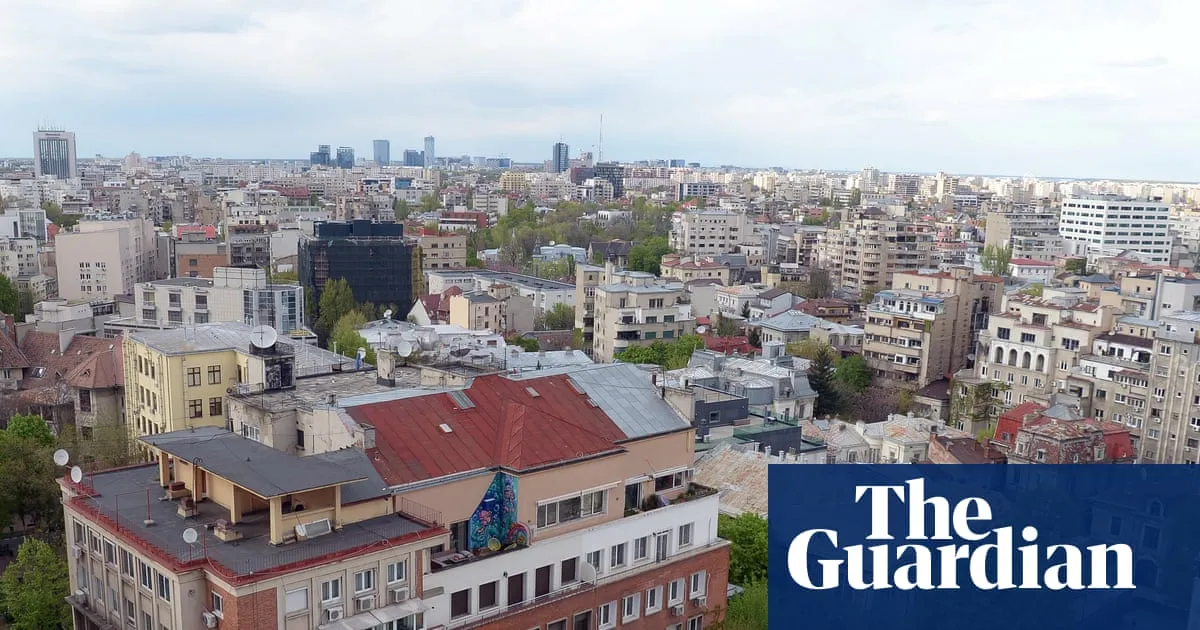
Tourists in Bucharest are unknowingly staying in over 200 illegal rental properties listed on Airbnb and Booking.com that are located in buildings classified at the highest seismic risk level. These properties, identified by the organization Re:Rise, have a combined capacity to host over 1,000 visitors nightly.
Andrei Popoviciu in Bucharest and Carmen Aguilar GarcíaThe Guardian - World NewsFiled 2026-07-16 · 05:00 GMTLean · Center-LeftRead · 5 min
The Guardian - World NewsFIG 01
Reading time
5min
Word count
1 200words
Sources cited
3cited
Entities identified
11entities
Quality score
100%
§ 01
Briefing Summary
AI-generatedNEWSAR · AI
Tourists in Bucharest are unknowingly staying in over 200 illegal rental properties listed on Airbnb and Booking.com that are located in buildings classified at the highest seismic risk level. These properties, identified by the organization Re:Rise, have a combined capacity to host over 1,000 visitors nightly. Romania outlawed rentals in these RS1 buildings in 2024 due to Bucharest's high vulnerability to earthquakes, with violations carrying significant fines. Neither booking platform requires hosts to disclose seismic safety, and warnings are often downplayed or obscured for foreign visitors. Experts believe the true number of unsafe accommodations is likely higher, as only a fraction of the city's buildings have been formally assessed.
Confidence 0.90Sources 3Claims 5Entities 11
§ 02
Article analysis
Model · rule-basedFraming
Public Health
Legal & Judicial
Tone
Sensational
AI-assessed
CalmNeutralAlarmist
Factuality
0.80 / 1.00
Factual
LowHigh
Sources cited
3
Well sourced
FewMany
§ 03
Key claims
5 extracted01
Romania outlawed rentals in high-risk buildings (RS1) in 2024, with violations carrying fines of €1,000 to €2,000.
factualThe Guardian
Confidence
0.95
02
Neither Airbnb nor Booking.com requires hosts to declare if their properties are structurally sound.
factualThe Guardian
Confidence
0.90
03
At least 207 illegal tourist rental properties were identified on Airbnb and Booking.com in Bucharest, with capacity for over 1,000 guests nightly.
statisticRe:Rise (via The Guardian)
Confidence
0.90
04
Tourists are staying in illegal rental accommodations in Bucharest located in buildings at high seismic risk.
factualThe Guardian
Confidence
0.90
05
Experts believe another major earthquake in Bucharest is inevitable, potentially causing damage exceeding previous disasters.
predictionExperts (via The Guardian)
Confidence
0.80
§ 04
Full report
5 min read · 1 200 words§ 05
Entities
11 identifiedKey playerOppositionContextPositiveNeutralNegative
Organizations5
§ 06
Keywords & salience
10 termsseismic risk
1.00
earthquake vulnerability
0.90
illegal rentals
0.80
bucharest
0.70
airbnb
0.60
booking.com
0.60
rental regulations
0.50
structural integrity
0.50
tourist safety
0.40
building collapse
0.40
§ 07
Topic connections
Interactive graph Network visualization showing 41 related topics
View Full Graph Person Organization Location Event|Click node to navigate|Edge numbers = shared articles