All businesses and other institutions in Ghana must now use a biometric app scanner to check national identity cards under new rules aimed at strengthening security and curbing fraud.Until now many of them have just visually checked or photocopied the card for their records, which has made it possible for criminals to impersonate someone.All Ghanaian citizens and foreign residents in the country must carry a plastic biometric national ID known as the "Ghana-card" class="entity-link entity-topic" data-entity-id="166152" data-entity-type="topic">Ghana Card".Introduced over the last decade, the Ghana-card" class="entity-link entity-topic" data-entity-id="166152" data-entity-type="topic">Ghana Card has become central to daily life in the West African nation and is needed to access banking services, register Sim cards and to obtain a passport or driver's licence.The biometric data captured on the card by the country's National Identification Authority (NIA) includes 10 fingerprints, iris scans as well as a photograph and signature.In future those checking the card will have to use a mobile phone app that checks that data after scanning the card."It is now an offence to photocopy or visually inspect a Ghana-card" class="entity-link entity-topic" data-entity-id="166152" data-entity-type="topic">Ghana Card for the purpose of transaction. biometric verification is now mandatory," said Wisdom Yayra Koku Deku, the NIA chief, in a statement.Organisations that continue using photocopies or visual ID checks risk prosecution, with fines of up to 24,000 Ghanaian cedis (about $2,100 or £1,550). Individuals face fines of up to 6,000 Ghanaian cedis (about $525 or £390), NIA said.
SRCBBC News - World
LANGEN
LEANCenter
WORDS226
ENT8
THU · 2026-07-16 · 11:18 GMTBRIEF NSR-2026-0716-93506
NSR-2026-0716-93506News Report·EN·Technology
Fraud crackdown on Ghana ID cards makes digital checks compulsory - photocopies banned
Ghana's National Identification Authority (NIA) has mandated the use of a biometric app scanner for verifying national identity cards, known as the "Ghana Card," to combat fraud and forgery. Previously, businesses and institutions relied on visual checks or photocopies, which facilitated impersonation.
42 minutes agoShareSaveAdd as preferred on GoogleWycliffe MuiaBBC News - WorldFiled 2026-07-16 · 11:18 GMTLean · CenterRead · 1 min
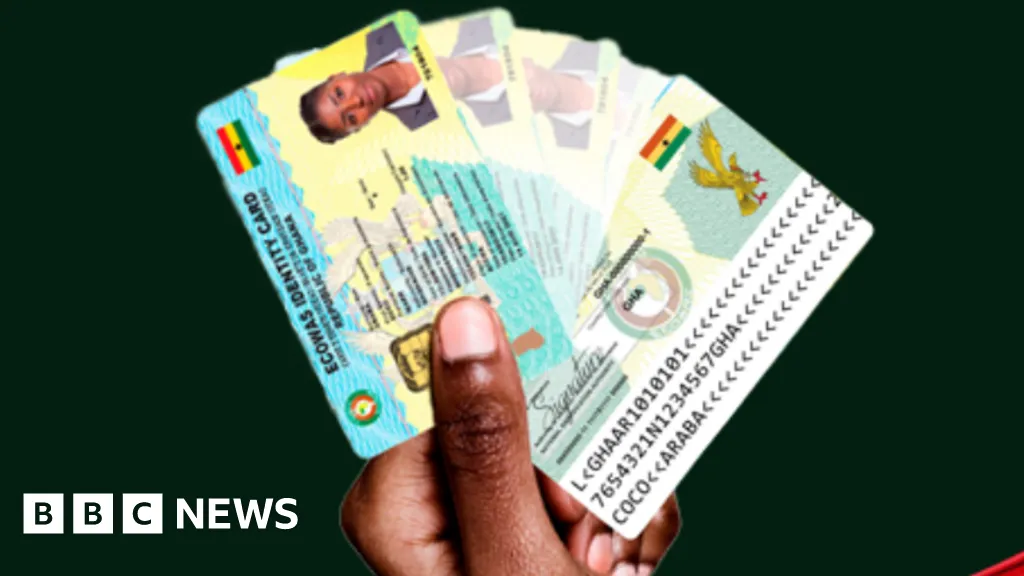
BBC News - WorldFIG 01
Reading time
1min
Word count
226words
Sources cited
1cited
Entities identified
8entities
Quality score
100%
§ 01
Briefing Summary
AI-generatedNEWSAR · AI
Ghana's National Identification Authority (NIA) has mandated the use of a biometric app scanner for verifying national identity cards, known as the "Ghana Card," to combat fraud and forgery. Previously, businesses and institutions relied on visual checks or photocopies, which facilitated impersonation. This new regulation requires all organizations and individuals to use a mobile app to scan and electronically verify the biometric data on the Ghana Card, which includes fingerprints, iris scans, photographs, and signatures. Failure to comply will result in prosecution, with potential fines for both organizations and individuals. This measure aims to enhance security and prevent theft by ensuring the authenticity of identity verification for essential services.
Confidence 0.90Sources 1Claims 5Entities 8
§ 02
Article analysis
Model · rule-basedFraming
Technology
Legal & Judicial
Tone
Measured
AI-assessed
CalmNeutralAlarmist
Factuality
0.90 / 1.00
Factual
LowHigh
Sources cited
1
Limited
FewMany
§ 03
Key claims
5 extracted01
The Ghana Card contains 10 fingerprints, iris scans, a photograph, and signature.
factual
Confidence
1.00
02
Individuals face fines up to 6,000 Ghanaian cedis for non-compliance with biometric verification.
statisticNIA
Confidence
1.00
03
Organizations face fines up to 24,000 Ghanaian cedis for non-compliance with biometric verification.
statisticNIA
Confidence
1.00
04
Photocopying or visually inspecting a Ghana Card for transactions is now an offense.
quoteWisdom Yayra Koku Deku, NIA chief
Confidence
1.00
05
Businesses in Ghana must use a biometric app scanner to check national ID cards under new rules to curb fraud.
factual
Confidence
1.00
§ 04
Full report
1 min read · 226 words§ 05
Entities
8 identifiedKey playerOppositionContextPositiveNeutralNegative
§ 06
Keywords & salience
9 termsghana card
1.00
biometric verification
1.00
fraud crackdown
0.90
digital checks
0.80
mandatory verification
0.70
national identification authority
0.60
ghana
0.50
biometric app scanner
0.50
impersonation
0.40
§ 07
Topic connections
Interactive graph Network visualization showing 50 related topics
View Full Graph Person Organization Location Event|Click node to navigate|Edge numbers = shared articles