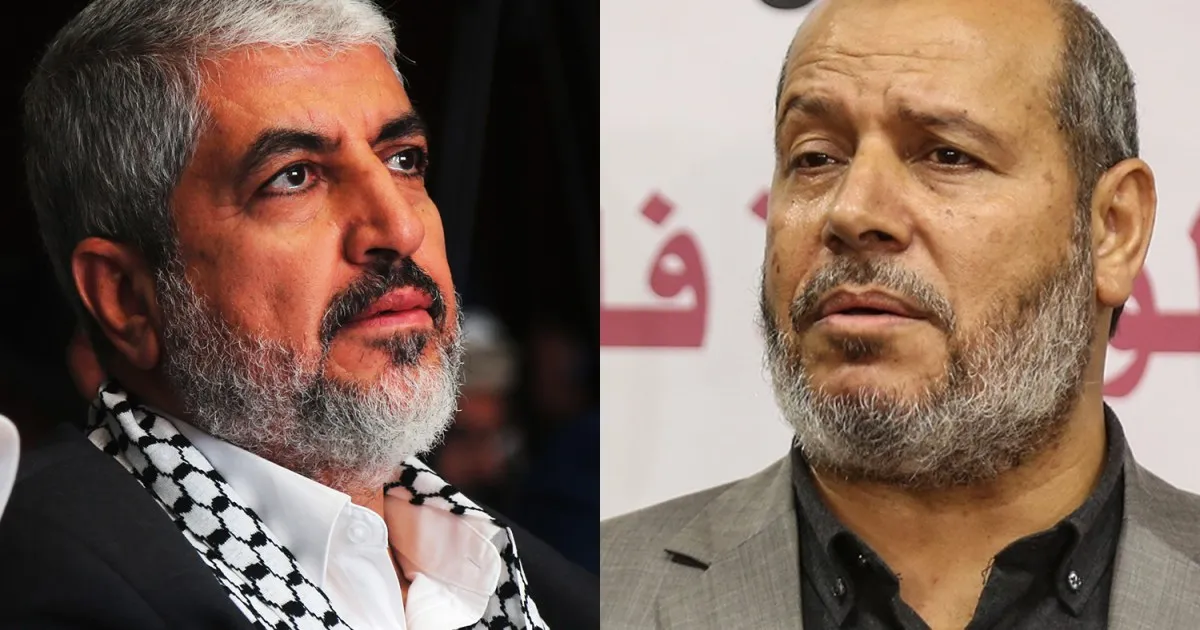
EXCLUSIVEIsraeli assassinations of several key leaders force Hamas to find new head, a process expected to be completed next weekSenior Hamas officials Khaled Meshaal and Khalil al-Hayya are expected to be in the run-off for leadership of Hamas's political bureau [File: Getty Images]Published On 16 Jul 2026Hamas is set to hold a decisive run-off election next week to choose its new political bureau chief. This will complete a complex transition process initiated to fill leadership vacancies left by Israel’s assassinations of some of the group’s top figures, such as Ismail Haniyeh and Yahya Sinwar.The highly anticipated vote represents a critical juncture for the Palestinian group as it attempts to renew itself, even as it faces the ongoing Israeli war.According to a Hamas source, the internal ballot to select a chairman has narrowed down to what is likely to be a close contest between former Hamas political leader Khaled Meshaal and former deputy chairman Khalil al-Hayya.The winner will replace the current transitional council, which took over following Sinwar’s assassination in Gaza in October 2024. The new leader will then continue until 2027, when new elections are due to be held.Under Hamas’s internal rules, a candidate must secure an absolute majority of 50 percent plus one of the votes within the Shura Council – the group’s consultative body – to win the leadership outright. Because neither candidate achieved that threshold during the initial rounds, a run-off election has been scheduled for next week to break the deadlock.The source explained that, according to a 2021 framework, the top two leadership positions must include a representative of the Gaza region – one of the three geographical areas Hamas is divided into, with the other two being the West Bank and the diaspora. Therefore, if al-Hayya, who represents Gaza, does not secure the leadership in the run-off, he is expected to be positioned as deputy political chief.Change in processA second Hamas source told Al Jazeera that the group has been forced to abandon its typical voting process, which involves participation from the entire grassroots base. Instead, only a narrower group has been able to vote in the political bureau elections, in order to complete the current electoral term, which began in 2021.The source explained that security challenges imposed by the war, alongside the urgent priority of filling vacancies in the group’s Shura Council resulting from the deaths of several members, had delayed the leadership selection. Despite those challenges, the source dismissed reports of a shift towards a clandestine or collective leadership structure, asserting that the identity of the newly elected chief will be formally and publicly announced once the votes are finalised.Both the Hamas sources confirmed that regardless of next week’s outcome, preparations for a fully comprehensive, grassroots election across all three traditional regions are scheduled to begin next year, subject to prevailing security conditions.Palestinian political analyst Abdullah Aqrabawi told Al Jazeera that those internal dynamics can no longer be viewed as the closed-door affairs of a local group. Since the events of October 7, 2023, Hamas has emerged as a central regional actor whose decisions reverberate far beyond the Palestinian arena, directly shaping the geopolitics of the entire Middle East. Consequently, Aqrabawi noted, the transition of Hamas’s leadership has become a matter of intense regional and international scrutiny.Institutional resilienceThe current electoral framework stems from Hamas’s internal general elections in early 2021. Haniyeh was chosen as the overall head of the political bureau, while Sinwar was re-elected to lead the Gaza Strip and Meshaal was selected to head the movement’s diaspora wing abroad.This institutional structure faced unprecedented disruption following the outbreak of the war, which saw Israel target multiple tiers of Hamas’s political and military commands. In July 2024, political chief Haniyeh was assassinated in Tehran, prompting the group’s Shura Council to name Sinwar as his overall successor in August 2024. Following Sinwar’s death during a clash with Israeli forces in Rafah in October 2024, the group adapted by establishing a temporary, five-member ruling leadership council to handle wartime governance and negotiations. This transitional committee has since been nominally headed by Qatar-based official Mohammad Darwish.Despite Israel’s declared objective of dismantling Hamas’s command-and-control apparatus, the structured nature of this transition highlights the group’s deep organisational safety net.Palestinian political analyst Wissam Afifa told Al Jazeera that Hamas’s organisational structure operates akin to the biological process of “mitotic division” – where a single cell splits to create two identical cells. In times of crisis, pre-existing emergency procedures and backup plans automatically trigger secondary administrative and leadership layers to assume control.Afifa emphasised that while iconic, charismatic figures are irreplaceable, the survival of the institution itself is never tied to a single individual, allowing the group to absorb unprecedented shocks.Agreeing with this assessment, Aqrabawi observed that the movement’s insistence on adhering strictly to its voting regulations and bylaws under the fire of an ongoing war reflects a deep-seated institutionalism.Rather than resorting to swift appointments or consensus decrees, he said, the group has chosen a voting process. According to Aqrabawi, the active competition between two distinct leaders shows a healthy internal debate on the movement’s political and strategic directions during a crucial moment.A shift in the decision-making hubThe war has nevertheless forced structural adjustments in how Hamas governs itself. Afifa pointed out that the extensive targeting of Hamas’s long-time military commanders inside the Gaza Strip has led to an inevitable delegation of authority.To ensure continuity, the political leadership abroad has been granted broad mandates to make strategic decisions. This delegation of power allows external leaders to navigate diplomatic and political manoeuvres free from the immediate tactical pressures of the battlefield.This external pivot has persisted despite direct threats. Last September, Israel launched an attack on a residential complex in Doha targeting senior Hamas figures, though the leadership survived. Afifa noted that while collective leadership has been crucial for building internal consensus during this transitional phase, Hamas’s history suggests that strong, charismatic, individual leadership remains vital for taking decisive actions during major historical turning points.Diplomatic and post-war implicationsThe outcome of the vote is expected to determine the organisational management of ceasefire negotiations. While al-Hayya has been deeply involved as Hamas’s main negotiator operating out of regional hubs such as Qatar, Meshaal has remained largely outside of these immediate diplomatic portfolios over the past year.According to the second source, if al-Hayya wins the presidency, structural changes may be introduced to the committees handling the ceasefire talks. However, if Meshaal is elected, the negotiation framework will continue as currently structured, with al-Hayya retaining his direct oversight of the Gaza file and the broader negotiating team. Ultimately, any potential reshuffling or strategic adjustments to the diplomatic team will remain at the discretion of the incoming president.Looking ahead, the next leader will face the daunting task of managing post-war reconstruction and relations with other Palestinian factions, such as Fatah. Aqrabawi concluded that the primary, urgent priority of the incoming leadership must be preserving the geopolitical gains of the Palestinian resistance while shielding the humanitarian and social fabric of the Gaza Strip. Changing direction or showing signs of retreat mid-battle, Aqrabawi warned, would be counterproductive at a time when regional dynamics indicate that Israel is increasingly struggling to impose its military will.
SRCAl Jazeera
LANGEN
LEANCenter
WORDS1 194
ENT10
THU · 2026-07-16 · 15:44 GMTBRIEF NSR-2026-0716-93551
NSR-2026-0716-93551News Report·EN·Political Strategy
Hamas leadership run-off expected between Meshaal and al-Hayya
Hamas is preparing for a leadership run-off election next week to select a new political bureau chief, a process necessitated by Israeli assassinations of key leaders like Ismail Haniyeh and Yahya Sinwar. The contest is expected to be between former leader Khaled Meshaal and former deputy chairman Khalil al-Hayya.
Mohammad MansourAl JazeeraFiled 2026-07-16 · 15:44 GMTLean · CenterRead · 5 min
Al JazeeraFIG 01
Reading time
5min
Word count
1 194words
Sources cited
2cited
Entities identified
10entities
Quality score
100%
§ 01
Briefing Summary
AI-generatedNEWSAR · AI
Hamas is preparing for a leadership run-off election next week to select a new political bureau chief, a process necessitated by Israeli assassinations of key leaders like Ismail Haniyeh and Yahya Sinwar. The contest is expected to be between former leader Khaled Meshaal and former deputy chairman Khalil al-Hayya. Due to security challenges and leadership vacancies, the election process has been narrowed to a smaller voting group, deviating from the usual grassroots participation. The winner will lead until 2027, and preparations for comprehensive elections are planned for next year. This transition highlights Hamas's organizational resilience despite significant leadership losses.
Confidence 0.90Sources 2Claims 5Entities 10
§ 02
Article analysis
Model · rule-basedFraming
Political Strategy
Conflict
Tone
Measured
AI-assessed
CalmNeutralAlarmist
Factuality
0.70 / 1.00
Factual
LowHigh
Sources cited
2
Limited
FewMany
§ 03
Key claims
5 extracted01
The winner will replace the current transitional council, which took over following Sinwar’s assassination in Gaza in October 2024.
factual
Confidence
0.90
02
Hamas is set to hold a run-off election next week to choose its new political bureau chief.
factual
Confidence
0.90
03
Senior Hamas officials Khaled Meshaal and Khalil Al-Hayya are expected to be in the run-off for leadership.
factualHamas source
Confidence
0.85
04
The group has been forced to abandon its typical voting process, which involves participation from the entire grassroots base, due to security challenges and vacancies.
factualSecond Hamas source
Confidence
0.80
05
Preparations for a fully comprehensive, grassroots election across all three traditional regions are scheduled to begin next year.
factualBoth Hamas sources
Confidence
0.75
§ 04
Full report
5 min read · 1 194 words§ 05
Entities
10 identifiedKey playerOppositionContextPositiveNeutralNegative
People4
§ 06
Keywords & salience
10 termshamas leadership
1.00
political bureau chief
0.90
run-off election
0.80
israeli assassinations
0.70
khaled meshaal
0.60
khalil al-hayya
0.60
shura council
0.50
leadership vacancies
0.50
gaza
0.40
transition process
0.40
§ 07
Topic connections
Interactive graph Network visualization showing 51 related topics
View Full Graph Person Organization Location Event|Click node to navigate|Edge numbers = shared articles