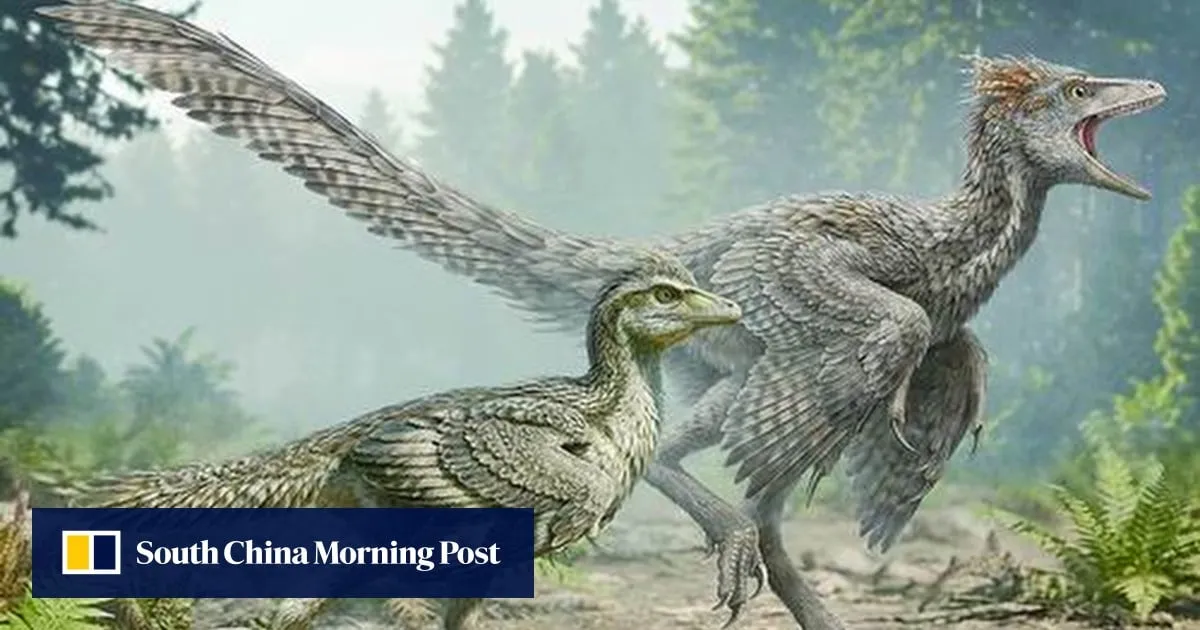
A fossil found in China suggests modern birds shed the long, bony tails of their dinosaur ancestors through a step-by-step process, rather than a sudden evolutionary transition as previously believed.The transition to a short, feathered tail was one of the most important steps in the evolution and survival of birds, the only living group of dinosaurs to survive a mass extinction event 66 million years ago.“The evolutionary assembly of the flight-adapted bird body plan encompasses some of the most profound morphological changes in terrestrial vertebrate history,” a team of Chinese researchers said in their paper published in the peer-reviewed journal Science Advances on July 1.
SRCSouth China Morning Post
LANGEN
LEANCenter-Right
WORDS105
ENT7
SAT · 2026-07-18 · 04:00 GMTBRIEF NSR-2026-0718-93952
NSR-2026-0718-93952News Report·EN·Environmental
Chinese fossil find shows birds shed their dinosaur tails step by step
A fossil discovered in China provides evidence that modern birds evolved their short, feathered tails from the long, bony tails of their dinosaur ancestors through a gradual, step-by-step process. This finding challenges the previous belief that the transition was a sudden evolutionary leap.
Victoria BelaSouth China Morning PostFiled 2026-07-18 · 04:00 GMTLean · Center-RightRead · 1 min
South China Morning PostFIG 01
Reading time
1min
Word count
105words
Sources cited
1cited
Entities identified
7entities
Quality score
100%
§ 01
Briefing Summary
AI-generatedNEWSAR · AI
A fossil discovered in China provides evidence that modern birds evolved their short, feathered tails from the long, bony tails of their dinosaur ancestors through a gradual, step-by-step process. This finding challenges the previous belief that the transition was a sudden evolutionary leap. Researchers published their findings in the journal Science Advances on July 1. The development of a shorter tail was a crucial adaptation for birds, enabling their survival as the only dinosaur lineage to persist after a mass extinction event 66 million years ago. This evolutionary change is considered one of the most significant morphological shifts in the history of terrestrial vertebrates.
Confidence 0.85Sources 1Claims 4Entities 7
§ 02
Article analysis
Model · rule-basedFraming
Environmental
Human Interest
Tone
Measured
AI-assessed
CalmNeutralAlarmist
Factuality
0.90 / 1.00
Factual
LowHigh
Sources cited
1
Limited
FewMany
§ 03
Key claims
4 extracted01
The evolutionary assembly of the flight-adapted bird body plan involved profound morphological changes.
quoteChinese researchers
Confidence
1.00
02
Birds are the only living group of dinosaurs to survive a mass extinction event 66 million years ago.
factualChinese researchers
Confidence
0.90
03
The transition to a short, feathered tail was a crucial step in bird evolution and survival.
factualChinese researchers
Confidence
0.90
04
A fossil find in China suggests birds evolved their short tails from dinosaur ancestors through a step-by-step process.
factualChinese researchers
Confidence
0.90
§ 04
Full report
1 min read · 105 words§ 05
Entities
7 identifiedKey playerOppositionContextPositiveNeutralNegative
Organizations1
Locations1
§ 06
Keywords & salience
7 termsbird evolution
1.00
dinosaur tails
0.90
fossil find
0.80
evolutionary transition
0.70
mass extinction
0.60
china
0.50
science advances
0.40
§ 07
Topic connections
Interactive graph No topic relationship data available yet. This graph will appear once topic relationships have been computed.