An Australian woman has given birth to rare, naturally-conceived identical quadruplets after a pregnancy described as "extremely high risk" by the Royal Brisbane and Women's Hospital.The four girls, who were delivered via caesarean section at 28 weeks and four days on 14 July, were monozygotic quadruplets - where a single fertilised egg splits into four embryos.The hospital said the girls' mother, 34-year-old Jenitar Na'amoana, and her husband Jortham, already had four children and were taken by "immense surprise" when told to expect quadruplets.Dr Alexa Bendall, who cared for the mother from the start of her pregnancy, estimated identical quadruplets occur "at one in every 15 million pregnancies" and said "but to share the same placenta - this is unheard of".Bendall, who is a maternal foetal medicine specialist and obstetrician, said such a pregnancy was very high-risk, with the hospital admitting Na'amoana as an inpatient at 25 weeks so she could be monitored."We always said that if we could get her to 28 weeks, we would be doing well," Bendall said."So the fact that we've got four beautiful, healthy babies born at 28 weeks and four days is incredible and we're very happy to be a part of it," she added.Jenitar Na’amoana/GofundmeJenitar Na'amoana said her and her husband's hearts were "overflowing with gratitude" after the births
SRCBBC News - World
LANGEN
LEANCenter
WORDS215
ENT9
MON · 2026-07-20 · 12:57 GMTBRIEF NSR-2026-0720-94446
NSR-2026-0720-94446News Report·EN·Human Interest
Rare identical quadruplets born in Australia
An Australian woman, Jenitar Na'amoana, gave birth to rare, naturally-conceived identical quadruplets on July 14th at the Royal Brisbane and Women's Hospital. The four girls, delivered via caesarean section at 28 weeks and four days, are monozygotic, meaning a single fertilized egg split into four embryos.
3 hours agoShareSaveAdd as preferred on GoogleAmy WalkerBBC News - WorldFiled 2026-07-20 · 12:57 GMTLean · CenterRead · 1 min
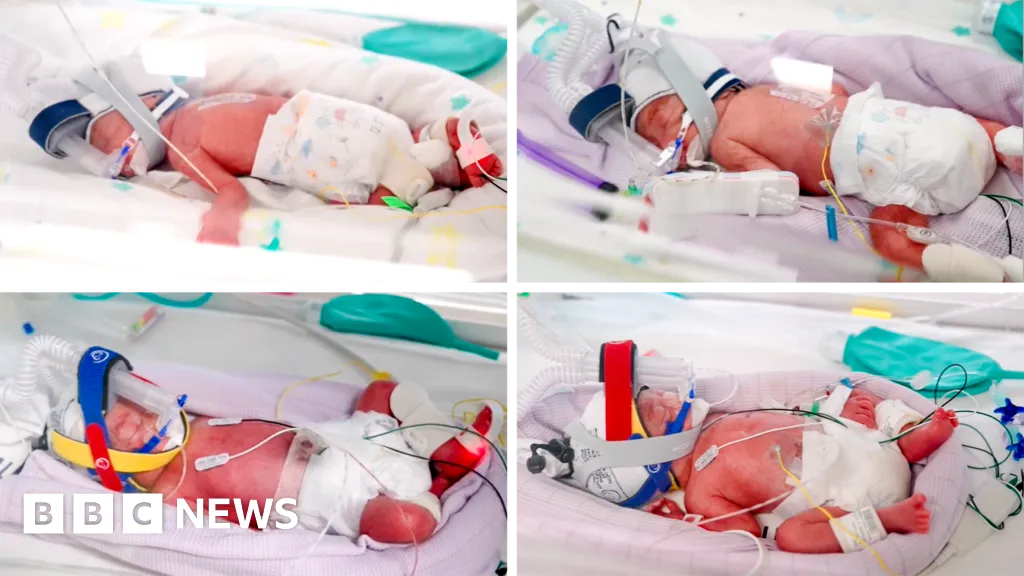
BBC News - WorldFIG 01
Reading time
1min
Word count
215words
Sources cited
2cited
Entities identified
9entities
Quality score
100%
§ 01
Briefing Summary
AI-generatedNEWSAR · AI
An Australian woman, Jenitar Na'amoana, gave birth to rare, naturally-conceived identical quadruplets on July 14th at the Royal Brisbane and Women's Hospital. The four girls, delivered via caesarean section at 28 weeks and four days, are monozygotic, meaning a single fertilized egg split into four embryos. This type of pregnancy is estimated to occur in one in 15 million pregnancies, and sharing the same placenta is considered unheard of. The parents, already with four children, were surprised by the pregnancy, which was deemed "extremely high risk." The mother was admitted as an inpatient at 25 weeks for monitoring, and doctors are celebrating the birth of four healthy babies at 28 weeks.
Confidence 0.90Sources 2Claims 5Entities 9
§ 02
Article analysis
Model · rule-basedFraming
Human Interest
Public Health
Tone
Measured
AI-assessed
CalmNeutralAlarmist
Factuality
0.80 / 1.00
Factual
LowHigh
Sources cited
2
Limited
FewMany
§ 03
Key claims
5 extracted01
The pregnancy was described as "extremely high risk" by the hospital.
quoteRoyal Brisbane and Women's Hospital
Confidence
1.00
02
Identical quadruplets sharing the same placenta is "unheard of".
quoteDr Alexa Bendall
Confidence
1.00
03
Identical quadruplets occur "at one in every 15 million pregnancies".
statisticDr Alexa Bendall
Confidence
1.00
04
The quadruplets were delivered via caesarean section at 28 weeks and four days.
factual
Confidence
1.00
05
An Australian woman gave birth to rare, naturally-conceived identical quadruplets.
factual
Confidence
1.00
§ 04
Full report
1 min read · 215 words§ 05
Entities
9 identifiedKey playerOppositionContextPositiveNeutralNegative
People3
Locations1
§ 06
Keywords & salience
8 termsidentical quadruplets
1.00
monozygotic quadruplets
0.90
high-risk pregnancy
0.80
rare birth
0.70
caesarean section
0.60
maternal foetal medicine
0.50
royal brisbane and women's hospital
0.40
australia
0.40
§ 07
Topic connections
Interactive graph No topic relationship data available yet. This graph will appear once topic relationships have been computed.