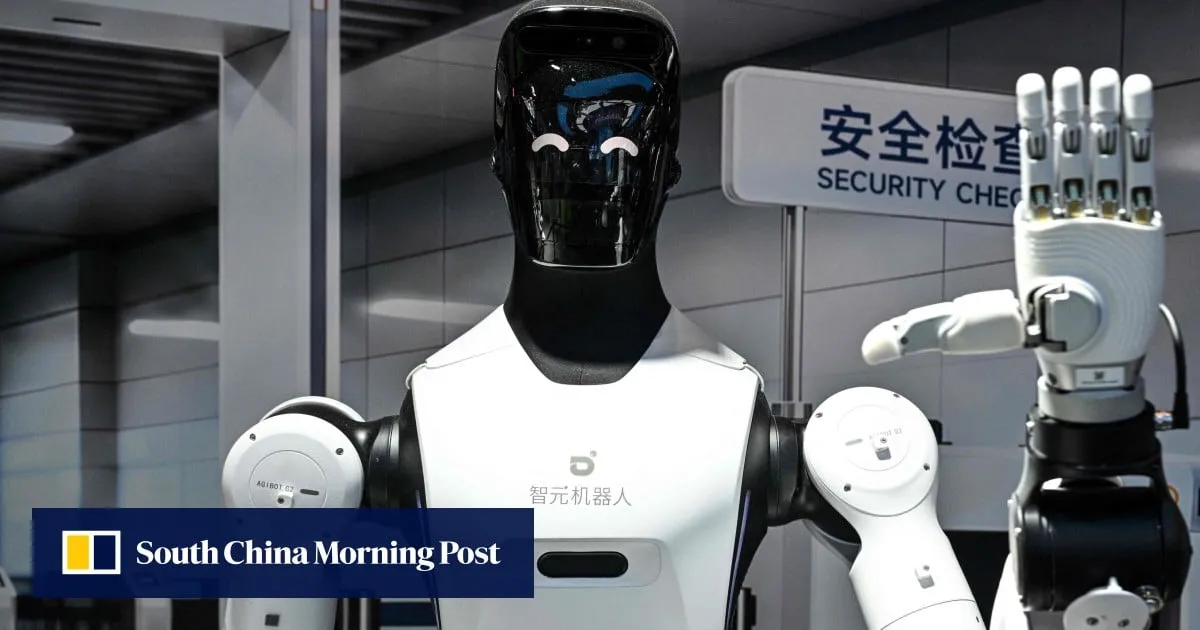
Chinese Robotics companies lack both sufficient data and a good “brain” to improve the interaction of their products with the physical world, according to industry insiders at the World Artificial Intelligence Conference (WAIC), which concluded on Monday in Shanghai.The most critical challenge for the Embodied AI industry was to “link hardware, data, models and real-world scenarios into a closed-loop iterative system”, said Wang Xiaogang, co-founder of SenseTime and chairman of its Robotics spin-off Robotics" class="entity-link entity-organization" data-entity-id="140954" data-entity-type="organization">Ace Robotics, in an interview with the China-morning-post" class="entity-link entity-organization" data-entity-id="12558" data-entity-type="organization">South China Morning Post on Saturday.Currently, a vast amount of training data is collected from human demonstrations. But for that data to effectively translate into better embodied AIs, hardware design for robots must be jointly optimised alongside data-collection methods and physical structure, according to Wang.He added that robot deployment across real-world scenarios, where data originated, remained too limited.“The key question is how to unlock these scenarios and replicate them at scale,” he said.The amount of available multi-modal data about the physical world was far from adequate, compared with that used in large language models, according to Yao Maoqing, partner and senior vice-president of Shanghai-based humanoid robot maker AgiBot. This created one of the bottlenecks in the current training of the so-called world models that were expected to allow next-generation humanoid robots to model and navigate their surroundings, he said.
SRCSouth China Morning Post
LANGEN
LEANCenter-Right
WORDS219
ENT12
MON · 2026-07-20 · 23:00 GMTBRIEF NSR-2026-0721-94528
NSR-2026-0721-94528News Report·EN·Technology
Chinese robot makers’ lament: if we only had a better ‘brain’, and more data
Chinese robotics companies are facing significant challenges in improving their products' interaction with the physical world, according to industry insiders at the World Artificial Intelligence Conference in Shanghai. The primary obstacles identified are a lack of sufficient data and a "brain" or advanced AI models.
Wency Chen,Iris DengSouth China Morning PostFiled 2026-07-20 · 23:00 GMTLean · Center-RightRead · 1 min
South China Morning PostFIG 01
Reading time
1min
Word count
219words
Sources cited
2cited
Entities identified
12entities
Quality score
100%
§ 01
Briefing Summary
AI-generatedNEWSAR · AI
Chinese robotics companies are facing significant challenges in improving their products' interaction with the physical world, according to industry insiders at the World Artificial Intelligence Conference in Shanghai. The primary obstacles identified are a lack of sufficient data and a "brain" or advanced AI models. Experts emphasize the need to create a closed-loop iterative system that integrates hardware, data, models, and real-world scenarios. Currently, training data largely relies on human demonstrations, but effective translation into better embodied AI requires joint optimization of robot hardware, data collection, and physical structure. Limited robot deployment in real-world scenarios hinders the collection of diverse, multi-modal data, which is crucial for training "world models" that enable robots to understand and navigate their environment.
Confidence 0.90Sources 2Claims 4Entities 12
§ 02
Article analysis
Model · rule-basedFraming
Technology
Economic Impact
Tone
Measured
AI-assessed
CalmNeutralAlarmist
Factuality
0.70 / 1.00
Factual
LowHigh
Sources cited
2
Limited
FewMany
§ 03
Key claims
4 extracted01
The critical challenge for embodied AI is linking hardware, data, models, and real-world scenarios into a closed-loop iterative system.
quoteWang Xiaogang
Confidence
1.00
02
The amount of multi-modal data for the physical world is inadequate compared to data used for large language models.
factualYao Maoqing
Confidence
0.90
03
Robot deployment in real-world scenarios for data collection is too limited to effectively train embodied AIs.
factualWang Xiaogang
Confidence
0.90
04
Chinese robotics companies lack sufficient data and advanced AI 'brains' for better physical world interaction.
factualindustry insiders at WAIC
Confidence
0.90
§ 04
Full report
1 min read · 219 words§ 05
Entities
12 identifiedKey playerOppositionContextPositiveNeutralNegative
Organizations4
§ 06
Keywords & salience
9 termsembodied ai
1.00
robotics
0.90
artificial intelligence
0.80
training data
0.80
world models
0.70
hardware design
0.60
physical world
0.50
humanoid robots
0.40
world artificial intelligence conference
0.40
§ 07
Topic connections
Interactive graph No topic relationship data available yet. This graph will appear once topic relationships have been computed.