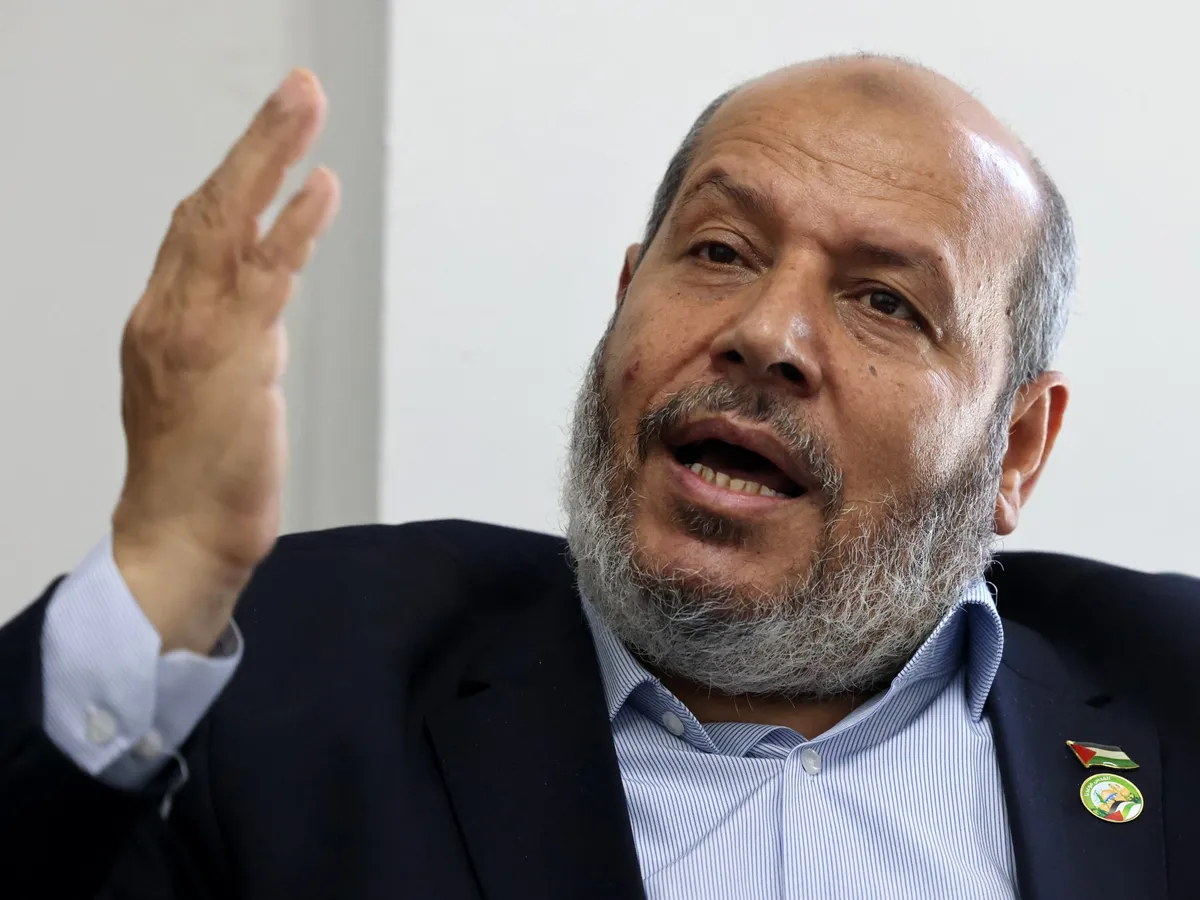
There are mixed reactions in Gaza after Khalil al-Hayya is elected Hamas leader, as residents weigh politics against daily hardships.Khalil al-Hayya was elected as Hamas's new leader this week [AFP]Published On 21 Jul 2026Gaza City, Gaza Strip – There have been mixed reactions among Palestinians in Gaza about the election of Khalil al-Hayya as Hamas leader, and the impact this development could have on their lives.Al-Hayya won an internal election against former Hamas political leader Khaled Meshaal this week.For many, the announcement was overshadowed by more immediate concerns, notably a decent and dignified home, finding food, securing clean water and surviving another day of war.Noman Saleh, 63, lost his factory during Israel’s ongoing genocide in Gaza, something that has shaped every aspect of his life.“People here are all suffering. People are hungry. People have been humiliated. Who is standing with the people today? No one,” said Saleh.“I blame all the [political] factions. If there are factions, there is failure. The national cause should not be used for organisations to serve themselves.”Gaza remains almost completely destroyed from Israel’s genocidal war, beginning on October 7, 2023.An Israeli siege on Gaza has also left Palestinians trapped and unable to find the most basic commodities.Noman Saleh says electing a new Hamas leader will not change the harsh reality faced by people in Gaza [Abdelhakim Abu Riash/Al Jazeera]“Whether al-Hayya wins or someone else wins, it does not make a difference to us,” Saleh said. “We want someone who is loyal to the country, someone who is honest, someone who believes in the people who are living through this.”A generation focused on survivalAli Abu Amshi, 28, has lost 22 of his family members – including his mother, father and a brother – and was displaced from his home in Gaza City during the war.He said the suffering he and others in Gaza have endured since October 2023 has pushed political questions down people’s lists of concerns.“The news does not make a difference to us. We want to live. We want crossings to reopen, we want to eat, drink and have a normal life,” he told Al Jazeera.“We don’t want to keep asking who will lead us, who will be elected, or who will rule us. Whoever governs us, we just want to live.”Ali Abu Amsha says all he wants is to live peacefully after losing several family members during the war, including his parents [Abdelhakim Abu Riash/Al Jazeera]He said this was not about political blame, but about ending the hardship facing ordinary people.“The war was very difficult. I lost loved ones. I feel dead inside, yet I’m still alive,” Abu Amsha said.“We return to the same pain, the same wars, every year. If they can feed us, provide us with water, help us live a dignified life, that is all we ask for.“Look at Gaza today. The streets are filled with waste. Is this a life? Of course not. We hope things will change.”A message of continuityStill, Palestinian journalist Mahmoud Haniyeh viewed Khalil al-Hayya’s election as a significant political message from Hamas. Essentially, it reflects the movement’s decision to maintain continuity in its leadership and political direction, he said.“The importance of electing Khalil al-Hayya at this time is that Israel considers him one of the remaining figures involved in the decision-making circle behind October 7,” Haniyeh told Al Jazeera.“By choosing him, Hamas is sending a message that it does not distance itself from October 7 and still considers it part of its strategic path.”Mahmoud Haniyeh sees the election of a new Hamas leader as a positive gesture, giving Gaza residents hope that conditions may improve [Abdelhakim Abu Riash/Al Jazeera]While Hamas has shown flexibility in its political positions during the current phase, it has not abandoned its focus on resistance to Israel.Hamas’s internal election, Haniyeh said, should essentially be viewed within the wider Palestinian political landscape, including preparations for possible legislative elections, which could lead to more political engagement.“The Palestinian citizen will have a wider space to choose the political leadership that represents them,” he said.After nearly two decades of governing the Gaza Strip, Hamas has announced earlier it will dissolve its government and hand over power to a new, Palestinian technocratic governing authority.The move comes as a United States-backed peace process, which resulted in a ceasefire last year, has largely stalled and as Israel’s bombardment of the Strip continues regardless.Hamas said it would be transferring power to the National Committee for the Administration of Gaza (NCAG) – a Palestinian-run technical committee backed by the United Nations as part of the US-mediated ceasefire.The National Committee for the Administration of Gaza (NCAG) was formed in January 2026 under the UN Security Council’s Resolution 2803 as part of the US-backed 20-point peace plan to end Israel’s war on Gaza.It is a transitional body led by Palestinian technocrats, including Acting Commissioner Ali Abdel Hamid Shaath, who are seen as neutral and non-partisan.However, Israel has not yet allowed the committee members to enter the Gaza Strip. The committee is temporarily headquartered in Cairo.A crisis of trustFor many people in the Gaza Strip, the prospects of peace and stability remain a distant reality.Mustafa Ibrahim, a political analyst based in Gaza, said the reactions to Hamas’s internal election reflect a wider crisis of trust between Palestinians and political factions.Living under years of Israeli bombardments and forced displacement orders has led many to have a critical view of Hamas, which has governed Gaza since 2007.Mustafa Ibrahim, a political analyst, says people have lost trust in Hamas and other Palestinian factions, as they see no changes in their favour and continue to suffer [Abdelhakim Abu Riash/ Al Jazeera] “Many people no longer see Hamas as having a political future, and some support arrangements that would prevent the movement from having a role in Gaza’s civil or administrative governance,” Ibrahim said.Unless political changes translate into concrete steps in Gaza, many Palestinians will view internal Hamas elections as distant from their everyday struggles.“People want the war to end,” Ibrahim said. “If they were given the choice between new elections that bring different political figures and parties, or an end to the suffering they are living through, they would choose to end the war.”“The question people are asking is not who was elected as the head of a political office; they want to know what decisions this leadership can take to end the war, reach an agreement and change their reality.”
SRCAl Jazeera
LANGEN
LEANCenter
WORDS1 063
ENT11
TUE · 2026-07-21 · 06:18 GMTBRIEF NSR-2026-0721-94592
NSR-2026-0721-94592News Report·EN·Human Interest
‘We just want to live’: Palestinians in Gaza react to Hamas election
Palestinians in Gaza have expressed mixed reactions to the election of Khalil al-Hayya as Hamas's new leader. Many residents are preoccupied with daily hardships such as securing food, water, and shelter amidst the ongoing war and Israeli siege, stating that the leadership change makes little difference to their suffering.
Maram HumaidAl JazeeraFiled 2026-07-21 · 06:18 GMTLean · CenterRead · 5 min
Al JazeeraFIG 01
Reading time
5min
Word count
1 063words
Sources cited
2cited
Entities identified
11entities
Quality score
100%
§ 01
Briefing Summary
AI-generatedNEWSAR · AI
Palestinians in Gaza have expressed mixed reactions to the election of Khalil al-Hayya as Hamas's new leader. Many residents are preoccupied with daily hardships such as securing food, water, and shelter amidst the ongoing war and Israeli siege, stating that the leadership change makes little difference to their suffering. They prioritize basic survival and a dignified life over political developments. Conversely, some view al-Hayya's election as a message of continuity from Hamas, signaling no departure from its strategic path and potentially indicating preparations for future political engagement. This election occurs as Hamas has announced plans to dissolve its government and transfer power to a technocratic authority, a move linked to a stalled US-backed peace process and ongoing conflict.
Confidence 0.90Sources 2Claims 5Entities 11
§ 02
Article analysis
Model · rule-basedFraming
Human Interest
Conflict
Tone
Measured
AI-assessed
CalmNeutralAlarmist
Factuality
0.40 / 1.00
Mixed
LowHigh
Sources cited
2
Limited
FewMany
§ 03
Key claims
5 extracted01
Ali Abu Amshi lost 22 family members, including his parents, and was displaced from his home.
quoteAli Abu Amshi
Confidence
1.00
02
Many residents in Gaza are more concerned with daily hardships like food, water, and shelter than the election of a new Hamas leader.
quoteNoman Saleh, Ali Abu Amshi
Confidence
1.00
03
Khalil al-Hayya was elected as Hamas's new leader this week.
factualAFP
Confidence
1.00
04
An Israeli siege on Gaza has left Palestinians trapped and unable to find basic commodities.
factual
Confidence
0.80
05
Gaza remains almost completely destroyed from Israel’s genocidal war, beginning on October 7, 2023.
factual
Confidence
0.80
§ 04
Full report
5 min read · 1 063 words§ 05
Entities
11 identifiedKey playerOppositionContextPositiveNeutralNegative
People4
Organizations2
Topics1
§ 06
Keywords & salience
10 termspalestinian daily life
1.00
hamas election
1.00
gaza hardships
0.90
war in gaza
0.80
khalil al-hayya
0.70
survival concerns
0.70
israeli siege
0.60
political factions
0.50
basic commodities
0.40
national cause
0.40
§ 07
Topic connections
Interactive graph Network visualization showing 51 related topics
View Full Graph Person Organization Location Event|Click node to navigate|Edge numbers = shared articles