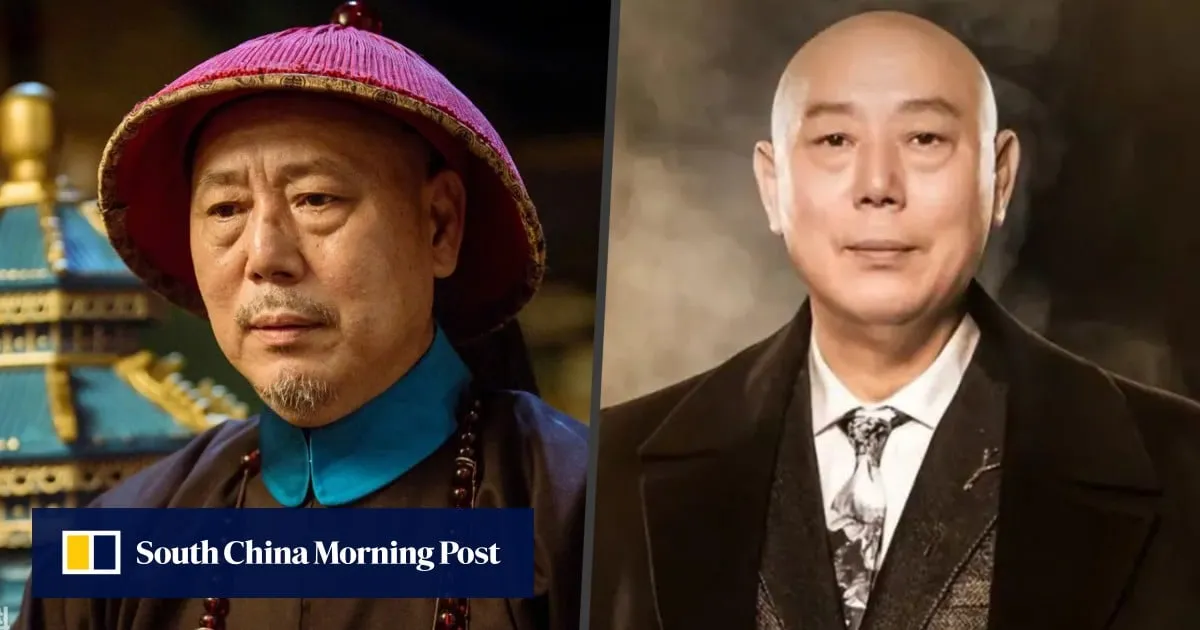
Li Chengru is a nationally famous Chinese actor, but before he gained fame as an entertainer, he was a self-made businessman who lost his entire US$13 million in foreign currency trading.Beijing-born Li, 71, is famous for many classic roles, such as police officer Da Zeng in one of China’s first crime dramas, The VI Group of Fatal Case, and a psychopath who delivers a sharp monologue about the real estate market in Feng Xiaogang’s 2001 film Big Shot’s Funeral.Li was the youngest son of 11 children born to his parents, who ran a silk shop. He was two years old in 1956 when his father died, with the family business already having failed. Li grew up eating wild vegetables and other people’s leftover food. His mother worked at railway construction sites, and sent her older children to learn Peking opera.Li, far left, is seen in a archival photo with companions; he was the youngest of 11 children born to his parents, who operated a traditional silk shop. Photo: QQ.comLi was assigned to a clothing factory after leaving secondary school. One day he met actor Dong Xingji while watching a play, and became his apprentice. The experience sparked Li’s passion for acting. He took a test to enter the amateur acting training class of the Beijing-film-academy" class="entity-link entity-organization" data-entity-id="168628" data-entity-type="organization">Beijing Film Academy at the age of 26.Li’s teacher told him he had a face that would not make him famous before he turned 40. The prophecy came true. Li could not find an acting job, so instead he sought backstage opportunities.He impressed Yang Jie, director of the classic 1986 TV series Journey to the West, with his writing skills, and became a script supervisor.Li toured China in search of impactful locations for the drama. He said this adventurous experience benefited his later life as a businessman and actor.Early in his career, Li’s acting teacher predicted his face would not bring him fame before age 40. When the prophecy held true and acting roles dried up, Li pivoted to backstage production work. Photo: QQ.comAfter the show finished, Li went into business. In 1990, he opened Beijing’s first self-service clothing store, Tebiete, or Special Special. To recruit saleswomen, he offered a monthly salary of 5,000 to 6,000 yuan (US$740 to US$890) – over 20 times the city’s average salary – and held a beauty contest for over 7,000 applicants.When the store opened, he held a fashion show featuring 110 women. Li said the store’s daily turnover was 500,000 to 600,000 yuan.Li wore suits worth no less than 15,000 yuan, drove Mercedes and BMW cars, and could easily tip a waiter US$100.Then in 1993, Li lost all the money in his account, US$13 million, in foreign exchange trading. He said he went bald overnight.At the height of his clothing retail business, Li lived lavishly — wearing luxury suits worth over 15,000 yuan (US$2,200), and driving high-end Mercedes and BMW vehicles. Photo: QQ.comBankrupt Li then decided that he still wanted to be an actor.Further ReadingHe wanted to play a police role, so he co-planned The VI Group of Fatal Case. The classic monologue in Big Shot’s Funeral, in which Li spoke 328 characters in 86 seconds, was shot in one take.In 2019, Li went viral for his comments on contestants’ poor acting skills in a talent show.He used three Chinese idioms: “I feel like I’m sitting on pins and needles, like I have a thorn in my back, like I have a fishbone stuck in my throat.”Following a sudden business bankruptcy that caused him to go bald overnight from sheer shock, Li returned to his original passion of acting to rebuild his life. Photo: QQ.comThe idioms became a meme that is still widely used to comment on things that people feel uncomfortable with.Now he reportedly lives in a house where he has planted 500 cherry trees. He sometimes eats wild vegetables from the garden, and wears socks that cost less than 10 yuan. He said he had “grown up.”
SRCSouth China Morning Post
LANGEN
LEANCenter-Right
WORDS660
ENT12
TUE · 2026-07-21 · 10:00 GMTBRIEF NSR-2026-0721-94643
NSR-2026-0721-94643News Report·EN·Human Interest
From bankruptcy to viral critic: the remarkable journey of Chinese veteran actor Li Chengru
Chinese actor Li Chengru experienced a dramatic life transformation, moving from a successful but ultimately bankrupt businessman to a celebrated entertainer and viral critic. After a challenging childhood, Li pursued acting but found early success elusive, leading him to backstage production work.
Fran LuSouth China Morning PostFiled 2026-07-21 · 10:00 GMTLean · Center-RightRead · 3 min
South China Morning PostFIG 01
Reading time
3min
Word count
660words
Sources cited
0cited
Entities identified
12entities
Quality score
100%
§ 01
Briefing Summary
AI-generatedNEWSAR · AI
Chinese actor Li Chengru experienced a dramatic life transformation, moving from a successful but ultimately bankrupt businessman to a celebrated entertainer and viral critic. After a challenging childhood, Li pursued acting but found early success elusive, leading him to backstage production work. He then transitioned to business, opening Beijing's first self-service clothing store and living lavishly until losing his entire US$13 million in foreign currency trading in 1993. This financial ruin prompted his return to acting, where he achieved fame in classic roles. More recently, Li gained widespread recognition for his sharp critiques on a talent show, with his memorable idioms becoming a popular meme. He now lives a more humble life, reflecting on his journey.
Confidence 0.90Claims 5Entities 12
§ 02
Article analysis
Model · rule-basedFraming
Human Interest
Economic Impact
Tone
Mixed Tone
AI-assessed
CalmNeutralAlarmist
Factuality
0.60 / 1.00
Mixed
LowHigh
Sources cited
0
No named sources
FewMany
§ 03
Key claims
5 extracted01
Li Chengru was assigned to a clothing factory after leaving secondary school and later became an apprentice to actor Dong Xingji.
factual
Confidence
0.90
02
Li Chengru's acting teacher predicted he would not become famous before age 40.
quoteLi Chengru's teacher
Confidence
0.90
03
Li Chengru grew up in poverty, eating wild vegetables and leftovers after his father died and family business failed.
factual
Confidence
0.90
04
Li Chengru was a nationally famous Chinese actor who previously lost US$13 million in foreign currency trading.
factual
Confidence
0.90
05
Li Chengru opened Beijing's first self-service clothing store, Tebiete, in 1990, with a daily turnover of 500,000 to 600,000 yuan.
factual
Confidence
0.80
§ 04
Full report
3 min read · 660 words§ 05
Entities
12 identifiedKey playerOppositionContextPositiveNeutralNegative
People4
§ 06
Keywords & salience
8 termsactor
1.00
businessman
0.90
career journey
0.80
bankruptcy
0.70
entrepreneurship
0.60
film industry
0.50
peking opera
0.40
script supervisor
0.40
§ 07
Topic connections
Interactive graph No topic relationship data available yet. This graph will appear once topic relationships have been computed.