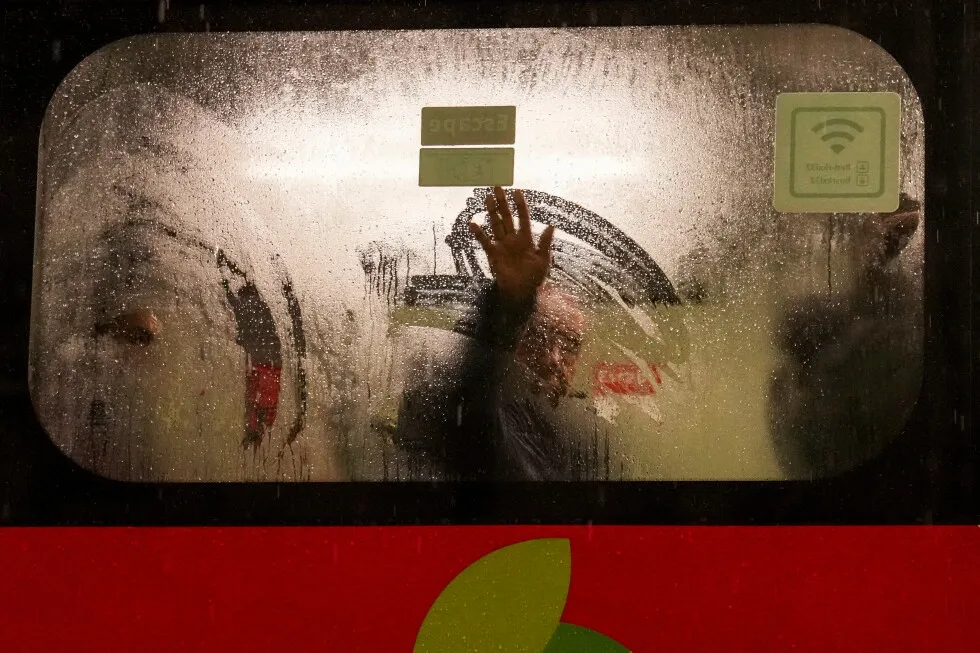
Weeklong rainstorms in Chile blamed on El Nino kill at least 10 and trigger flash floods 1 of 5 | A man on a bus wipes frost from the window during a rainstorm in Santiago, Chile, early Monday, July 20, 2026. (AP Photo/Esteban Felix) 2 of 5 | People cross Alameda Bernardo O’Higgins Avenue during a rainstorm in Santiago, Chile, early Monday, July 20, 2026. (AP Photo/Esteban Felix)x) 3 of 5 | A woman waits for a bus during a rainstorm in Santiago, Chile, early Monday, July 20, 2026. (AP Photo/Esteban Felix) 4 of 5 | Commuters open their umbrellas as they leave the bus as it rains in Santiago, Chile, Monday, July 20, 2026. (AP Photo/Esteban Felix) 5 of 5 | Police stand by a body on a park bench amid rainstorms in Santiago, Chile, Monday, July 20, 2026. The person died of hypothermia, according city officials. (AP Photo/Esteban Felix) 1 of 5 | A man on a bus wipes frost from the window during a rainstorm in Santiago, Chile, early Monday, July 20, 2026. (AP Photo/Esteban Felix) 1 of 5 A man on a bus wipes frost from the window during a rainstorm in Santiago, Chile, early Monday, July 20, 2026. (AP Photo/Esteban Felix) Add AP News on Google Add AP News as your preferred source to see more of our stories on Google. Share 2 of 5 | People cross Alameda Bernardo O’Higgins Avenue during a rainstorm in Santiago, Chile, early Monday, July 20, 2026. (AP Photo/Esteban Felix)x) 2 of 5 People cross Alameda Bernardo O’Higgins Avenue during a rainstorm in Santiago, Chile, early Monday, July 20, 2026. (AP Photo/Esteban Felix)x) Add AP News on Google Add AP News as your preferred source to see more of our stories on Google. Share 3 of 5 | A woman waits for a bus during a rainstorm in Santiago, Chile, early Monday, July 20, 2026. (AP Photo/Esteban Felix) 3 of 5 A woman waits for a bus during a rainstorm in Santiago, Chile, early Monday, July 20, 2026. (AP Photo/Esteban Felix) Add AP News on Google Add AP News as your preferred source to see more of our stories on Google. Share 4 of 5 | Commuters open their umbrellas as they leave the bus as it rains in Santiago, Chile, Monday, July 20, 2026. (AP Photo/Esteban Felix) 4 of 5 Commuters open their umbrellas as they leave the bus as it rains in Santiago, Chile, Monday, July 20, 2026. (AP Photo/Esteban Felix) Add AP News on Google Add AP News as your preferred source to see more of our stories on Google. Share 5 of 5 | Police stand by a body on a park bench amid rainstorms in Santiago, Chile, Monday, July 20, 2026. The person died of hypothermia, according city officials. (AP Photo/Esteban Felix) 5 of 5 Police stand by a body on a park bench amid rainstorms in Santiago, Chile, Monday, July 20, 2026. The person died of hypothermia, according city officials. (AP Photo/Esteban Felix) Add AP News on Google Add AP News as your preferred source to see more of our stories on Google. Share Updated [hour]:[minute] [AMPM] [timezone], [monthFull] [day], [year] Santiago, Chile (AP) — Weeklong rainstorms blamed on El Nino that have battered Chile have killed at least 10 people as authorities raced on Tuesday to reach more than 100,000 cut off by flash floods in what has been one of the country’s worst weather disasters in decades.Torrential rains and strong winds continued to lash the usually arid northern regions of Atacama and Coquimbo, where the government of President José Antonio Kast declared a state of emergency on Monday. Authorities said the storms have also injured 16 people and displaced over 4,000 others, with 1,031 staying in emergency shelters. Thousands more have been left without electricity or drinking water. The rainfall has so far destroyed 81 homes and damaged more than 20,000. Chile’s national disaster response service, Senapred, has sent out hundreds of evacuation alerts to 10 out of the country’s 16 regions. Swollen rivers and flooded roads have stranded 104,271 people, Senapred reported, warning that overwhelmed rivers will remain a threat even when the rainfall eases. “River levels do not necessarily rise at the same time precipitation is falling,” said Alicia Cebrián, the head of Senapred. “Water accumulates in the foothill areas, which means river levels can continue rising even hours after the storm system has passed.”Meteorologists attribute the deluge in Chile to the return of El Nino, a powerful, naturally occurring phenomenon in the Pacific Ocean that drives temperatures higher and exacerbates extreme weather events. El Niño is typically associated with heavier rainfall in parts of southern South America.
SRCAssociated Press (AP)
LANGEN
LEANCenter
WORDS779
ENT9
TUE · 2026-07-21 · 17:53 GMTBRIEF NSR-2026-0721-94762
NSR-2026-0721-94762News Report·EN·Human Interest
Weeklong rainstorms in Chile blamed on El Nino kill at least 10 and trigger flash floods
Weeklong rainstorms, attributed to El Niño, have caused severe flooding in Chile, resulting in at least 10 deaths and injuring 16 people. Over 100,000 individuals are stranded by flash floods, with over 4,000 displaced and thousands lacking electricity and drinking water.
By
NAYARA BATSCHKEAssociated Press (AP)Filed 2026-07-21 · 17:53 GMTLean · CenterRead · 4 min
Associated Press (AP)FIG 01
Reading time
4min
Word count
779words
Sources cited
1cited
Entities identified
9entities
Quality score
100%
§ 01
Briefing Summary
AI-generatedNEWSAR · AI
Weeklong rainstorms, attributed to El Niño, have caused severe flooding in Chile, resulting in at least 10 deaths and injuring 16 people. Over 100,000 individuals are stranded by flash floods, with over 4,000 displaced and thousands lacking electricity and drinking water. The storms have destroyed 81 homes and damaged over 20,000 others, primarily in the northern regions of Atacama and Coquimbo. Chile's President José Antonio Kast declared a state of emergency, and the national disaster response service has issued numerous evacuation alerts. Authorities warn that river levels may continue to rise even after rainfall subsides.
Confidence 0.90Sources 1Claims 4Entities 9
§ 02
Article analysis
Model · rule-basedFraming
Human Interest
Public Health
Tone
Mixed Tone
AI-assessed
CalmNeutralAlarmist
Factuality
0.80 / 1.00
Factual
LowHigh
Sources cited
1
Limited
FewMany
§ 03
Key claims
4 extracted01
One person died of hypothermia during the rainstorms, according to city officials.
factualcity officials
Confidence
1.00
02
The rainstorms have triggered flash floods.
factual
Confidence
1.00
03
The rainstorms are blamed on El Nino.
factual
Confidence
1.00
04
Weeklong rainstorms in Chile have killed at least 10 people.
factual
Confidence
1.00
§ 04
Full report
4 min read · 779 words§ 05
Entities
9 identifiedKey playerOppositionContextPositiveNeutralNegative
Topics1
§ 06
Keywords & salience
7 termsel nino
1.00
rainstorms
0.90
flash floods
0.80
chile
0.70
santiago
0.60
fatalities
0.50
hypothermia
0.40
§ 07
Topic connections
Interactive graph Network visualization showing 4 related topics
View Full Graph Person Organization Location Event|Click node to navigate|Edge numbers = shared articles