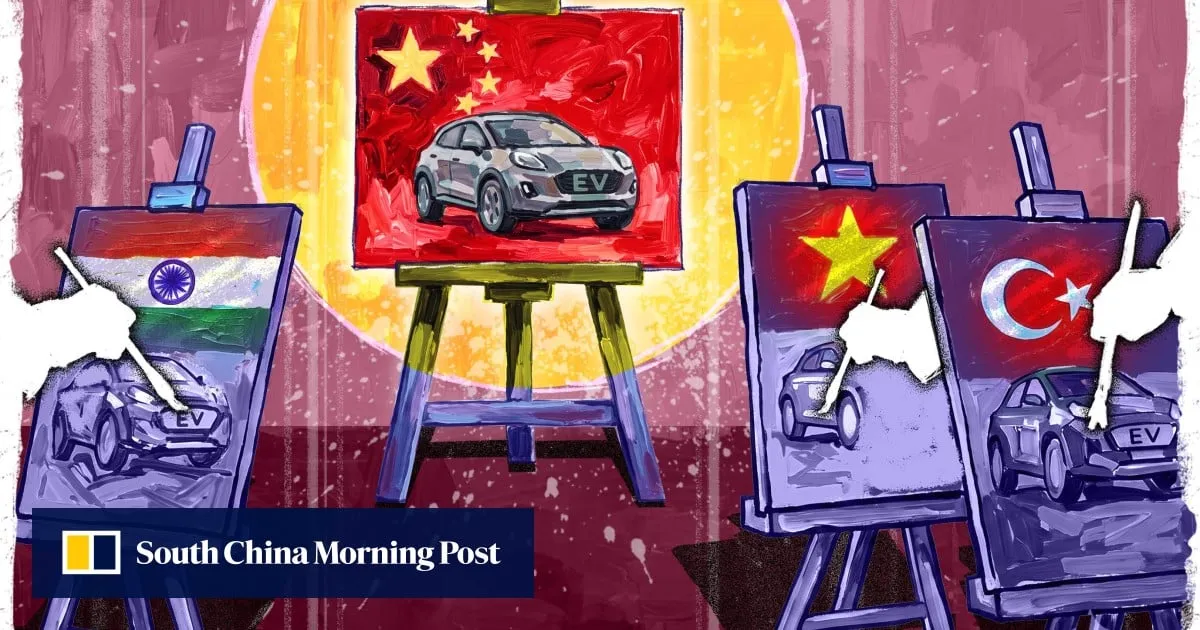
China’s electric vehicle (EV) industry sits at the centre of numerous economic and geopolitical trends: consumer spending, environmental protection, trade policy, high-end manufacturing, technology and more. In this short series, we assess the current state of the sector within these broader contexts. Here, Yeon Woo Lee asks whether Beijing has written a blueprint for developing countries to kick-start their own contenders in the field.Emerging markets once seemed like also-rans in the global car industry. In the days when petrol vehicles predominated, manufacturers required vast supplier networks and hard-won expertise in engines, transmissions and other core power train technologies to compete – two advantages among many for established, wealthier players.But with a global shift towards electric engines and China’s consequent rise from automotive latecomer to EV powerhouse, that calculus has changed.
SRCSouth China Morning Post
LANGEN
LEANCenter-Right
WORDS130
ENT6
TUE · 2026-07-21 · 22:00 GMTBRIEF NSR-2026-0722-94867
NSR-2026-0722-94867Analysis·EN·Technology
China’s policy playbook took its EV sector from zero to hero – can other countries follow?
China's electric vehicle (EV) industry has become a significant player globally, driven by government policy. This rise is examined in the context of economic and geopolitical trends, including consumer spending, environmental protection, and technology.
Yeon Woo LeeSouth China Morning PostFiled 2026-07-21 · 22:00 GMTLean · Center-RightRead · 1 min
South China Morning PostFIG 01
Reading time
1min
Word count
130words
Sources cited
1cited
Entities identified
6entities
Quality score
100%
§ 01
Briefing Summary
AI-generatedNEWSAR · AI
China's electric vehicle (EV) industry has become a significant player globally, driven by government policy. This rise is examined in the context of economic and geopolitical trends, including consumer spending, environmental protection, and technology. The article questions whether China's approach offers a blueprint for developing countries to establish their own EV sectors. Historically, emerging markets struggled in the traditional car industry due to the need for extensive supplier networks and expertise in internal combustion engine technology, advantages held by established manufacturers. However, the global shift to electric engines has altered this landscape, allowing China to transition from an automotive latecomer to a leading EV producer.
Confidence 0.85Sources 1Claims 4Entities 6
§ 02
Article analysis
Model · rule-basedFraming
Technology
Economic Impact
Tone
Measured
AI-assessed
CalmNeutralAlarmist
Factuality
0.60 / 1.00
Mixed
LowHigh
Sources cited
1
Limited
FewMany
§ 03
Key claims
4 extracted01
The article assesses if Beijing has created a blueprint for developing countries to establish their own EV contenders.
factualYeon Woo Lee
Confidence
0.95
02
In the era of petrol vehicles, established players had advantages in supplier networks and powertrain expertise over emerging markets.
factual
Confidence
0.90
03
China's electric vehicle (EV) industry is central to economic and geopolitical trends including consumer spending, environmental protection, trade policy, manufacturing, and technology.
factual
Confidence
0.90
04
The global shift towards electric engines has changed the automotive industry's competitive landscape, benefiting China's rise.
factual
Confidence
0.80
§ 04
Full report
1 min read · 130 words§ 05
Entities
6 identifiedKey playerOppositionContextPositiveNeutralNegative
§ 06
Keywords & salience
9 termselectric vehicle industry
1.00
china ev policy
0.90
developing countries
0.80
automotive sector
0.70
manufacturing
0.60
economic trends
0.50
geopolitical trends
0.50
technology
0.50
trade policy
0.40
§ 07
Topic connections
Interactive graph No topic relationship data available yet. This graph will appear once topic relationships have been computed.