Britain’s new prime minister must solve the old riddle of how to reinvigorate a slow-growing economy 1 of 4 | Britain’s new Prime Minister Andy Burnham speaks to staff and media at 10 Downing Street in London, Monday, July 20, 2026.(AP Photo/Kirsty Wigglesworth) 2 of 4 | Newly appointed Chancellor of the Exchequer John Healey leaves number 10 Downing Street, as new British Prime Minister Andy Burnham has entered number 10 Downing Street and among his first tasks is the selection of his new Cabinet, in London, Monday July 20, 2026. (Yui Mok/PA via AP) 3 of 4 | Britain’s Chancellor of the Exchequer John Healey, center, attends the first cabinet meeting held by Prime Minister Andy Burnham at 10 Downing Street, London, Tuesday July 21, 2026. (Eddie Mulholland/Pool Photo via AP) 4 of 4 | FILE -A man walks in front of the England" class="entity-link entity-organization" data-entity-id="2477" data-entity-type="organization">Bank of England, at the financial district in London, Feb. 5, 2026 (AP Photo/Kin Cheung, File) By DANICA KIRKA Updated 6:05 AM MESZ, July 22, 2026 Add AP News on Google Add AP News as your preferred source to see more of our stories on Google. Share Share Facebook Copy Link copied Print Email X LinkedIn Bluesky Flipboard Pinterest Reddit London (AP) — U.K. Prime Minister Andy Burnham’s announcements during his first 24 hours on the job underscore the political and financial challenges he faces as he tries to jump-start the country’s sluggish economy. Burnham, from Britain’s left-leaning Labour Party, faces restive voters seeking relief from the high cost of living. At the same time, the investors who help finance the government by buying its bonds are demanding that he reduce public sector debt that has ballooned to levels last seen in the 1960s. In an effort to balance the competing demands, Burnham surprised pundits by naming former Defense Secretary John Healey as his Treasury chief. Healey, who served in the Treasury under former Prime Minister Gordon Brown, is seen as someone who will make sure the government lives up to its pledge to reduce Britain’s debt pile. Then, first thing Tuesday morning, Burnham made a down payment on his commitment to ease the pressure on cash-strapped consumers. The government announced it would scrap the tax on home electricity use for at least six months beginning in October, saving the average household 45 pounds ($60) a year. Importantly, the government said the move would be paid for by canceling plans to introduce digital ID, in an effort to reassure investors that Burnham isn’t about to go on an unfunded spending spree. “Healey has a daunting task on his hands,’’ said Victoria Scholar, the head of investment at interactive investor. “The government has ambitious plans to tackle cost-of-living pressures … but he faces a very difficult set of public finances to carry these expensive plans through.” Now that he’s controlling the purse strings, Burnham faces the same issues that have bedeviled every prime minister since the financial crisis of 2008. And their failure to find answers is a big part of the reason that the eight men and women who have taken up residence behind the famous black door at 10 Downing Street in that period have had an average tenure of two years. Burnham, like his predecessors, faces the challenge of finding a way to reinvigorate an economy that has grown an average of less than 1.5% a year since 2009, compared with an annual average of 3% in the 15 years before the financial crisis. As he develops his economic plans, Burnham will be constrained by promises to reduce government debt, which now exceeds 95% of gross domestic product. According to Britain’s budget watchdog, debt interest payments rose to 111.2 billion pounds ($149 billion), or 8.3% of government spending, in the financial year that ended in April, leaving less money to spend on government services ranging from healthcare to education and defense. UK leader Burnham gathers his Cabinet after sweeping away Starmer supporters 4 MIN READ Andy Burnham becomes the UK’s seventh prime minister in a decade after Starmer resigns 1 MIN READ Andy Burnham distanced himself from UK Prime Minister Starmer, but may be stuck with his policies 1 MIN READ New challenges are added to the old ones But he also faces a new challenge after his predecessor, like most other European governments, pledged to increase defense spending to 3.5% of GDP by 2035. That came after pressure from U.S. President Donald Trump, who has criticized his allies for not paying their fair share of Europe’s defense. Meeting that commitment will cost about 36 billion pounds a year, or 500 pounds for each person in the U.K., according to estimates from the Institute for Fiscal Studies, a respected independent researcher. “We should absolutely acknowledge that these constraints are structural,” said Olivia O’Sullivan at Chatham House, a London-based think tank. “They would be tough for any prime minister at this time.” And that’s why boosting economic output is so crucial to all of Burnham’s plans. Stimulating economic growth is key to Burnham’s plans Without faster growth, British taxpayers will either have to pay higher taxes or accept cuts in popular programs such as the National Health Service, which offers free medical care to everyone. A booming economy, on the other hand, would boost the revenue generated by existing taxes and tax rates because the value of company profits, worker salaries and other transactions would rise. Sluggish growth doomed former Prime Minister Keir Starmer’s government when angry Labour lawmakers forced him to cancel welfare cuts designed to help balance the budget. More recently he was widely criticized for failing to offer a credible plan for increasing defense spending. Some Labour supporters have grumbled that the government “shouldn’t be in hock to the bond market.” But economists say Burnham and Healey must take the financial constraints seriously if they are going to succeed in bolstering the economy and increasing the pot available to fund popular programs. “It’s not some imaginary bogeyman in the bond market,” said David Aikman, director of the independent National Institute of Economic and Social Research. “We need people to buy the debt we’re issuing.” So far, Burnham has offered little detail on his plans for the British economy. His big idea is to “reindustrialize” the economy by shifting investment away from London to other parts of the country that were hard hit by the decline in manufacturing. Burnham also says he will increase construction of public housing to address the nation’s housing shortage and bolster the construction industry, and support the small and medium-size businesses that account for 60% of private employment. At the same time, he has pledged to stick to Labour’s promises not to raise taxes on working people and to maintain the “triple lock” on state pensions, an expensive policy that guarantees pensions will rise each year by the annual increase in consumer price inflation, average wage growth, or 2.5%, whichever is higher. Jim O’Neill, a former chief economist for Goldman Sachs and member of the House of Lords who has advised Burnham in the past, told the BBC last month that Britain’s new prime minister must “get real.” “We need somebody that’s prepared to do something bold and different,” he said. Burnham, he added, “has got the same challenge that everybody else seems to avoid and that’s doing something about things like welfare, stop this never-ending spectacular rise in the spending on NHS. … Do something about the triple lock, etc., etc., and get out of this weird sort of prison of being owned by every little small group that opposes anything anybody wants to do. “
SRCAssociated Press (AP)
LANGEN
LEANCenter
WORDS1 269
ENT12
WED · 2026-07-22 · 04:23 GMTBRIEF NSR-2026-0722-94947
NSR-2026-0722-94947News Report·EN·Economic Impact
Britain’s new prime minister must solve the old riddle of how to reinvigorate a slow-growing economy
New UK Prime Minister Andy Burnham faces significant challenges in revitalizing Britain's slow-growing economy. He must balance the demands of voters seeking relief from the cost of living with investor pressure to reduce the ballooning national debt.
Associated Press (AP)Filed 2026-07-22 · 04:23 GMTLean · CenterRead · 6 min
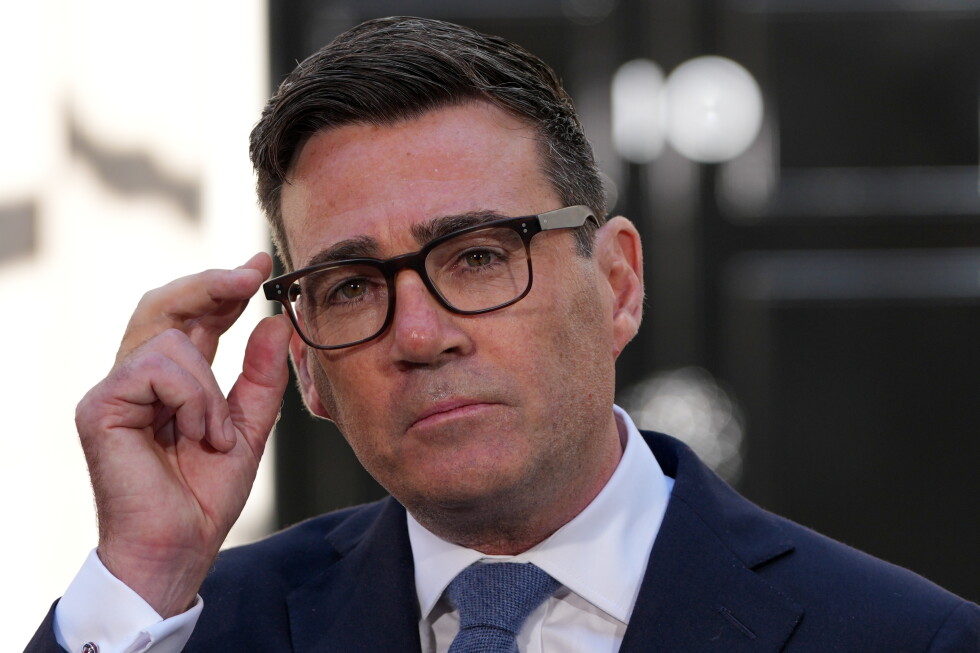
Associated Press (AP)FIG 01
Reading time
6min
Word count
1 269words
Sources cited
1cited
Entities identified
12entities
Quality score
100%
§ 01
Briefing Summary
AI-generatedNEWSAR · AI
New UK Prime Minister Andy Burnham faces significant challenges in revitalizing Britain's slow-growing economy. He must balance the demands of voters seeking relief from the cost of living with investor pressure to reduce the ballooning national debt. In his first 24 hours, Burnham appointed John Healey as Treasury chief, signaling a commitment to fiscal responsibility. He also announced a six-month suspension of the home electricity tax, funded by canceling digital ID plans, to reassure investors. Burnham's administration aims to reindustrialize the economy, boost public housing construction, and support small businesses, while adhering to promises not to raise taxes on working people and to maintain the state pension's "triple lock." However, he also faces the new challenge of increasing defense spending.
Confidence 0.90Sources 1Claims 5Entities 12
§ 02
Article analysis
Model · rule-basedFraming
Economic Impact
Political Strategy
Tone
Measured
AI-assessed
CalmNeutralAlarmist
Factuality
0.70 / 1.00
Factual
LowHigh
Sources cited
1
Limited
FewMany
§ 03
Key claims
5 extracted01
Healey has a daunting task on his hands; the government has ambitious plans to tackle cost-of-living pressures but faces difficult public finances.
quoteVictoria Scholar
Confidence
1.00
02
The move to scrap the electricity tax will be paid for by canceling plans to introduce digital ID.
factual
Confidence
0.90
03
The government will scrap the tax on home electricity use for at least six months, saving the average household 45 pounds ($60) a year.
factual
Confidence
0.90
04
Public sector debt has ballooned to levels last seen in the 1960s.
statistic
Confidence
0.90
05
U.K. Prime Minister Andy Burnham faces political and financial challenges in jump-starting the country's sluggish economy.
factual
Confidence
0.90
§ 04
Full report
6 min read · 1 269 words§ 05
Entities
12 identifiedKey playerOppositionContextPositiveNeutralNegative
People3
§ 06
Keywords & salience
10 termsreinvigorate economy
1.00
slow-growing economy
1.00
public sector debt
0.90
cost of living
0.80
prime minister andy burnham
0.70
economic policy
0.60
chancellor of the exchequer john healey
0.60
tax on home electricity
0.50
labour party
0.40
bank of england
0.40
§ 07
Topic connections
Interactive graph Network visualization showing 51 related topics
View Full Graph Person Organization Location Event|Click node to navigate|Edge numbers = shared articles