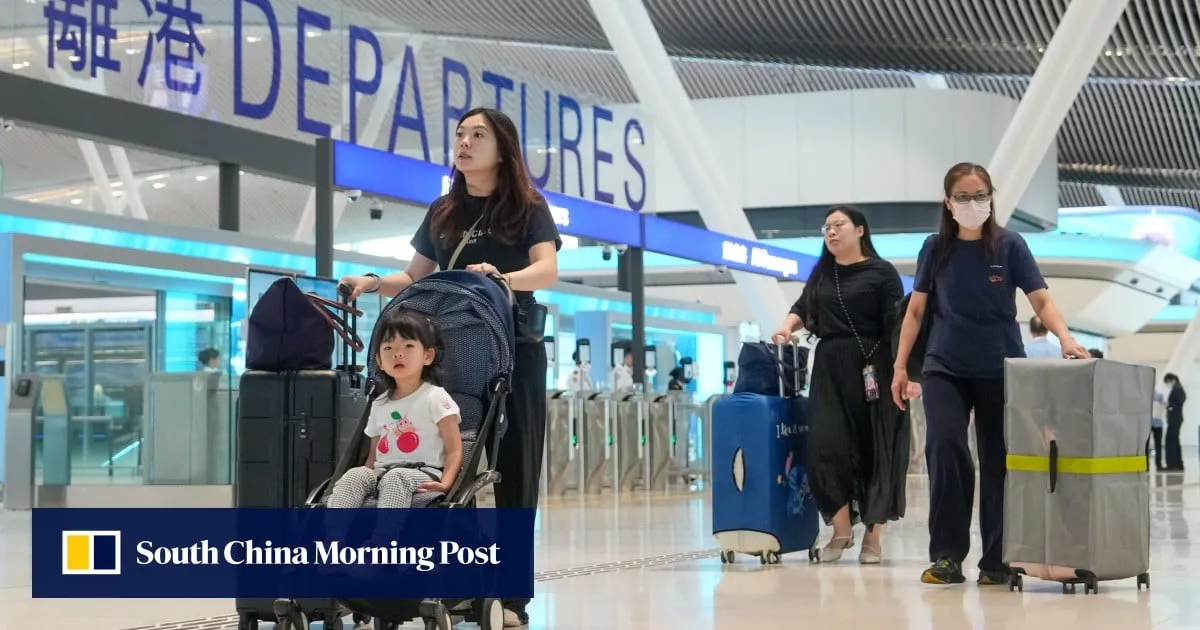
Targeted viral surveillance of transit passengers at just two major aviation hubs, Hong Kong and the United Arab Emirates, could speed global detection of new variants by about three days, a university study has found.Professor Leo Poon Lit-man, chair of public health virology at the University of Hong Kong (HKU), said on Wednesday that the approach would help authorities stay ahead of emerging threats.“Strengthening local surveillance in all regions remains the foundation of global health security. Our proposed strategy does not require redistributing resources from other regions,” he told a radio programme.
SRCSouth China Morning Post
LANGEN
LEANCenter-Right
WORDS92
ENT8
WED · 2026-07-22 · 07:37 GMTBRIEF NSR-2026-0722-94968
NSR-2026-0722-94968News Report·EN·Public Health
Hong Kong, UAE hubs could act as global early warning system for pandemics: study
A University of Hong Kong study suggests that targeted viral surveillance of transit passengers at Hong Kong and the United Arab Emirates' major aviation hubs could accelerate the global detection of new viral variants by approximately three days. Professor Leo Poon Lit-man of HKU stated that this strategy would enable authorities to proactively address emerging threats.
Cannix YauSouth China Morning PostFiled 2026-07-22 · 07:37 GMTLean · Center-RightRead · 1 min
South China Morning PostFIG 01
Reading time
1min
Word count
92words
Sources cited
1cited
Entities identified
8entities
Quality score
100%
§ 01
Briefing Summary
AI-generatedNEWSAR · AI
A University of Hong Kong study suggests that targeted viral surveillance of transit passengers at Hong Kong and the United Arab Emirates' major aviation hubs could accelerate the global detection of new viral variants by approximately three days. Professor Leo Poon Lit-man of HKU stated that this strategy would enable authorities to proactively address emerging threats. He emphasized that this approach complements, rather than replaces, the essential foundation of strengthening local surveillance in all regions. The study's findings were shared on a radio program.
Confidence 0.85Sources 1Claims 4Entities 8
§ 02
Article analysis
Model · rule-basedFraming
Public Health
Diplomatic
Tone
Measured
AI-assessed
CalmNeutralAlarmist
Factuality
0.80 / 1.00
Factual
LowHigh
Sources cited
1
Limited
FewMany
§ 03
Key claims
4 extracted01
Professor Leo Poon Lit-man is chair of public health virology at the University of Hong Kong.
factual
Confidence
1.00
02
The proposed strategy does not require redistributing resources from other regions.
quoteProfessor Leo Poon Lit-man
Confidence
1.00
03
Strengthening local surveillance in all regions remains the foundation of global health security.
quoteProfessor Leo Poon Lit-man
Confidence
1.00
04
Targeted viral surveillance at Hong Kong and UAE aviation hubs could speed global detection of new variants by about three days.
statisticuniversity study
Confidence
0.90
§ 04
Full report
1 min read · 92 words§ 05
Entities
8 identifiedKey playerOppositionContextPositiveNeutralNegative
Organizations1
§ 06
Keywords & salience
8 termspandemic early warning system
1.00
viral surveillance
0.90
hong kong
0.80
united arab emirates
0.80
global detection
0.70
new variants
0.60
public health
0.50
health security
0.40
§ 07
Topic connections
Interactive graph Network visualization showing 51 related topics
View Full Graph Person Organization Location Event|Click node to navigate|Edge numbers = shared articles