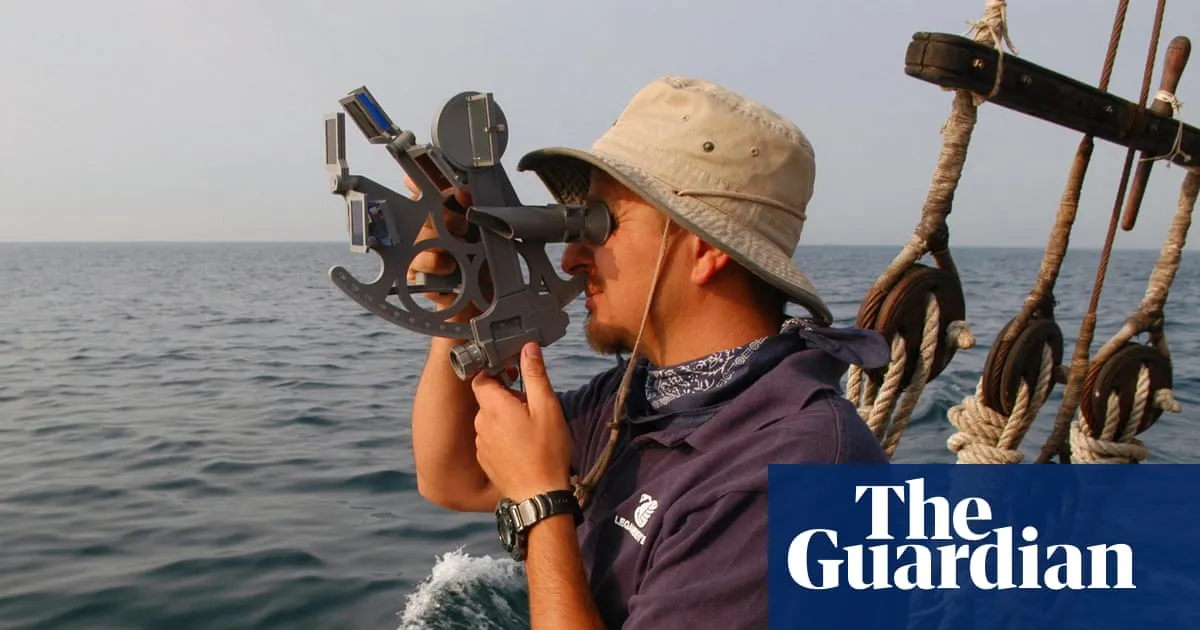
The defence force is already offering sextant training, so members can navigate by the stars, along with terrestrial navigation training. Photograph: Dino Fracchia/Alamy View image in fullscreen The defence force is already offering sextant training, so members can navigate by the stars, along with terrestrial navigation training. Photograph: Dino Fracchia/Alamy How will Australia’s emergency services cope if satellites go down? With a sextant and a street directory Military and SES personnel being taught analog communication and navigation techniques as experts warn solar flare could knock out ‘critical space infrastructure’ Get our breaking news email, free app or daily news podcast Australia’s emergency services and military personnel are being trained to read paper maps, navigate without GPS support, and sail by the stars in case something knocks out the nation’s space capabilities. A panel at the 19th Australian space forum in Adelaide on Wednesday was asked to consider what would happen “if we suddenly lost access to critical space infrastructure – no satellites, no GPS, no remote sensing, no secure communications?” The experts warned that Australians are unaware just how dependent they are on space, and how vulnerable that connection is to enemy attacks and solar flares. It’s “not science fiction”, Optus satellite and space systems head, Nick Leake, said. He described ATM networks going down, emergency services losing their situational awareness, aircraft navigation degrading, defence losing secure communications and remote communities being entirely cut off. Aviation, freight and energy grid communications all rely on satellites, and financial systems could face “immediate cascading failure”, he said. People may only realise their service is being delivered by a satellite when they lose it. “Most Australians have no idea that space is part of their everyday life,” Leake said. “This isn’t science fiction. This is how critical satellite infrastructure is. Australia has one of the highest per capita dependencies on satellite infrastructure in the world. Flinders University adjunct professor Jackie Craig AM is an expert in cyber and virtual warfare and an incident management team leader with the South Australian state emergency service. She said emergency services are “increasingly dependent on increasingly vulnerable systems”. View image in fullscreen Australians are not aware of how dependent they are on space, and how vulnerable that connection is to solar flares, experts say. Photograph: Solar Dynamics Observatory/AP She said they now teach members to navigate with street directories and maps instead of phones – a once ubiquitous skill that has become lost in the age of Google Maps. “What we discovered is the young people of the digital revolution can’t actually use a UBD [street directory]. They’re also very poor at reading and using maps,” she said. She said if the satellite systems went down emergency services would be “back to pencil and paper”, radios, and hard copies of procedure manuals. Michael Murphy, deputy chief executive of the Royal Flying Doctor Service SA/NT, said if satellite systems went dark tomorrow, they would continue as normal – for about 24 hours, thanks to inbuilt contingencies and redundancies. Then, they would prioritise life-saving missions, relying on manual procedures and alternative communication methods. He said they could go “old school” with high frequency radio and use the bush telegraph to share information in an analogue way. “[And] we’ve got heaps of really good landmarks, the river systems, deserts, ranges, borders, water. If you’re familiar with the land, you’ll get around pretty well,” he said. The Australian defence force’s air commodore, Chris Robson, said planning for a loss of satellite support wasn’t “doomsday prepping” or a “scare tactic” but “something we need to be honest about”. “I don’t think the general public understands,” the space forces group and joint forces space component commander said. The defence force is already offering sextant training, so members can navigate by the stars, along with terrestrial navigation training. But Robson did not think it would be frequently used. “I don’t think that you will see too many people sitting on the bridge looking at a sextant,” he said. The biggest risk was not an enemy attack, he said, but “that big orange glowing thing that on any single day can have a hiccup and take out a significant portion of our space capabilities”. The panel discussed ways to make the network more resilient, including having satellite redundancy in multiple orbits, more Earth stations, and sovereign satellite capabilities, instead of relying on US giants Amazon and Starlink. Explore more on these topics Australia news Space emergency services South Australia Australian military news Share Reuse this content
SRCThe Guardian - World News
LANGEN
LEANCenter-Left
WORDS751
ENT12
WED · 2026-07-22 · 15:00 GMTBRIEF NSR-2026-0722-95088
NSR-2026-0722-95088News Report·EN·National Security
How will Australia’s emergency services cope if satellites go down? With a sextant and a street directory
Australian emergency services and military personnel are undergoing training in analog communication and navigation techniques, including using paper maps and sextants, due to concerns about the nation's reliance on vulnerable satellite infrastructure. Experts at the 19th Australian Space Forum warned that a solar flare or enemy attack could disable critical space capabilities, impacting everything from ATM networks and emergency services' situational awareness to aviation and financial systems.
Tory ShepherdThe Guardian - World NewsFiled 2026-07-22 · 15:00 GMTLean · Center-LeftRead · 4 min
The Guardian - World NewsFIG 01
Reading time
4min
Word count
751words
Sources cited
2cited
Entities identified
12entities
Quality score
100%
§ 01
Briefing Summary
AI-generatedNEWSAR · AI
Australian emergency services and military personnel are undergoing training in analog communication and navigation techniques, including using paper maps and sextants, due to concerns about the nation's reliance on vulnerable satellite infrastructure. Experts at the 19th Australian Space Forum warned that a solar flare or enemy attack could disable critical space capabilities, impacting everything from ATM networks and emergency services' situational awareness to aviation and financial systems. This preparedness is a response to the realization that many Australians are unaware of their dependence on satellites and the potential for widespread disruption if these systems fail. The training aims to equip personnel with skills like reading street directories and navigating by the stars, acknowledging that younger generations may lack these traditional abilities.
Confidence 0.90Sources 2Claims 5Entities 12
§ 02
Article analysis
Model · rule-basedFraming
National Security
Technology
Tone
Mixed Tone
AI-assessed
CalmNeutralAlarmist
Factuality
0.70 / 1.00
Factual
LowHigh
Sources cited
2
Limited
FewMany
§ 03
Key claims
5 extracted01
Australians are unaware of their high dependency on satellite infrastructure and its vulnerability to enemy attacks and solar flares.
quoteNick Leake
Confidence
0.90
02
Australia's emergency services and military are being trained in analog communication and navigation techniques due to potential satellite failure.
factual
Confidence
0.90
03
Australia has one of the highest per capita dependencies on satellite infrastructure globally.
statisticNick Leake
Confidence
0.85
04
Young people trained in the digital revolution are often unable to use street directories or read maps effectively.
quoteJackie Craig AM
Confidence
0.80
05
A loss of critical space infrastructure could lead to ATM networks going down, emergency services losing situational awareness, and aircraft navigation degrading.
predictionNick Leake
Confidence
0.80
§ 04
Full report
4 min read · 751 words§ 05
Entities
12 identifiedKey playerOppositionContextPositiveNeutralNegative
Organizations6
§ 06
Keywords & salience
9 termssatellite infrastructure
1.00
emergency services
0.90
space capabilities
0.80
gps
0.70
analog navigation
0.60
vulnerability
0.50
solar flares
0.50
cyber warfare
0.40
sextant training
0.40
§ 07
Topic connections
Interactive graph Network visualization showing 51 related topics
View Full Graph Person Organization Location Event|Click node to navigate|Edge numbers = shared articles