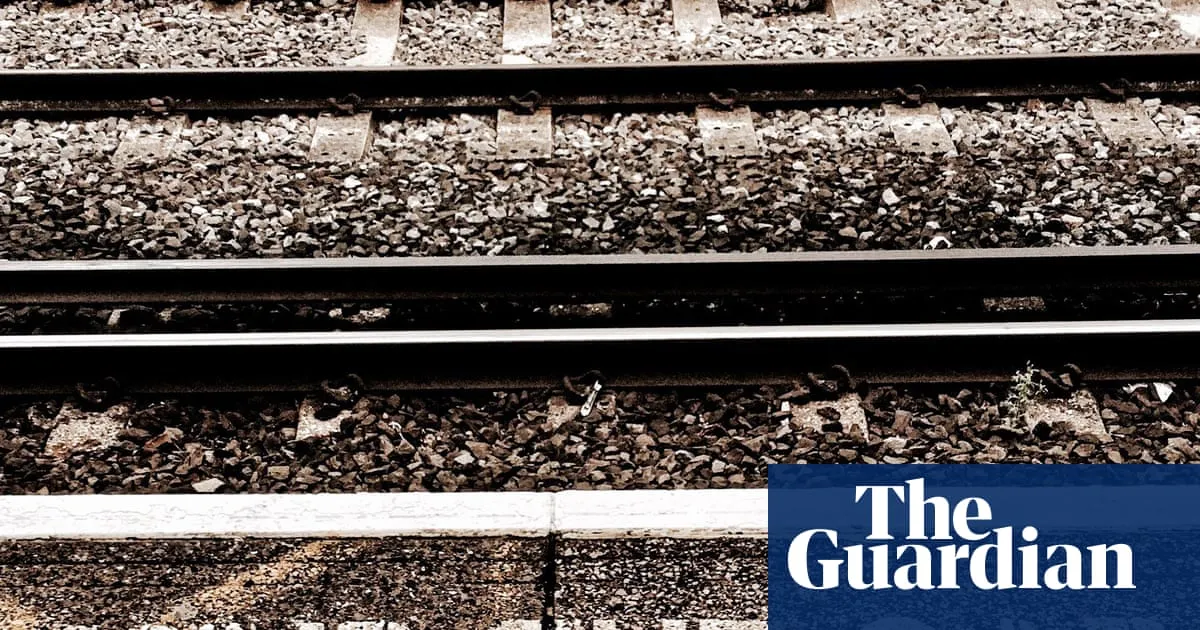
Four in five blind and partially sighted people in the UK have struggled to cross the gap between trains and station platforms, according to a survey, with some falling and injuring themselves.Many blind and partially sighted people avoid taking train journeys owing to anxieties around whether they will be properly supported after having had inconsistent experiences, according to research from the Royal National Institute of Blind People (RNIB).It found that more than one-third (37%) of blind and partially sighted people felt unable to take all the train journeys they wanted and needed. The gap between the platform and trains was a “significant source of fear”, with some people being struck by a train or coming into contact with an electric rail, or trapped in train doors and dragged as the train departed, the RNIB found.This is partly because tactile wayfinding, which uses raised bumps and colours to help blind and visually impaired people navigate, is less common in British train stations than in many comparable countries such as European nations and Japan, with just one-fifth of blind and visually impaired people surveyed by the RNIB saying they had encountered it at a station.The report also highlighted inconsistent experiences with passenger assistance, with two-thirds of the 1,200 survey participants regularly left stranded at railway stations when they booked passenger assistance, three-quarters unable to rely on rail staff for help and information, and two-thirds having not been alerted if a train destination changed while onboard.One respondent said they found train travel “too overwhelming to even dare try and use a train alone”, while another said: “Unstaffed stations are a nightmare for the blind.” Erik Matthies, the RNIB’s policy lead for travel and transport, who has sight loss, said the RNIB would like the government to use the new railways bill, which will pave the way for Great British Railways, to “make sure accessibility is embedded” from the start.“Blind and partially sighted people have to contend with challenging ticket-buying methods, inaccessible stations, platforms and onboard facilities like toilets, and inconsistent gaps between the train and platform edges, which contribute to anxious, potentially unsafe journeys,” he said.Paul Goddard, from East Sussex, who was registered blind in 2008 and travels regularly to London Bridge, said: “Every time I book assistance through the passenger assistance app when I’m travelling to London Bridge, I’m very anxious because I know the assistance is going to fail. No one meets me. You speak to the gate line staff who are often completely disinterested.“Then it’s very difficult to claim back the money you’ve lost on those tickets and you can be left completely out of pocket. It’s just completely unacceptable.”The research found that rail companies often failed to provide information for blind and partially sighted passengers in formats they could understand. It further highlighted the impact of staffing cuts to ticket offices, with nearly half of respondents (42%) preferring to buy train tickets from a person at ticket offices.Khadija Raza, a blind disability campaigner, said that in the seven years she had been using trains without friends and family she had had “a very inconsistent experience”.Her previous local station was unmanned and although she booked passenger assistance every time, “nobody ever met me at the platform,” she said, “so a journey that should have taken me two and a half hours ultimately took about four, missing connection after connection.”She has since moved station and now relies on ticket office staff to assist her, even though it is not their job and it means she cannot travel after 5.30pm or on Sundays as they are not working then.“I always plan in a lot of ‘panic if things go wrong’ time and I always try to be as prepared as possible. I get to the train station at least 20 minutes before the train – and yet still I have issues,” she said.“Even when my train experiences are positive, I’m still exhausted after them, because I constantly think about ‘what if this goes wrong, what will happen to me’.”She contrasted her struggles on railways with more positive experiences on the London Underground network, which she said was “very efficient”. She suspected this may be the benefit of having a single operator, compared with separate train and railway station operators where there is often disagreement as to whose responsibility passenger assistance is.She would like to see all staff given disability awareness training, improved station accessibility and more informative audio announcements on train journeys. “When something goes wrong, we’re usually the last people to know, and we’re the ones who need to know,” she said.
SRCThe Guardian - World News
LANGEN
LEANCenter-Left
WORDS761
ENT5
THU · 2026-01-22 · 00:01 GMTBRIEF NSR-2026-0122-9513
NSR-2026-0122-9513News Report·EN·Human Interest
Four in five blind people struggle with gap at UK train stations, survey finds
A recent RNIB survey revealed that four in five blind and partially sighted people in the UK struggle with the gap between trains and platforms, leading to falls and injuries. The research, involving 1,200 participants, found that over a third avoid train travel due to anxieties about inconsistent support and accessibility issues.
Rachel HallThe Guardian - World NewsFiled 2026-01-22 · 00:01 GMTLean · Center-LeftRead · 4 min
The Guardian - World NewsFIG 01
Reading time
4min
Word count
761words
Sources cited
3cited
Entities identified
5entities
Quality score
100%
§ 01
Briefing Summary
AI-generatedNEWSAR · AI
A recent RNIB survey revealed that four in five blind and partially sighted people in the UK struggle with the gap between trains and platforms, leading to falls and injuries. The research, involving 1,200 participants, found that over a third avoid train travel due to anxieties about inconsistent support and accessibility issues. The report highlighted the lack of tactile wayfinding at stations compared to other countries, as well as unreliable passenger assistance, with many respondents being stranded or unable to get help from staff. The RNIB is urging the government to improve accessibility in the upcoming railways bill, citing challenging ticket systems, inaccessible stations, and inconsistent platform gaps as contributing factors to unsafe journeys.
Confidence 0.90Sources 3Claims 5Entities 5
§ 02
Article analysis
Model · rule-basedFraming
Human Interest
Social Justice
Tone
Mixed Tone
AI-assessed
CalmNeutralAlarmist
Factuality
0.70 / 1.00
Factual
LowHigh
Sources cited
3
Well sourced
FewMany
§ 03
Key claims
5 extracted01
Blind and partially sighted people have to contend with challenging ticket-buying methods, inaccessible stations...and inconsistent gaps.
quoteErik Matthies, RNIB
Confidence
1.00
02
Every time I book assistance through the passenger assistance app...I’m very anxious because I know the assistance is going to fail.
quotePaul Goddard
Confidence
1.00
03
Two-thirds of the 1,200 survey participants regularly left stranded at railway stations when they booked passenger assistance.
statisticRNIB survey
Confidence
1.00
04
More than one-third (37%) of blind and partially sighted people felt unable to take all the train journeys they wanted and needed.
statisticRNIB
Confidence
1.00
05
Four in five blind and partially sighted people in the UK have struggled to cross the gap between trains and station platforms.
statisticRNIB survey
Confidence
1.00
§ 04
Full report
4 min read · 761 words§ 05
Entities
5 identifiedKey playerOppositionContextPositiveNeutralNegative
Organizations1
§ 06
Keywords & salience
9 termsblind people
1.00
train stations
0.90
accessibility
0.80
passenger assistance
0.70
train travel
0.60
sight loss
0.60
railway safety
0.50
tactile wayfinding
0.50
platform gap
0.40
§ 07
Topic connections
Interactive graph No topic relationship data available yet. This graph will appear once topic relationships have been computed.