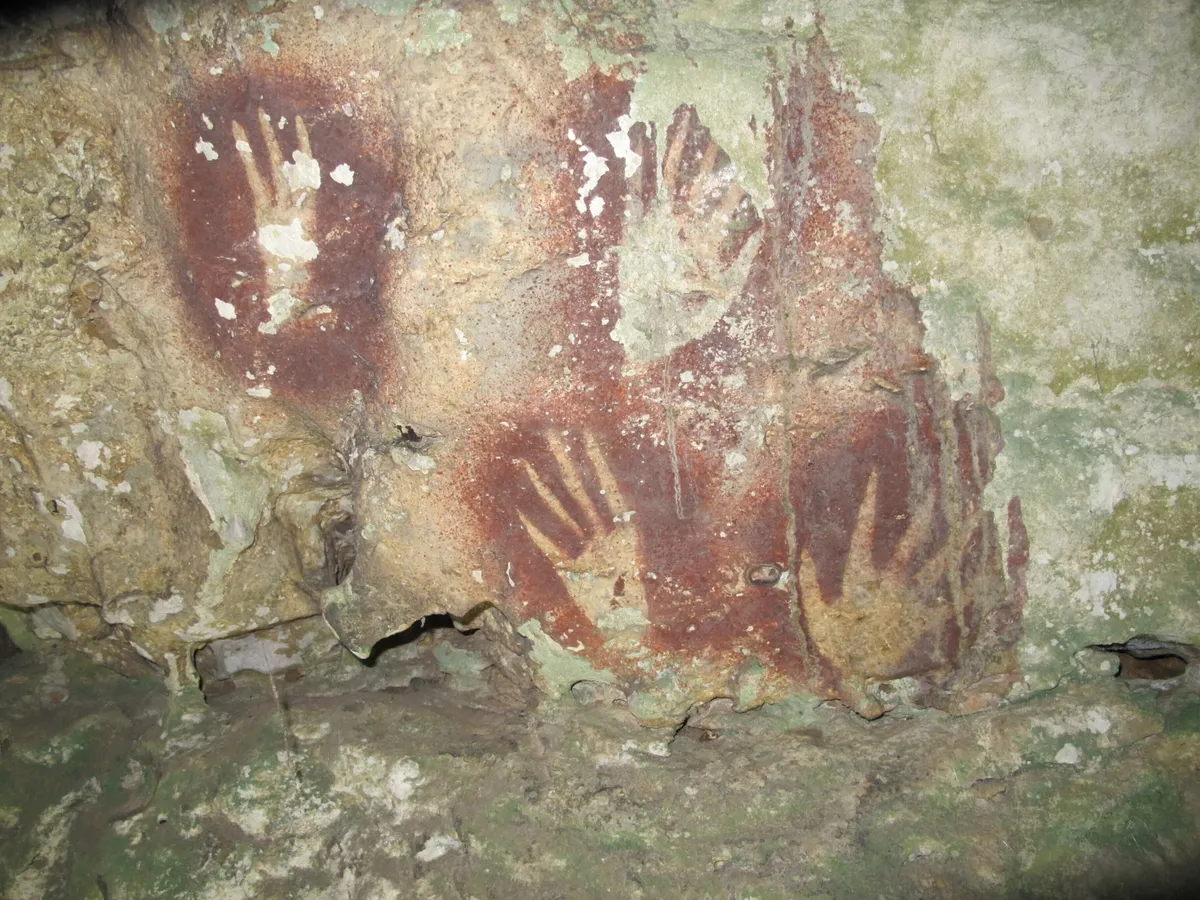
Indonesia and the surrounding region is known for some of the world’s most ancient archaeological finds.Published On 22 Jan 2026Archaeologists have found that handprints stencilled on limestone caves on the Indonesian island of Muna could be up to 67,800 years old, making them the oldest known paintings in the world.The tan-coloured drawings analysed by Indonesian and Australian researchers were made by blowing pigment over hands placed against the cave walls, leaving an outline, scientists said on Wednesday.Recommended Stories list of 4 itemslist 1 of 4Ancient Aboriginal rock art, African sites make UNESCO World Heritage listlist 2 of 4Indonesian rescuers find wreckage of plane that had 11 people on boardlist 3 of 4The Ancient Egyptian stone that Britain refuses to returnlist 4 of 4Ancient Khmer temples scarred by Thailand-Cambodia conflictend of listAccording to the Jakarta Post news outlet, archaeologist Adhi Agus Oktaviana from Indonesia’s National Research and Innovation Agency (BRIN) has been looking for hand stencils in the Muna Island region, in Sulawesi province, since 2015.Adhi found the hand stencils, which have now been dated, under newer paintings in the cave of a person riding a horse alongside a chicken.At first, Adhi said it was difficult to prove to his co-researchers that the stencils were hands as he believed, but he “finally found some spots that looked like human fingers”.Some of the fingertips were also tweaked to look more pointed.“The oldest hand stencil described here is distinctive because it belongs to a style found only in Sulawesi,” said Maxime Aubert, a specialist in archaeological science at Griffith University in Australia who helped lead the research published on Wednesday in the journal Nature.“The tips of the fingers were carefully reshaped to make them appear pointed,” Aubert said.Aubert’s co-author, Adam Brumm, who is also an archaeologist at Griffith University, said it appeared the people who painted the hands may have been trying to depict something else.This image provided by Maxime Aubert shows cave drawings in Sulawesi province, Indonesia, of a human figure and a bird with a faded handprint in between them [Maxime Aubert/AP Photo]“It was almost as if they were deliberately trying to transform this image of a human hand into something else – an animal claw perhaps,” said Brumm.
SRCAl Jazeera
LANGEN
LEANCenter
WORDS368
ENT8
THU · 2026-01-22 · 02:57 GMTBRIEF NSR-2026-0122-9530
NSR-2026-0122-9530News Report·EN·Human Interest
World’s oldest cave art discovered in Indonesia’s Muna island
Archaeologists have discovered the world's oldest known cave art on Muna Island, Indonesia. Published on January 22, 2026, the research reveals that hand stencils found in limestone caves are approximately 67,800 years old.
Lyndal RowlandsAl JazeeraFiled 2026-01-22 · 02:57 GMTLean · CenterRead · 2 min
Al JazeeraFIG 01
Reading time
2min
Word count
368words
Sources cited
3cited
Entities identified
8entities
Quality score
100%
§ 01
Briefing Summary
AI-generatedNEWSAR · AI
Archaeologists have discovered the world's oldest known cave art on Muna Island, Indonesia. Published on January 22, 2026, the research reveals that hand stencils found in limestone caves are approximately 67,800 years old. Indonesian and Australian researchers analyzed the tan-colored drawings, which were created by blowing pigment over hands pressed against cave walls. The discovery was made by archaeologist Adhi Agus Oktaviana, who has been searching for hand stencils in the region since 2015. Researchers suggest the artists may have intentionally reshaped the fingertips in the stencils, possibly to depict something other than a human hand. The findings, published in the journal Nature, highlight a unique artistic style previously only found in Sulawesi.
Confidence 0.90Sources 3Claims 5Entities 8
§ 02
Article analysis
Model · rule-basedFraming
Human Interest
Technology
Tone
Measured
AI-assessed
CalmNeutralAlarmist
Factuality
0.90 / 1.00
Factual
LowHigh
Sources cited
3
Well sourced
FewMany
§ 03
Key claims
5 extracted01
The oldest hand stencil described here is distinctive because it belongs to a style found only in Sulawesi.
quoteMaxime Aubert
Confidence
1.00
02
Adhi Agus Oktaviana has been looking for hand stencils in the Muna island region since 2015.
factualJakarta Post news outlet
Confidence
1.00
03
The tan-coloured drawings were made by blowing pigment over hands placed against the cave walls.
factualScientists
Confidence
1.00
04
Handprints stencilled on limestone caves on Muna island could be up to 67,800 years old.
factualArchaeologists
Confidence
0.90
05
It appeared the people who painted the hands may have been trying to depict something else.
quoteAdam Brumm
Confidence
0.80
§ 04
Full report
2 min read · 368 words§ 05
Entities
8 identifiedKey playerOppositionContextPositiveNeutralNegative
Organizations1
§ 06
Keywords & salience
9 termscave art
1.00
oldest paintings
0.90
indonesia
0.80
muna island
0.70
hand stencils
0.60
archaeological finds
0.60
archaeology
0.50
limestone caves
0.50
sulawesi
0.40
§ 07
Topic connections
Interactive graph Network visualization showing 51 related topics
View Full Graph Person Organization Location Event|Click node to navigate|Edge numbers = shared articles