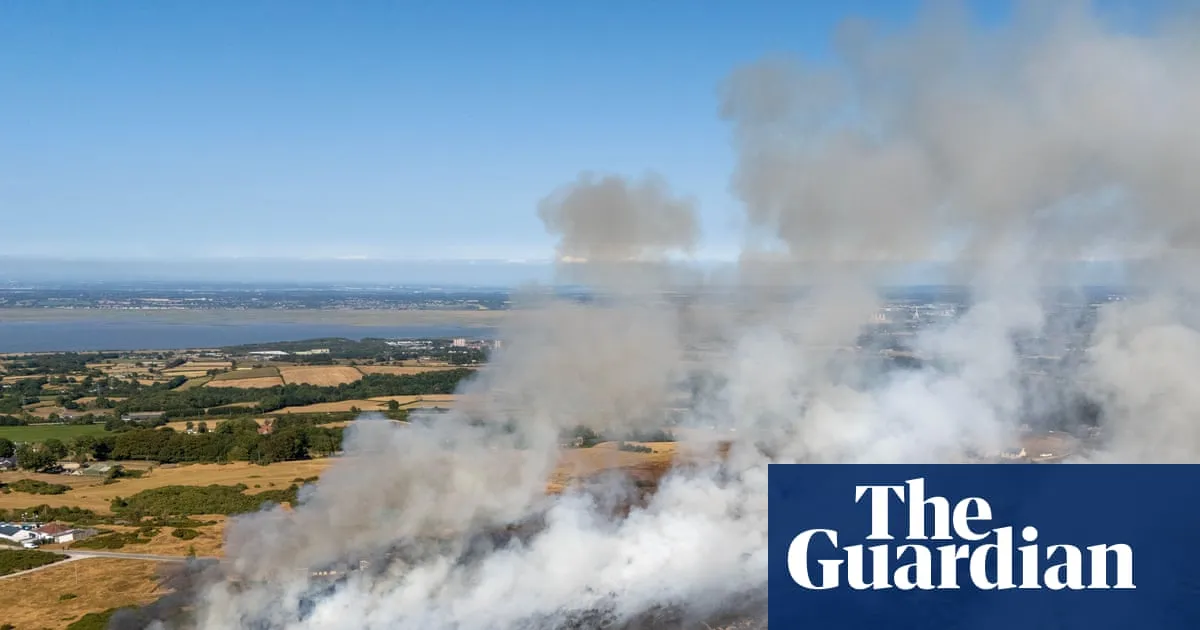
Parts of Wales are now in Drought and all other areas of the country are experiencing prolonged dry weather conditions, according to a government agency.Wales" class="entity-link entity-organization" data-entity-id="26765" data-entity-type="organization">Natural Resources Wales (NRW) said on Thursday that record-low river flows, back-to-back heatwaves and widespread wildfires have prompted the declaration of Drought status in north Wales and the Upper Severn.The hot and dry weather over recent weeks means July is on course to be the driest on record in Wales for nearly 200 years, causing problems for fish, wildlife and crops.As of Thursday, several fires were still burning across the country after more than a week, leading the Welsh government to activate “crisis” plans amid concerns over a lack of firefighting helicopters.The declaration of Drought in Wales comes as a new scientific analysis finds that extreme heat, supercharged by the human-caused Climate Crisis, is sucking Europe dry in summer and intensifying the Drought hitting the continent.Deadly wildfires have raged through Spain and France, and rivers are running low across Europe. On Monday, the National Drought Group – the members of which include the Met Office, the National Farmers’ Union, water companies and expert bodies – declared parts of southern, central and eastern England to be in “prolonged dry weather”.The two areas now in Drought in Wales have received less than 2% of the expected rainfall for the month so far, and the rivers Clwyd, Alwen, Alyn, Clywedog, Dyfi and Conwy in north Wales, as well as the Wye, have recorded new monthly minimum flows or are approaching record lows.NRW announced last week that north and south-east Wales were moving to “prolonged dry weather” status, the stage before Drought, triggering extra checks on waterways and protected wildlife sites as well as the release of reservoir water into struggling rivers.Rhian Thomas, the sustainable water and nature manager at NRW, said: “The prolonged period of hot, dry weather we have experienced this summer is now having serious impacts on the environment across parts of Wales.“We have seen rivers fall to exceptionally low levels, groundwater continuing to decline, and increasing reports of environmental impacts affecting wildlife, fisheries, farming and sensitive habitats. The recent wildfires across north Wales and south-east Wales are one of the clearest and most visible signs of how dry our landscapes have become.”Drought has no official threshold criteria, but is measured by NRW as “a combination of indicators showing a significant shortage of rainfall and water availability, resulting in impacts on rivers, groundwater, ecosystems, agriculture and land management”.skip past newsletter promotionafter newsletter promotionWhile Welsh Water has reported that reservoir levels remain healthy overall, the company has implemented a hosepipe ban in parts of west Wales. People across England and Wales are being urged to be mindful of water usage. About 23 million people will have been banned from using hosepipes by this weekend.Drought was declared across much of England, Wales and eastern Scotland last summer – conditions that did not officially end until March, after a wet autumn and winter replenished rivers and reservoirs.The Met Office predicts that climate change will make UK summers 1C-6C (1.8F-10.8F) hotter and up to 60% drier by 2070, compared with 1990.Hannah Cloke, professor of meteorology and climate science at the University of Reading, said: “Unless the UK collectively gets its act together, and builds greater resilience into its water system at every point, we face a more uncertain future in which the tap could run dry. There is a better future, where we use water better where it falls and don’t waste as much. But we need a fundamental shift in understanding from almost everyone to get there.”
SRCThe Guardian - World News
LANGEN
LEANCenter-Left
WORDS597
ENT11
THU · 2026-07-23 · 15:46 GMTBRIEF NSR-2026-0723-95391
NSR-2026-0723-95391News Report·EN·Environmental
Drought declared in parts of Wales as July on course to be driest in nearly 200 years
Parts of north Wales and the Upper Severn have been declared to be in drought by Natural Resources Wales (NRW) due to prolonged dry weather, back-to-back heatwaves, and widespread wildfires. July is on track to be the driest on record in Wales for nearly 200 years, impacting rivers, wildlife, and crops.
Bethan McKernan Wales correspondentThe Guardian - World NewsFiled 2026-07-23 · 15:46 GMTLean · Center-LeftRead · 3 min
The Guardian - World NewsFIG 01
Reading time
3min
Word count
597words
Sources cited
4cited
Entities identified
11entities
Quality score
100%
§ 01
Briefing Summary
AI-generatedNEWSAR · AI
Parts of north Wales and the Upper Severn have been declared to be in drought by Natural Resources Wales (NRW) due to prolonged dry weather, back-to-back heatwaves, and widespread wildfires. July is on track to be the driest on record in Wales for nearly 200 years, impacting rivers, wildlife, and crops. These areas have received minimal rainfall, with several rivers recording record-low flows. This drought declaration follows a move to "prolonged dry weather" status for other parts of Wales. The situation is exacerbated by a wider European drought, intensified by climate change. Water companies are implementing hosepipe bans, and the public is urged to conserve water.
Confidence 0.90Sources 4Claims 5Entities 11
§ 02
Article analysis
Model · rule-basedFraming
Environmental
Human Interest
Tone
Mixed Tone
AI-assessed
CalmNeutralAlarmist
Factuality
0.90 / 1.00
Factual
LowHigh
Sources cited
4
Well sourced
FewMany
§ 03
Key claims
5 extracted01
Record-low river flows, back-to-back heatwaves and widespread wildfires have prompted the declaration of drought status in north Wales and the Upper Severn.
factualNatural Resources Wales (NRW)
Confidence
1.00
02
Parts of Wales are now in drought and all other areas of the country are experiencing prolonged dry weather conditions.
factualNatural Resources Wales (NRW)
Confidence
1.00
03
The two areas now in drought in Wales have received less than 2% of the expected rainfall for the month so far.
statisticarticle
Confidence
0.90
04
July is on course to be the driest on record in Wales for nearly 200 years.
statisticarticle
Confidence
0.90
05
Extreme heat, supercharged by the human-caused climate crisis, is sucking Europe dry in summer and intensifying the drought hitting the continent.
factualnew scientific analysis
Confidence
0.80
§ 04
Full report
3 min read · 597 words§ 05
Entities
11 identifiedKey playerOppositionContextPositiveNeutralNegative
Organizations3
Locations5
Events1
§ 06
Keywords & salience
10 termsdrought
1.00
wales
0.90
climate crisis
0.80
wildfires
0.70
dry weather
0.70
river flows
0.60
natural resources wales
0.50
heatwaves
0.50
rainfall
0.40
environment
0.40
§ 07
Topic connections
Interactive graph Network visualization showing 51 related topics
View Full Graph Person Organization Location Event|Click node to navigate|Edge numbers = shared articles