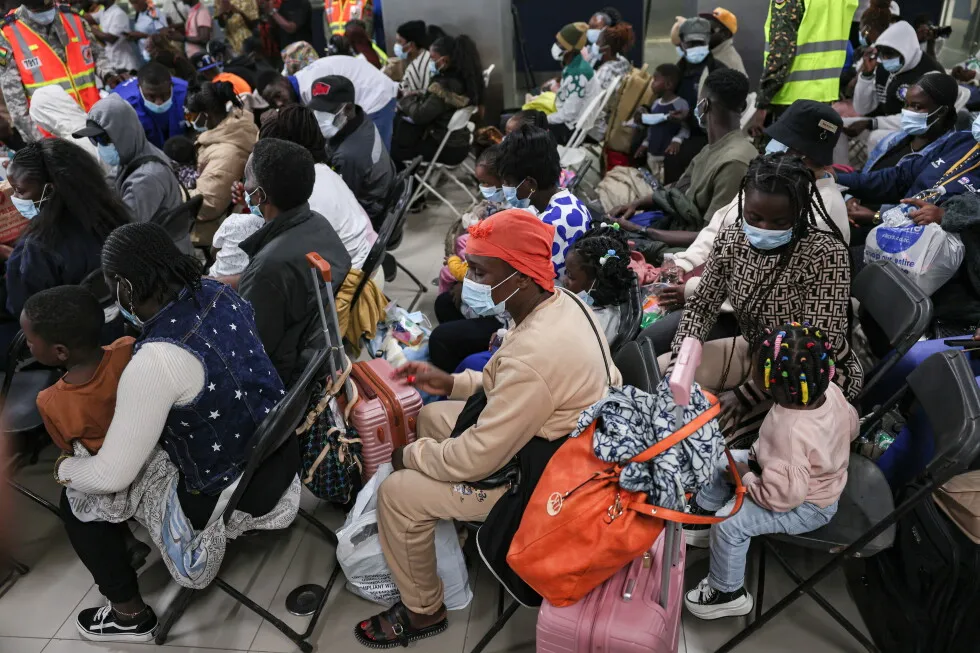
Ghanaian nationals repatriated from South Africa following concerns about unrest wait at the Accra International Airport upon their arrival in Accra, Ghana, May 27, 2026. (AP Photo/Tsraha Yaw, File) Updated [hour]:[minute] [AMPM] [timezone], [monthFull] [day], [year] Accra, Ghana (AP) — Two Ghanaian nationals have asked the International Criminal Court to examine years of xenophobic violence in South Africa, arguing that repeated attacks on foreign nationals could amount to crimes against humanity.The petition submitted to the ICC prosecutor by former Ghanaian government spokesperson Palgrave Boakye-Danquah and security analyst Emmanuel Kotin says it seeks accountability after years of recurring attacks on migrants. “We are simply asking the ICC to investigate these allegations,” Kotin told The Associated Press on Thursday, adding that the initiative was private and not backed by Ghana’s government.South Africa has experienced periodic outbreaks of anti-migrant violence for nearly two decades, with rights groups repeatedly urging authorities to do more to prevent attacks and prosecute those responsible. Anti-immigrant protesters in recent months blamed foreigners in South Africa for high levels of unemployment, crime and pressure on public services. The violence at the protests and attacks on Africans prompted Nigeria, Ghana and Malawi to repatriate their citizens and summon South African diplomats.The petition was submitted to the ICC prosecutor on July 15 and alleges widespread and systematic attacks against African migrants between 2015 and 2026, including killings, assaults, looting and forced displacement. It also argues South African authorities failed to adequately prevent or prosecute the violence. A spokesperson for the South African government did not immediately respond to a request for comment. The ICC confirmed to the AP it had received the communication after the petitioners made it public. Under the Rome Statute, individuals and groups may submit information on alleged crimes to the prosecutor, who assesses whether there is a reasonable basis to proceed. The submission of a communication does not automatically lead to a formal investigation, and the court receives many such communications, only a small proportion of which advance to later stages.
SRCAssociated Press (AP)
LANGEN
LEANCenter
WORDS334
ENT12
THU · 2026-07-23 · 16:23 GMTBRIEF NSR-2026-0723-95413
NSR-2026-0723-95413News Report·EN·Human Rights
Ghanaians ask International Criminal Court to examine years of anti-migrant violence in South Africa
Two Ghanaian nationals have petitioned the International Criminal Court (ICC) to investigate years of xenophobic violence in South Africa, arguing that repeated attacks on foreign nationals may constitute crimes against humanity. The petition, submitted by Palgrave Boakye-Danquah and Emmanuel Kotin, seeks accountability for recurring migrant attacks between 2015 and 2026, which allegedly include killings, assaults, looting, and forced displacement.
By
EDWARD ACQUAHAssociated Press (AP)Filed 2026-07-23 · 16:23 GMTLean · CenterRead · 2 min
Associated Press (AP)FIG 01
Reading time
2min
Word count
334words
Sources cited
3cited
Entities identified
12entities
Quality score
100%
§ 01
Briefing Summary
AI-generatedNEWSAR · AI
Two Ghanaian nationals have petitioned the International Criminal Court (ICC) to investigate years of xenophobic violence in South Africa, arguing that repeated attacks on foreign nationals may constitute crimes against humanity. The petition, submitted by Palgrave Boakye-Danquah and Emmanuel Kotin, seeks accountability for recurring migrant attacks between 2015 and 2026, which allegedly include killings, assaults, looting, and forced displacement. The petitioners also claim South African authorities have failed to adequately prevent or prosecute this violence. While the ICC has confirmed receipt of the communication, it stated that such submissions do not automatically trigger a formal investigation. This action follows recent anti-immigrant sentiment in South Africa, which has led to the repatriation of citizens from countries like Ghana, Nigeria, and Malawi.
Confidence 0.90Sources 3Claims 5Entities 12
§ 02
Article analysis
Model · rule-basedFraming
Human Rights
Legal & Judicial
Tone
Measured
AI-assessed
CalmNeutralAlarmist
Factuality
0.80 / 1.00
Factual
LowHigh
Sources cited
3
Well sourced
FewMany
§ 03
Key claims
5 extracted01
The ICC confirmed to the AP it had received the communication after the petitioners made it public.
factualAssociated Press
Confidence
1.00
02
The initiative was private and not backed by Ghana’s government.
factualEmmanuel Kotin
Confidence
1.00
03
The petition alleges widespread and systematic attacks against African migrants between 2015 and 2026, including killings, assaults, looting and forced displacement.
factualPalgrage Boakye-Danquah and Emmanuel Kotin
Confidence
1.00
04
Two Ghanaian nationals have asked the International Criminal Court to examine years of xenophobic violence in South Africa.
factualPalgrage Boakye-Danquah and Emmanuel Kotin
Confidence
1.00
05
South Africa has experienced periodic outbreaks of anti-migrant violence for nearly two decades.
factualAssociated Press
Confidence
0.90
§ 04
Full report
2 min read · 334 words§ 05
Entities
12 identifiedKey playerOppositionContextPositiveNeutralNegative
Organizations1
Locations5
§ 06
Keywords & salience
9 termsanti-migrant violence
1.00
xenophobic violence
0.90
international criminal court
0.90
crimes against humanity
0.80
ghana
0.70
south africa
0.70
accountability
0.60
repatriation
0.50
rome statute
0.40
§ 07
Topic connections
Interactive graph Network visualization showing 51 related topics
View Full Graph Person Organization Location Event|Click node to navigate|Edge numbers = shared articles