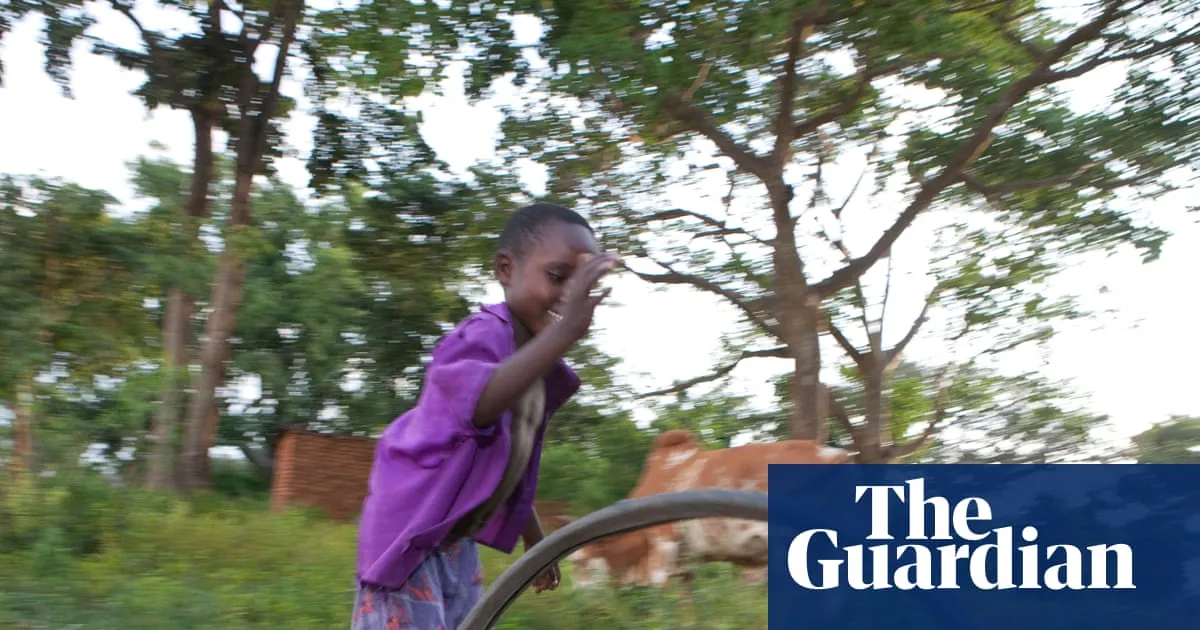
Child sponsorship schemes that allow donors to handpick children to support in poor countries can carry racialised, paternalistic undertones and need to be transformed, the newly appointed co-chief executives of ActionAid UK said as they set out to “decolonise” the organisation’s work.ActionAid began in 1972 by finding sponsors for schoolchildren in India and Kenya, but Taahra Ghazi and Hannah Bond have launched their co-leadership this month with the goal of shifting narratives around aid from sympathy towards solidarity and partnership with global movements.That will involve looking at how ActionAid UK’s work is funded by working with teams in Africa, Asia and Latin America so they can help shape a model that reflects what the communities they work with need.Ghazi said: “Most of our supporters are relatively well-off people and many of them are white, so if you’re asking them to choose a picture of a brown or black child and choose the country they come from – effectively, that’s a very transactional relationship and quite a paternalistic one. We recognise that the current child sponsorship model reflects a different time.”ActionAid’s supporters sponsor children in 30 countries, with the money providing 34% of the charity’s global funds, according to Ghazi.Ghazi said: “We’re in the process, until 2028, of transformation that includes our systems, what money we give, how we procure services - we’re decolonising it.“We are evolving the model so it is shaped by community voices and responds to the realities they face today,” adds Bond. “We value our sponsors and remain committed to making sure their support continues to have a real impact.“Meaningful change takes time, and this work is rooted in genuine commitment rather than lip service.”The charity is hoping to establish a fund specifically for women’s rights groups that are under attack as a result of the global anti-rights movement. Photograph: Misper Apawu/ActionAidAs a method of fundraising, the process of allowing donors to choose between children to support has been likened to “poverty porn” that perpetuates racist attitudes, leading to calls for it to be phased out.Charities vary in how they spend the money raised through child sponsorship; some use the funds to support the child directly, while others spend it on projects that support the child’s community. The charities often provide the sponsors with regular updates and the opportunity to exchange letters with them.Save the Children, a pioneer of the fundraising method from when the charity was founded in 1919, ended its child sponsorship programme last year. It said it was not suitable for modern contexts and was also expensive because money that could have been spent on projects had to be used to facilitate the exchange of letters between donors and the sponsored children.Bond and Ghazi’s vision for ActionAid’s future sees it as a feminist, anti-racist organisation that focuses more on fundraising through partnerships with civil society groups. One way that could work would be to encourage groups of friends or family members to form “sisterhoods” where they collectively raised money that would go towards women’s rights groups in a developing country.They also aim to provide long-term funding to grassroots groups that give those on the ground more power over how they spend it, and are planning to launch a fund specifically for women’s rights groups that are under attack as a result of the global anti-rights movement.“ActionAid’s future is about solidarity, justice and how we can really drive forward change,” said Bond. “The world is in a bad place and we have a really important role as a global federation in pushing back on the levels of injustice that are happening all over the world.”Themrise Khan, an independent researcher on the aid sector, said the practice of marketing mostly African children to a western audience should be abandoned altogether.“The entire concept is highly problematic and racist in its overtones and shrieks ‘white saviourism’,” said Khan. “Nothing should replace it.“Better education, state welfare systems and healthcare should be the model – all responsibilities of a nation state. Not: ‘sponsor a poor African/Asian child at x dollars a month’ to make you feel good about a child you have never even seen in person, and may never see other than in a picture on your refrigerator.”
SRCThe Guardian - World News
LANGEN
LEANCenter-Left
WORDS699
ENT7
THU · 2026-01-22 · 05:00 GMTBRIEF NSR-2026-0122-9547
NSR-2026-0122-9547News Report·EN·Social Justice
ActionAid to rethink child sponsorship as part of plan to ‘decolonise’ its work
ActionAid UK is rethinking its child sponsorship program as part of a broader effort to "decolonize" its work. The organization, led by new co-chief executives Taahra Ghazi and Hannah Bond, aims to shift from a model perceived as paternalistic and transactional to one based on solidarity and partnership with communities in Africa, Asia, and Latin America.
Kaamil AhmedThe Guardian - World NewsFiled 2026-01-22 · 05:00 GMTLean · Center-LeftRead · 3 min
The Guardian - World NewsFIG 01
Reading time
3min
Word count
699words
Sources cited
4cited
Entities identified
7entities
Quality score
100%
§ 01
Briefing Summary
AI-generatedNEWSAR · AI
ActionAid UK is rethinking its child sponsorship program as part of a broader effort to "decolonize" its work. The organization, led by new co-chief executives Taahra Ghazi and Hannah Bond, aims to shift from a model perceived as paternalistic and transactional to one based on solidarity and partnership with communities in Africa, Asia, and Latin America. This transformation, planned until 2028, involves reshaping funding systems and empowering local voices to determine how resources are allocated. While child sponsorship currently provides 34% of ActionAid's global funds, the charity acknowledges that allowing donors to choose individual children can perpetuate racialized attitudes. ActionAid plans to evolve the model to be shaped by community voices, while still ensuring sponsors' support has a real impact.
Confidence 0.90Sources 4Claims 5Entities 7
§ 02
Article analysis
Model · rule-basedFraming
Social Justice
Human Interest
Tone
Measured
AI-assessed
CalmNeutralAlarmist
Factuality
0.70 / 1.00
Factual
LowHigh
Sources cited
4
Well sourced
FewMany
§ 03
Key claims
5 extracted01
Save the Children ended its child sponsorship programme last year.
factual
Confidence
1.00
02
Money from child sponsorship provides 34% of ActionAid’s global funds.
statisticTaahra Ghazi
Confidence
1.00
03
ActionAid's supporters sponsor children in 30 countries.
factualTaahra Ghazi
Confidence
1.00
04
ActionAid is rethinking child sponsorship to 'decolonise' its work.
factualActionAid UK
Confidence
1.00
05
Child sponsorship schemes can carry racialised, paternalistic undertones.
quoteActionAid UK co-chief executives
Confidence
0.90
§ 04
Full report
3 min read · 699 words§ 05
Entities
7 identifiedKey playerOppositionContextPositiveNeutralNegative
§ 06
Keywords & salience
9 termschild sponsorship
1.00
decolonise aid
0.90
actionaid
0.80
paternalistic
0.70
racialised
0.60
global movements
0.50
charity
0.50
community voices
0.40
women's rights
0.40
§ 07
Topic connections
Interactive graph No topic relationship data available yet. This graph will appear once topic relationships have been computed.