Black members of Oklahoma Native American tribe file federal lawsuit to gain Citizenship Rights 1 of 2 | Rhonda Grayson and Jeff Kennedy pose on June 16, 2025, in Moore, Okla. (AP Photo/Nick Oxford, File) 2 of 2 | Rhonda Grayson, left, calls an attorney after she and Jeffrey Kennedy, right, were unable to get citizenship cards from the Muscogee Nation, Aug. 21, 2025, in Okmulgee, Okla. (AP Photo/Nate Billings, File) 1 of 2 | Rhonda Grayson and Jeff Kennedy pose on June 16, 2025, in Moore, Okla. (AP Photo/Nick Oxford, File) 1 of 2 Rhonda Grayson and Jeff Kennedy pose on June 16, 2025, in Moore, Okla. (AP Photo/Nick Oxford, File) Add AP News on Google Add AP News as your preferred source to see more of our stories on Google. Share 2 of 2 | Rhonda Grayson, left, calls an attorney after she and Jeffrey Kennedy, right, were unable to get citizenship cards from the Muscogee Nation, Aug. 21, 2025, in Okmulgee, Okla. (AP Photo/Nate Billings, File) 2 of 2 Rhonda Grayson, left, calls an attorney after she and Jeffrey Kennedy, right, were unable to get citizenship cards from the Muscogee Nation, Aug. 21, 2025, in Okmulgee, Okla. (AP Photo/Nate Billings, File) Add AP News on Google Add AP News as your preferred source to see more of our stories on Google. Share Updated [hour]:[minute] [AMPM] [timezone], [monthFull] [day], [year] Two descendants of Black people once enslaved by a Native American tribe are asking a federal court in Oklahoma to force tribal leaders to issue them citizenship cards as ordered a year ago by a tribal court.A lawsuit filed Thursday in U.S. District Court in Oklahoma-city" class="entity-link entity-location" data-entity-id="16076" data-entity-type="location">Oklahoma City on behalf of Rhonda Grayson and Jeffrey Kennedy names Principal Chief David Hill and the Muscogee Nation Citizenship Board as defendants.It says that Hill and the citizenship board are violating an 1866 treaty between the tribe and the U.S. government by refusing to recognize Black Creek Freedmen as citizens as ordered by the Muscogee Nation Supreme Court in July 2025.The board had denied the applications of Grayson and Kennedy in 2019 because they could not identify a lineal descendant of the tribe, but the court said the pair are entitled to tribal citizenship. However, Hill and the board have not yet issued the citizenship cards, denying Grayson and Kennedy their “right to vote and the ability to participate fully as members of the Nation,” according to the lawsuit.Last August, Hill blocked the tribe’s citizenship board from issuing citizenship cards until leaders decide how to change the tribe’s constitution. The tribe’s headquarters is in Okmulgee, about 100 miles (160 kilometers) northeast of Oklahoma-city" class="entity-link entity-location" data-entity-id="16076" data-entity-type="location">Oklahoma City.The Associated Press left messages Thursday seeking comment from Hill and the Muscogee Nation Citizenship Board. The Muscogee Nation is one of five tribes in Oklahoma that once practiced slavery. 9 MIN READ 2 MIN READ 3 MIN READ Under the 1866 treaty, the tribe abolished slavery and granted citizenship to the formerly enslaved. The Muscogee Nation adopted in 1979 a constitution that restricted membership to the descendants of people listed as “Muscogee (Creek) Indians by blood” on the Dawes Rolls, a census of members of the five tribes created around 1900. When the Dawes Rolls were created, people were listed on two separate rolls: those who were Muscogee and those who were identified by the U.S. government as Freedmen.The court’s 2025 ruling also directed the board to apply the treaty of 1866 to future applicants who can trace an ancestor to either roll. The decision could create a path to tribal citizenship for thousands of new members who are not Muscogee by blood. Attorney Damario Solomon-Simmons, a Black Creek Indian who is one of the lawyers representing Grayson and Kennedy, said Thursday that there about 100,000 Black Creeks across the United States.Successful legal cases were brought against two of the five Oklahoma tribes, the Seminole Nation and the Cherokee Nation, which have since granted citizenship to Freedmen descendants. “Every day of non-compliance is another day that Black Creek Freedman are denied our birthright and our very identity as citizens,” said Grayson, president of the Muscogee Creek Indian Freedmen Band. “The fight is bigger than every one of us,” she told reporters Thursday. “It belongs to every Black Creek Freedman descendant who has carried this history, protected these stories and refused to let our identity be dismissed or diminished.”————————-Williams is a member of AP’s Race & Ethnicities Team. He reported from Detroit.
SRCAssociated Press (AP)
LANGEN
LEANCenter
WORDS743
ENT12
THU · 2026-07-23 · 20:53 GMTBRIEF NSR-2026-0723-95497
NSR-2026-0723-95497News Report·EN·Human Rights
Black members of Oklahoma Native American tribe file federal lawsuit to gain citizenship rights
Two descendants of Black people formerly enslaved by the Muscogee Nation have filed a federal lawsuit in Oklahoma seeking to compel tribal leaders to issue them citizenship cards. The lawsuit, filed on behalf of Rhonda Grayson and Jeffrey Kennedy, alleges that Principal Chief David Hill and the Muscogee Nation Citizenship Board are violating an 1866 treaty by refusing to recognize Black Creek Freedmen as citizens, despite a Muscogee Nation Supreme Court order from July 2025.
By
COREY WILLIAMSAssociated Press (AP)Filed 2026-07-23 · 20:53 GMTLean · CenterRead · 3 min
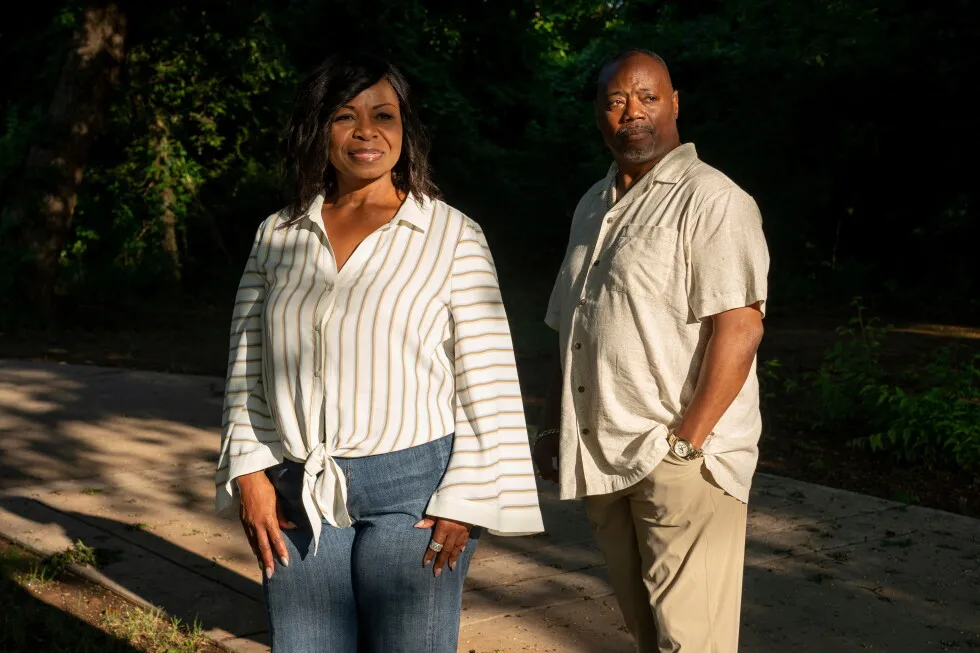
Associated Press (AP)FIG 01
Reading time
3min
Word count
743words
Sources cited
0cited
Entities identified
12entities
Quality score
100%
§ 01
Briefing Summary
AI-generatedNEWSAR · AI
Two descendants of Black people formerly enslaved by the Muscogee Nation have filed a federal lawsuit in Oklahoma seeking to compel tribal leaders to issue them citizenship cards. The lawsuit, filed on behalf of Rhonda Grayson and Jeffrey Kennedy, alleges that Principal Chief David Hill and the Muscogee Nation Citizenship Board are violating an 1866 treaty by refusing to recognize Black Creek Freedmen as citizens, despite a Muscogee Nation Supreme Court order from July 2025. The court had ruled that Grayson and Kennedy are entitled to tribal citizenship, overturning the board's previous denial. Tribal leaders have not yet issued the cards, which the plaintiffs state denies them the right to vote and full participation as members. The Muscogee Nation is one of five Oklahoma tribes that historically practiced slavery, and the 1866 treaty abolished it, granting citizenship to the formerly enslaved.
Confidence 0.90Claims 5Entities 12
§ 02
Article analysis
Model · rule-basedFraming
Human Rights
Legal & Judicial
Tone
Measured
AI-assessed
CalmNeutralAlarmist
Factuality
0.90 / 1.00
Factual
LowHigh
Sources cited
0
No named sources
FewMany
§ 03
Key claims
5 extracted01
Principal Chief David Hill blocked the issuance of citizenship cards until the tribe's constitution is changed.
factual
Confidence
1.00
02
The Muscogee Nation Supreme Court ordered citizenship for Grayson and Kennedy in July 2025.
factualMuscogee Nation Supreme Court
Confidence
1.00
03
The lawsuit alleges violation of an 1866 treaty by refusing to recognize Black Creek Freedmen as citizens.
factual
Confidence
1.00
04
The lawsuit names Principal Chief David Hill and the Muscogee Nation Citizenship Board as defendants.
factual
Confidence
1.00
05
Black members of an Oklahoma Native American tribe are suing federal court to gain citizenship rights.
factual
Confidence
1.00
§ 04
Full report
3 min read · 743 words§ 05
Entities
12 identifiedKey playerOppositionContextPositiveNeutralNegative
People3
Organizations3
Locations4
§ 06
Keywords & salience
8 termscitizenship rights
1.00
muscogee nation
0.90
federal lawsuit
0.80
black creek freedmen
0.80
tribal citizenship
0.70
1866 treaty
0.60
enslaved
0.50
tribal court
0.40
§ 07
Topic connections
Interactive graph No topic relationship data available yet. This graph will appear once topic relationships have been computed.