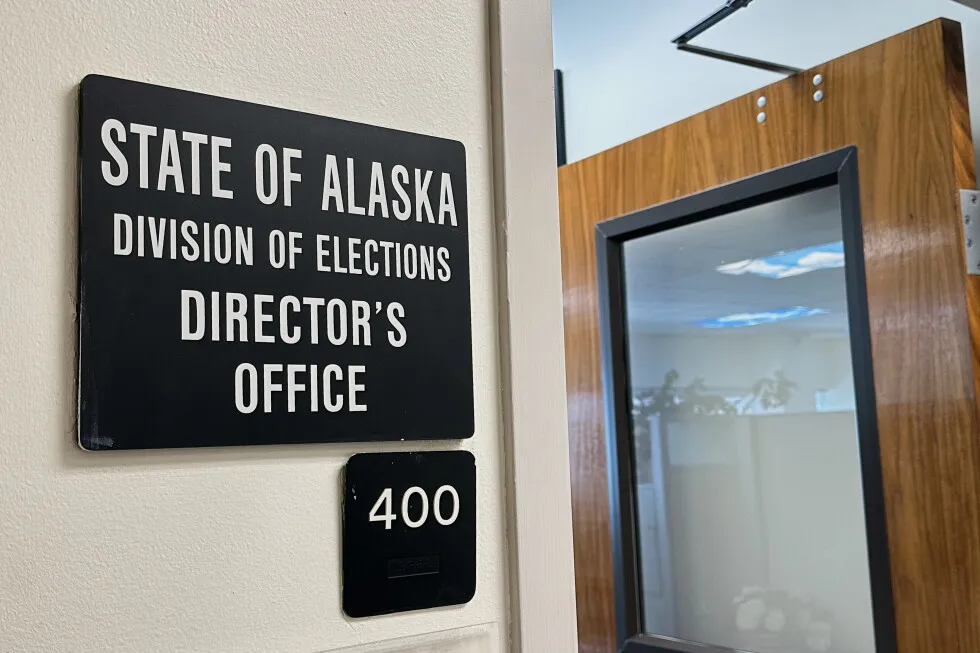
A sign hangs outside the director’s office of the Alaska-division-of-elections" class="entity-link entity-organization" data-entity-id="53525" data-entity-type="organization">Alaska Division of Elections, March 19, 2026, in Juneau, Alaska. (AP Photo/Becky Bohrer, File) Updated [hour]:[minute] [AMPM] [timezone], [monthFull] [day], [year] Juneau, Alaska (AP) — The state has sent more than 3,000 letters to Alaska voters asking them to verify their citizenship ahead of the Aug. 18 primary, a number a top state elections official said is unusually high.The letters have raised concerns among some state lawmakers, including one who said some constituents who received them are U.S. citizens.Alaska-division-of-elections" class="entity-link entity-organization" data-entity-id="53525" data-entity-type="organization">Alaska Division of Elections Director Carol Beecher told state lawmakers during a hearing this week that it appears “a lot of old data was picked up somehow” when the division conducted Voter roll maintenance that compares its list with information held by the Division of Motor Vehicles. The process usually yields about 200 names for further review, she said. Beecher estimated during Wednesday’s hearing that the number of letters sent was around 3,500, but a division spokesperson, Steve Kirch, on Thursday said the total was 3,048.The revelation comes at a time of heightened sensitivity surrounding claims of Non-citizen voting. Research and prosecutions have shown it to be extremely rare, but President Donald Trump and his allies have raised alarms since the presidential election cycle two years ago that Non-citizen voting is widespread. The president also has been trying to push voting changes through Congress that would require people to provide documents proving their citizenship to register to vote and a now-halted executive order that sought to create a federal list of verified voters, even though voter rolls are maintained by the states. Citizenship verification ‘is not disenfranchising’ votersThe Alaska letter asks recipients to affirm their citizenship via letter, phone or email, and Beecher said the division is not requiring paperwork or documentation. Those who receive the letter are moved to a list of “inactive” voters. If the division doesn’t hear back from the recipient, they still would be able to cast a special kind of ballot that also requires voters to attest to their qualifications to vote, she said. 4 MIN READ 3 MIN READ 2 MIN READ “It is not disenfranchising the individual from being able to vote, but it’s a measure the division has to take to make sure that we only have citizens voting,” she said. People who respond to the letter to say they are citizens will be moved back to the active list, Kirch said. State Rep. Andrew Gray, a Democrat, said the only people who had contacted his office about the letters were people who are citizens. Another Democrat, state Rep. Ashley Carrick, asked if the letters were related to Alaska’s decision late last year to share detailed data about the state’s voters with the U.S. Department of Justice.Beecher said it was not: “It has nothing to do with that,” she said, adding: “The information that we have received is specifically from DMV.” She said the Division of Elections has not heard from the Department of Justice “regarding any list or the list that we provided that they identified non-citizens on that.”DMV says request it received was ‘non-routine’Alaska was one of at least 16 states that have provided or said it would provide to the Trump administration detailed information about its voters — including dates of birth, driver’s license numbers and partial Social Security numbers, according to the Brennan Center. Alaska and Texas also signed agreements. The information is being run through a Department of Homeland Security program that checks for citizenship but has been criticized for its potential to flag eligible voters. Voting and civil rights groups in Alaska earlier this year sued over the state’s sharing of the information. That case is still pending.In response to questions, the Division of Motor Vehicles released a memo Thursday saying the Division of Elections in March provided the agency “with a list of approximately 15,200 DMV license and identification applicants and requested that DMV provide citizenship information for these records.” The memo described it as a “non-routine request.”The memo said the Division of Elections followed up in June, seeking clarification. The DMV said it responded to say that data it provided “included only those records where DMV’s latest confirmed status for an individual was something other than ‘Citizen.’”Kirch said his agency had sent the DMV its “entire voter list and they ran ours against theirs.” Officials unsure why so many voters had their status questionedBeecher, during the legislative hearing, said it remained unclear why the list of voters identified as potential non-citizens was so large this time. It’s possible people registered to vote after they became citizens and that data in their DMV files still showed them to be naturalized citizens, she said.“I believe that people probably don’t realize that all of these governmental entities don’t necessarily talk to each other,” she said.Kirch gave an example on Thursday. He said if a person was not a citizen some years ago when they received their driver’s license but since became a citizen and registered to vote when they applied for the annual dividend the state pays to residents from its oil-wealth fund, data from the DMV would still show them as not being a citizen.He said people should update their information with the DMV to ensure they are not flagged in future citizenship checks. Bohrer is a statehouse and political reporter based in Juneau, Alaska.
SRCAssociated Press (AP)
LANGEN
LEANCenter
WORDS896
ENT10
THU · 2026-07-23 · 23:53 GMTBRIEF NSR-2026-0724-95516
NSR-2026-0724-95516News Report·EN·Political Strategy
Alaska sends 3,000 letters asking voters to verify their citizenship ahead of this year’s elections
Alaska's Division of Elections has sent over 3,000 letters to voters requesting citizenship verification ahead of the August primary, an unusually high number. This process, which typically flags around 200 voters, appears to have resulted from outdated data during voter roll maintenance comparing state lists with Division of Motor Vehicles information.
By
BECKY BOHRERAssociated Press (AP)Filed 2026-07-23 · 23:53 GMTLean · CenterRead · 4 min
Associated Press (AP)FIG 01
Reading time
4min
Word count
896words
Sources cited
3cited
Entities identified
10entities
Quality score
100%
§ 01
Briefing Summary
AI-generatedNEWSAR · AI
Alaska's Division of Elections has sent over 3,000 letters to voters requesting citizenship verification ahead of the August primary, an unusually high number. This process, which typically flags around 200 voters, appears to have resulted from outdated data during voter roll maintenance comparing state lists with Division of Motor Vehicles information. While recipients are moved to an "inactive" voter status, they can still vote by attesting to their qualifications, and will be reinstated to active status if they confirm their citizenship. State lawmakers have expressed concern, with some constituents who received letters being U.S. citizens. The Division of Elections stated the process is not intended to disenfranchise voters but to ensure only citizens cast ballots.
Confidence 0.90Sources 3Claims 5Entities 10
§ 02
Article analysis
Model · rule-basedFraming
Political Strategy
Legal & Judicial
Tone
Mixed Tone
AI-assessed
CalmNeutralAlarmist
Factuality
0.80 / 1.00
Factual
LowHigh
Sources cited
3
Well sourced
FewMany
§ 03
Key claims
5 extracted01
The voter roll maintenance process that led to the letters involved data from the Division of Motor Vehicles.
quoteCarol Beecher
Confidence
1.00
02
The letters are a measure to ensure only citizens are voting and are not disenfranchising voters.
quoteCarol Beecher
Confidence
1.00
03
The number of citizenship verification letters sent is unusually high compared to previous years.
quoteCarol Beecher
Confidence
1.00
04
Alaska sent over 3,000 letters to voters asking them to verify their citizenship.
statisticAlaska Division of Elections
Confidence
1.00
05
Constituents who received the letters and contacted state lawmakers are U.S. citizens.
factualState Rep. Andrew Gray
Confidence
0.90
§ 04
Full report
4 min read · 896 words§ 05
Entities
10 identifiedKey playerOppositionContextPositiveNeutralNegative
Organizations2
§ 06
Keywords & salience
8 termsvoter citizenship verification
1.00
alaska division of elections
0.90
election integrity
0.80
voter roll maintenance
0.70
disenfranchisement concerns
0.60
non-citizen voting
0.50
dmv data comparison
0.40
voting rights
0.40
§ 07
Topic connections
Interactive graph No topic relationship data available yet. This graph will appear once topic relationships have been computed.