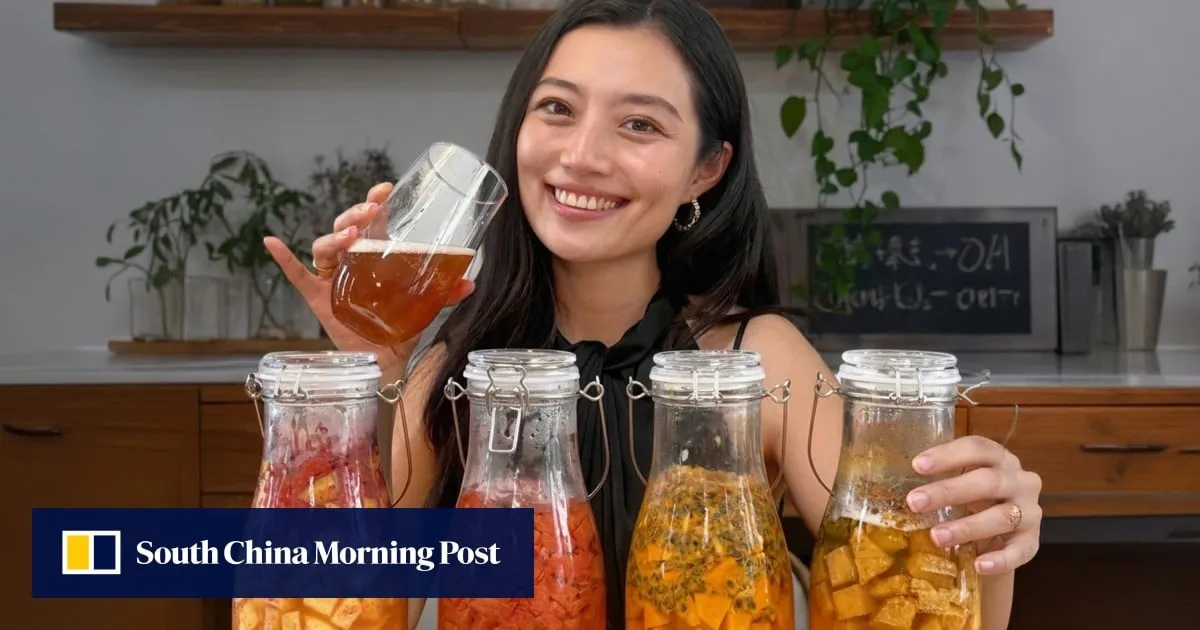
Young people in China are homemaking kombucha, reviving a 1980s fad from the previous generation after the drink became a globally recognised health product.In recent years, kombucha has gone viral in Western countries as a commercial beverage, endorsed by stars such as Kourtney Kardashian and Lady Gaga.The trend has reached China and prompted some drinks makers to release kombucha products. Meanwhile, some Chinese youngsters are making their own kombucha at home and sharing their methods online.On one social media platform, the hashtags #kombucha and #homemadekombucha respectively have 70 million and 10 million views.The obsession is real; #kombucha and #homemadekombucha have over 80 million combined views on social media. Photo: RedNoteHowever, it was not until many picked up the kombucha trend that they learned it was nothing new for their parents.Back in the 1970s and 1980s, many households in China fermented their own kombucha, which they called wei bao or “stomach treasure”.The fermented drink was believed to be beneficial for gut health. A person born in the 1960s told the SCMP that they used to keep big jars at home fermenting a mix of sugar, tea and scoby (“symbiotic culture of bacteria and yeasts”).It was the same method used in making kombucha at home today: you must mix one part of tea with 10 parts of sugar and 100 parts of boiling water, then wait until it cools to room temperature before adding the scoby and starter liquid – previously brewed raw kombucha.Two fresh jars of home-made kombucha: delicious, bubbly, and amazing for gut health. Photo: RedNoteA social media user said fermenting kombucha was like looking after a pet: “You need to make sure the whole process is sterile, and the mix must cool down to room temperature before putting in the scoby, otherwise your baby might die.”What makes it different from their parents’ “stomach treasure” is the second fermentation. Homemade kombucha today usually requires two fermentations, the first featuring the scoby consuming the sweet tea and converting the sugar into healthy acids, which takes one to two weeks.The older generations usually stopped at this step, and thus kombucha in their minds tastes like vinegar.The second fermentation requires ingredients like fruit to be added to the liquid from the first fermentation, then for them react in a sealed bottle. This process generates natural carbonation and tasty flavours, and is what many young people find to be fun and creative.The second fermentation uses fresh fruit to create natural carbonation and delicious, tangy flavours. Photo: RedNoteIn fact, kombucha is said to have originated in China during the Qin dynasty (221–206 BC).Further ReadingAn influencer specialising in kombucha making, who goes by the name Liyansu, tested different kinds of Chinese teas for kombucha, including black tea, white tea, oolong, and osmanthus.“kombucha reflects China’s rich tea culture, as well as modern people’s wellness-oriented lifestyle,” she said, explaining the reason for kombucha’s revival in China.“What’s more, kombucha stands for a slow-paced life that is more cherished in today’s industrial world when everything is fast and straightforward,” she added. “The process of fermenting kombucha trains us to be patient, and feel with our body.”
SRCSouth China Morning Post
LANGEN
LEANCenter-Right
WORDS516
ENT9
FRI · 2026-07-24 · 06:00 GMTBRIEF NSR-2026-0724-95625
NSR-2026-0724-95625News Report·EN·Human Interest
What is kombucha and why are Chinese youth obsessed with the fermentation health trend?
Young people in China are embracing kombucha, a fermented tea drink, reviving a trend from the 1970s and 1980s when it was known as "stomach treasure." This resurgence is fueled by kombucha's global popularity as a health beverage, endorsed by Western celebrities. While commercial products are emerging, many Chinese youth are making kombucha at home, sharing methods online with millions of views on social media.
Fran LuSouth China Morning PostFiled 2026-07-24 · 06:00 GMTLean · Center-RightRead · 3 min
South China Morning PostFIG 01
Reading time
3min
Word count
516words
Sources cited
3cited
Entities identified
9entities
Quality score
100%
§ 01
Briefing Summary
AI-generatedNEWSAR · AI
Young people in China are embracing kombucha, a fermented tea drink, reviving a trend from the 1970s and 1980s when it was known as "stomach treasure." This resurgence is fueled by kombucha's global popularity as a health beverage, endorsed by Western celebrities. While commercial products are emerging, many Chinese youth are making kombucha at home, sharing methods online with millions of views on social media. The modern approach often includes a second fermentation with fruit, creating natural carbonation and diverse flavors, a step typically omitted by previous generations who found the drink vinegary. This revival connects to China's tea culture and a desire for a slower, wellness-oriented lifestyle.
Confidence 0.90Sources 3Claims 5Entities 9
§ 02
Article analysis
Model · rule-basedFraming
Human Interest
Public Health
Tone
Measured
AI-assessed
CalmNeutralAlarmist
Factuality
0.70 / 1.00
Factual
LowHigh
Sources cited
3
Well sourced
FewMany
§ 03
Key claims
5 extracted01
Hashtags #kombucha and #homemadekombucha have over 80 million combined views on social media platforms.
statistic
Confidence
0.95
02
In the 1970s and 1980s, many households in China fermented kombucha, called wei bao or “stomach treasure”, believed to be beneficial for gut health.
factual
Confidence
0.90
03
Kombucha has gone viral in Western countries, endorsed by celebrities like Kourtney Kardashian and Lady Gaga.
factual
Confidence
0.90
04
Young people in China are reviving a 1980s fad of homemaking kombucha, inspired by its global recognition as a health product.
factual
Confidence
0.90
05
Kombucha is said to have originated in China during the Qin dynasty (221–206 BC).
factual
Confidence
0.70
§ 04
Full report
3 min read · 516 words§ 05
Entities
9 identifiedKey playerOppositionContextPositiveNeutralNegative
Locations1
§ 06
Keywords & salience
9 termskombucha
1.00
fermentation
0.90
health trend
0.80
chinese youth
0.70
homemade kombucha
0.70
gut health
0.60
second fermentation
0.50
scoby
0.50
social media
0.40
§ 07
Topic connections
Interactive graph No topic relationship data available yet. This graph will appear once topic relationships have been computed.