Giraffes given a new home in Uganda to escape oil drilling in the country’s largest park 1 of 5 | Uganda-wildlife-authority" class="entity-link entity-organization" data-entity-id="170757" data-entity-type="organization">Uganda Wildlife Authority rangers and veterinarians restrain a sedated Nubian giraffe with its eyes covered by a cloth during translocation from Murchison Falls National Park to Ajai Wildlife Reserve, near Arua, northwestern Uganda, Wednesday, July 22, 2026. (AP Photo/Hajarah Nalwadda) 2 of 5 | A truck carrying Nubian giraffes is parked as Uganda-wildlife-authority" class="entity-link entity-organization" data-entity-id="170757" data-entity-type="organization">Uganda Wildlife Authority (UWA) rangers prepare for their translocation from Murchison Falls National Park to Ajai Wildlife Reserve northwestern Uganda, Tuesday, July 21, 2026. (AP Photo/Hajarah Nalwadda) 3 of 5 | Uganda-wildlife-authority" class="entity-link entity-organization" data-entity-id="170757" data-entity-type="organization">Uganda Wildlife Authority rangers and veterinarians restrain a sedated Nubian giraffe with its eyes covered by a cloth during translocation from Murchison Falls National Park to Ajai Wildlife Reserve, near Arua, northwestern Uganda, Wednesday, July 22, 2026. (AP Photo/Hajarah Nalwadda) 4 of 5 | Uganda-wildlife-authority" class="entity-link entity-organization" data-entity-id="170757" data-entity-type="organization">Uganda Wildlife Authority (UWA) rangers and veterinarians release Nubian giraffes during their translocation from Murchison Falls National Park to Ajai Wildlife Reserve near Arua, northwestern Uganda, Tuesday, July 21, 2026. (AP Photo/Hajarah Nalwadda) 5 of 5 | Uganda-wildlife-authority" class="entity-link entity-organization" data-entity-id="170757" data-entity-type="organization">Uganda Wildlife Authority (UWA) rangers and veterinarians restrain a sedated Nubian giraffe during its translocation from Murchison Falls National Park to Ajai Wildlife Reserve near Arua, northwestern Uganda, Wednesday, July 22, 2026. (AP Photo/Hajarah Nalwadda) By Patrick Onen Updated 1:30 PM MESZ, July 24, 2026 Add AP News on Google Add AP News as your preferred source to see more of our stories on Google. Share Share Facebook Copy Link copied Print Email X LinkedIn Bluesky Flipboard Pinterest Reddit Murchison Falls National Park, Uganda (AP) — On a cold morning in Uganda’s largest national park, rangers chat and sing to lift their spirits ahead of the start of a daunting wildlife project considered critical to conservation: moving the Nubian giraffe to a new home. Rangers at Murchison Falls National Park on Tuesday began to translocate 12 endangered Nubian giraffes, Earth’s tallest land mammal, 106 kilometers (65 miles) to Ajai Wildlife Reserve. The project, expected to last a couple of days, is intended to preserve the species’ population, enhance biodiversity and diversify tourism opportunities. An estimated 40% of Uganda’s oil deposits are in the Murchison Falls area and within the park. In recent months, there have been increased oil drilling activities including heavy machinery movement through the national park despite years of opposition from environmentalists. Uganda is pushing to produce its first oil from the area. In June 2023, TotalEnergies officially began drilling for oil in the Tilenga project area within the park. Patrick Atimnedi, the Uganda-wildlife-authority" class="entity-link entity-organization" data-entity-id="170757" data-entity-type="organization">Uganda Wildlife Authority assistant commissioner for veterinary services who led Tuesday’s giraffe translocation, said establishing new animal populations in other protected areas will reduce pressure on the current habitat if there is significant damage from drilling. Uganda wants to expand the range of the critically endangered giraffes because of oil and gas activities, tourism development, climate change, bush encroachment and invasive species, he said. War and economic crisis complicate efforts to protect Iran’s rich but endangered wildlife 11 MIN READ US cancels automatic protections for imperiled animals as critics warn of extinctions 2 MIN READ Trump administration rolls back a key protection for imperiled wildlife 2 MIN READ “This is shrinking the habitat of wildlife here, but especially giraffes,” Atimnedi said of the animals that can grow up to 6 meters (20 feet) tall and weigh up to 2,000 kilograms (4,400 pounds). “So having a seed population somewhere about 100 kilometers (62 miles) away from here within the same conservation area, the same zone, is the right conservation decision to make,” he said. New giraffe home is a rejuvenated wildlife reserve After a final briefing from Atimnedi, the exercise kicked off as officials directed three giraffes into waiting trucks, where tree branches were mounted for the giraffes to chew during the journey. At Ajai Wildlife Reserve, a dozen rangers awaited their arrival. The animals could not wait to get off the trucks and into their new 166-square-kilometer (64-square-mile) home. The reserve once had a diverse wildlife population but was wiped out in the early 1980s because of rampant poaching and prolonged insecurity in the country. The introduction of the Nubian giraffes to the reserve is part of an ongoing ecological restoration effort. In addition to the giraffes, other wild animals such as southern white rhinos, buffalo, zebras and hundreds of Uganda kobs are being reintroduced. “The animals are now doing very well and are multiplying. Many are now pregnant. They are spreading all over the reserve, both inside the electric fence and outside the electric fence,” said Wilson Katamigwa, the Ajai Wildlife Reserve senior warden in charge. Wildlife authorities are optimistic that Ajai, established in 1937, will serve as a new home for their work to increase Uganda’s wild animal population despite pressures from human activity and nature that threaten their conservation. Part of the reserve is being fenced and the number of rangers has increased to protect the animals from poachers. Area communities, which receive a share of the tourism revenues, have been educated about the importance of conservation. “They are ready to conserve with us, and we are having a good working relationship with the district leadership,” Katamigwa said. When the giraffe translocation is complete, members of the communities will be invited to the reserve to see the animals, which have been extinct in the area for decades, he said. “The big dream is that we want to see the economy of this place growing bigger and bigger and for the Madi Okollo district to be included in the money economy using tourism,” Katamigwa said. As the giraffes walked off the trucks, Moses Ayoti could not hide his excitement about having the animals near his home and the benefits they will bring to the environment. “The community is aware, the vigilance is high, and I am sure they are going to take care of the animals because they belong to the local community, too,” Ayoti said.
SRCAssociated Press (AP)
LANGEN
LEANCenter
WORDS997
ENT9
FRI · 2026-07-24 · 11:53 GMTBRIEF NSR-2026-0724-95695
NSR-2026-0724-95695News Report·EN·Environmental
Giraffes given a new home in Uganda to escape oil drilling in the country’s largest park
Uganda Wildlife Authority rangers have begun translocating 12 endangered Nubian giraffes from Murchison Falls National Park to Ajai Wildlife Reserve. This move, spanning 106 kilometers, is intended to preserve the species, enhance biodiversity, and diversify tourism opportunities.
Associated Press (AP)Filed 2026-07-24 · 11:53 GMTLean · CenterRead · 4 min
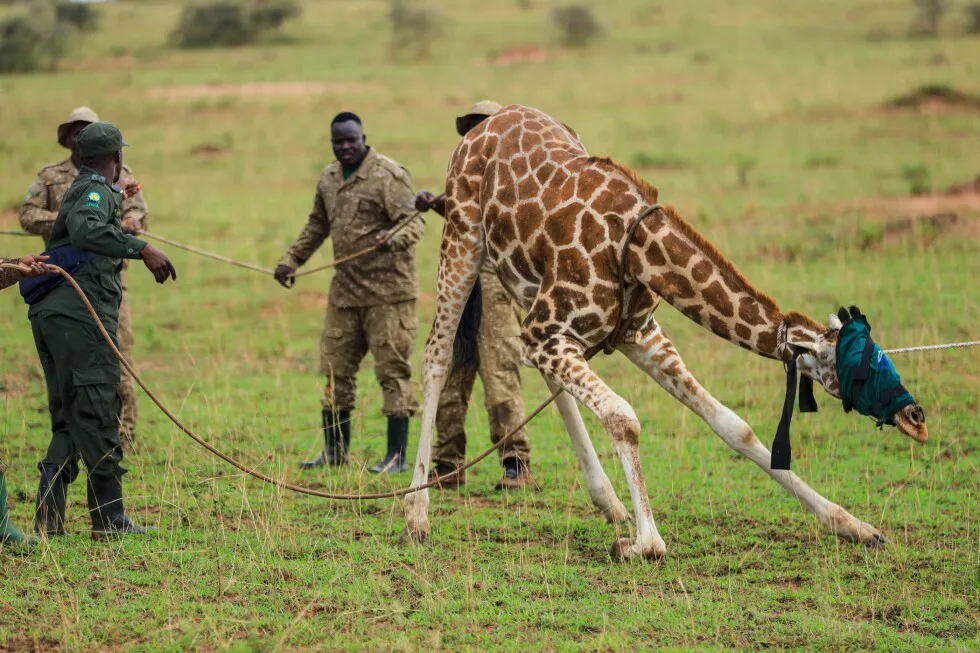
Associated Press (AP)FIG 01
Reading time
4min
Word count
997words
Sources cited
1cited
Entities identified
9entities
Quality score
100%
§ 01
Briefing Summary
AI-generatedNEWSAR · AI
Uganda Wildlife Authority rangers have begun translocating 12 endangered Nubian giraffes from Murchison Falls National Park to Ajai Wildlife Reserve. This move, spanning 106 kilometers, is intended to preserve the species, enhance biodiversity, and diversify tourism opportunities. The translocation is a conservation measure prompted by increased oil drilling activities within Murchison Falls National Park, where an estimated 40% of Uganda's oil deposits are located. Officials aim to reduce pressure on the giraffes' current habitat, which is shrinking due to oil and gas activities, tourism development, climate change, and other environmental factors. Ajai Wildlife Reserve is undergoing ecological restoration, with other species also being reintroduced, and authorities are working with local communities to ensure the animals' protection and boost the local economy through tourism.
Confidence 0.90Sources 1Claims 5Entities 9
§ 02
Article analysis
Model · rule-basedFraming
Environmental
Human Interest
Tone
Measured
AI-assessed
CalmNeutralAlarmist
Factuality
0.80 / 1.00
Factual
LowHigh
Sources cited
1
Limited
FewMany
§ 03
Key claims
5 extracted01
Establishing new animal populations in other protected areas will reduce pressure on existing ones.
quotePatrick Atimnedi, Uganda Wildlife Authority
Confidence
1.00
02
TotalEnergies officially began drilling for oil in the Tilenga project area within the park in June 2023.
factual
Confidence
1.00
03
12 endangered Nubian giraffes were translocated from Murchison Falls National Park to Ajai Wildlife Reserve.
factualUganda Wildlife Authority
Confidence
1.00
04
Increased oil drilling activities have occurred in the Murchison Falls National Park.
factual
Confidence
0.95
05
An estimated 40% of Uganda's oil deposits are in the Murchison Falls area and within the park.
statistic
Confidence
0.90
§ 04
Full report
4 min read · 997 words§ 05
Entities
9 identifiedKey playerOppositionContextPositiveNeutralNegative
Organizations1
Locations4
§ 06
Keywords & salience
9 termsgiraffe translocation
1.00
oil drilling
0.90
conservation
0.80
nubian giraffe
0.80
murchison falls national park
0.70
biodiversity
0.60
wildlife reserve
0.50
uganda wildlife authority
0.50
tourism
0.40
§ 07
Topic connections
Interactive graph No topic relationship data available yet. This graph will appear once topic relationships have been computed.