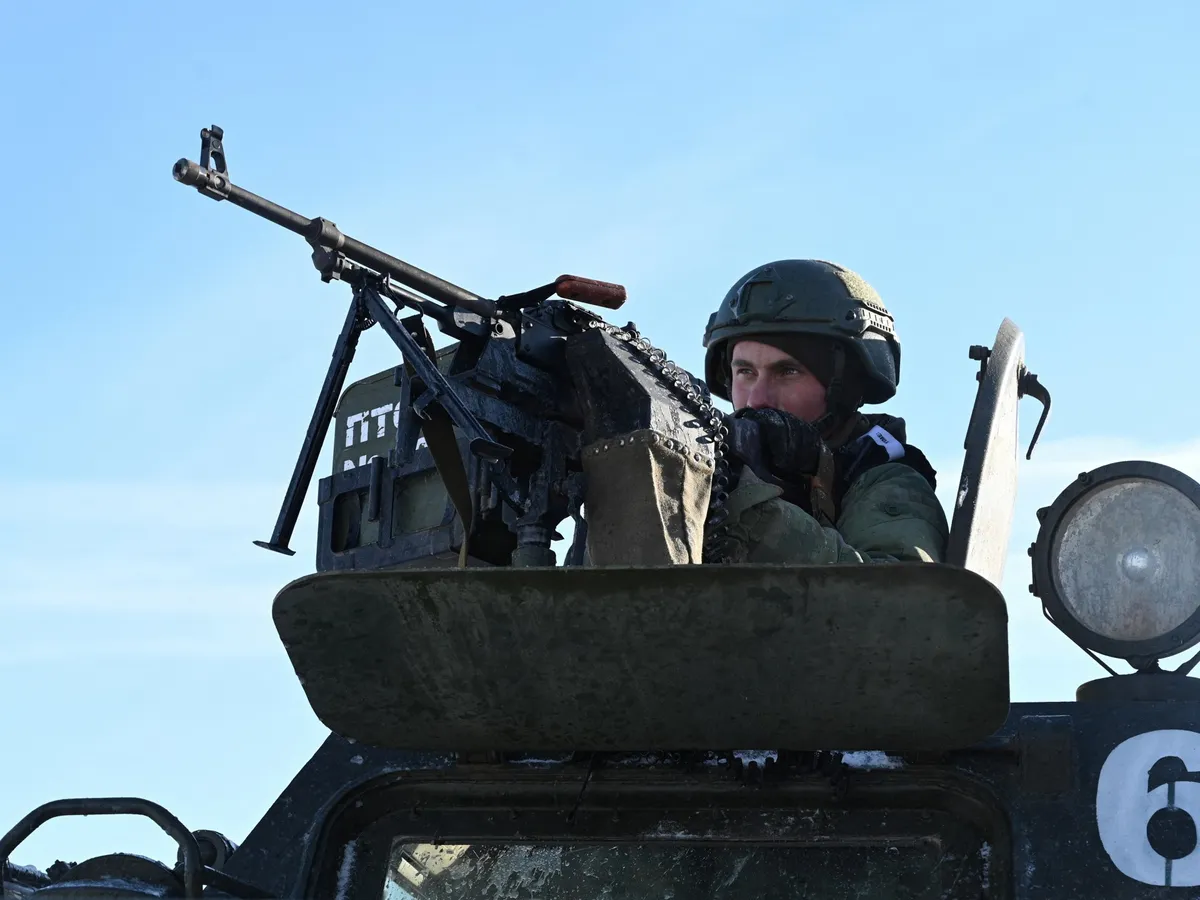
Atesh, an underground resistance group, says it has trained thousands of people – including Russian soldiers – in sabotage operations.A Russian service member aims a weapon during a training course in the Rostov region on January 19, 2026 [Sergey Pivovarov/Reuters]Published On 22 Jan 2026On the weekend, a power cut shut down a train line carrying Russian weapons and supplies to the front line through the region of Bryansk in western Russia near the Ukrainian border.But this was no ordinary blackout. It was caused by a fire at a nearby substation set by an agent of the Ukrainian resistance movement, Atesh.Recommended Stories list of 4 itemslist 1 of 4Two killed, dozens wounded in large Russian drone attacks across Ukrainelist 2 of 4Trump asks Putin to join Gaza ‘board of peace’ even as Ukraine war rageslist 3 of 4Tymoshenko vs Zelenskyy: Political clash over graft rocks wartime Ukrainelist 4 of 4How Russia is weaponising the freezing weather in Ukraineend of list“Atesh precisely targets the weak points of the enemy’s power grid, paralysing their rear,” the group announced to its 52,000 followers on its Telegram channel.While Russia strengthens its grip over occupied territory in Ukraine, its forces are facing resistance not only on the front lines but from the back as well. Among the so-called partisan groups, Atesh – whose name means “fire” in Crimean Tatar – has emerged as the most prolific, claiming responsibility for more than half of the sabotage attacks on Russian-controlled territory last year.“We are currently in a war of attrition, and the role of internal resistance is becoming decisive,” the organisation’s coordinator told Al Jazeera over Telegram.“The occupiers cannot guard every truck or every metre of rail in their rear.”Atesh was founded in September 2022, seven months after the Russian military mounted a full-scale invasion of its western neighbour. While its core consists of Crimean Tatars, an ethnic minority with long-held grievances against Moscow’s rule, members also include Ukrainians and even a handful of Russians and Belarusians, according to the representative.“We realised that Crimea and other captured territories would not simply wait for liberation; they must become a thorn in the occupier’s side from within,” said the representative, who cannot be named for safety reasons.“We are working for the systemic collapse of the Russian military machine from within. We are ensuring that every Russian soldier on our soil feels unsafe, and their logistics, equipment and headquarters are reduced to ashes.”‘Sabotage operations’Acts of sabotage have been taking place on Russian territory since the full-scale invasion of Ukraine began, starting with a wave of arson attacks on army draft offices.Since then, railroad infrastructure and supply trains for Russian troops have become the preferred targets for saboteurs seeking to slow down the Kremlin’s war machine. Among them are antiwar Russians and Belarusians, including underground networks such as BOAK (the Combat Organisation of Anarcho-Communists) as well as saboteurs-for-hire that Ukrainian agents have recruited online.“Sabotage operations are often coordinated by the Ukrainian intelligence and the SBU [Security Service of Ukraine] and conducted by either people supporting Ukraine or other persons recruited under the promise of a financial reward, threats or deceit,” Olha Polishchuk, research manager for the Armed Conflict Location and Event Data (ACLED) conflict monitor, told Al Jazeera.“It may be difficult to decouple Ukraine-led operations from partisan-led ones. There is often coordination between the two. Sometimes, we cannot establish a direct link to the Ukrainian government, but we know that persons involved in sabotage were recruited online by unidentified actors.”Russian intelligence has deployed similar tactics, reportedly paying local criminals to target logistics both in Ukraine and elsewhere in Europe.According to an ACLED report, Atesh was responsible for more than 50 percent of the acts of sabotage in Russian-occupied Ukraine in 2025.Dozens of its operations were reportedly within Russia, including setting fire to a locomotive in Rostov and destroying an air defence factory’s communications tower in Tula, south of Moscow.“The impact is difficult to estimate,” Polishchuk said.“A lot of sabotage activities have a limited effect and may cause inconveniences and resupply delays. This effect, however, can accumulate and force Russia to spend additional resources on repairs, security measures and policing the local population.”Although Atesh’s claims of responsibility cannot be independently confirmed, the group routinely broadcasts the coordinates and purported video evidence of their actions over Telegram.“We strike at the enemy’s most vulnerable points,” the Atesh representative said.“We select targets that are critical for logistics or troop command, such as headquarters, bridges and ammunition depots. Planning is based on intel from our agents directly on the ground. If we receive information about an important echelon or ammunition column, we focus all our efforts on that target while always prioritising the safety of our people.”The group said it minimises infiltration from Russian security services by adopting a decentralised command structure, communicating strictly through encrypted apps.“Individual agents don’t know each other, and cells operate autonomously,” the source said.“We use advanced encryption methods and train everyone in digital hygiene. Even when the FSB [Russia’s Federal Security Service] tries to infiltrate its provocateurs, our data verification and cross-checking system allows us to quickly mitigate the threat.”Russian sympathisers also support Atesh’s operations, the group claims.“We have active agents among the Russian armed forces, the national guard and even intelligence agencies,” the representative said.“Some do this for ideological reasons, having recognised the criminality of war, while others do so for the sake of their families’ futures, realising the inevitable collapse of the regime. Their inside information allows us to know in advance about the movement of combat vehicles and what is happening in closed command bunkers.”By 2023, Atesh said it had taught 4,000 Russian soldiers how to “survive” the war by damaging their own equipment.Aside from sabotage, Atesh’s activities range from what it describes as “propaganda” – plastering stickers with its messages over Russian and Russian-occupied cities – to reconnaissance of bases, depots and supply trains, which it shares with Ukrainian intelligence. Atesh claimed its information led directly to a successful wave of Ukrainian strikes in 2023 that forced Russia to relocate its Black Sea Fleet.Polischuk pointed to Ukraine’s Spiderweb operation last year, a mass drone strike on Russian airfields, as an example of an effective Ukrainian operation coordinated with partisan groups.If needed, Atesh agents do not hesitate to deploy lethal force. For example, in July, the group said it killed several Russian servicemen by setting fire to their truck in southeastern Ukraine’s Zaporizhia region.“Our targets are those who came to our land to kill and traitors who actively participate in repressions against the civilian population,” the partisans’ coordinator stated.“Collaborators who betray their neighbours and officers who order strikes on cities are priority targets.”The partisans put themselves at high risk.“Russia has implemented brutal policies since the beginning, so sabotage activity was born in these conditions and had to adjust to them immediately,” Polishchuk explained.“Expressing any support for Ukraine is dangerous both in occupied Ukraine and in Russia,” she added. “Those suspected of any cooperation with the Ukrainian military can be arrested or disappeared without due process, even if no evidence is found against them.”
SRCAl Jazeera
LANGEN
LEANCenter
WORDS1 174
ENT8
THU · 2026-01-22 · 07:38 GMTBRIEF NSR-2026-0122-9573
NSR-2026-0122-9573News Report·EN·Conflict
The Crimean Tatar movement trying to ruin Russia’s army from within
Atesh, a Ukrainian resistance group founded in September 2022, is actively sabotaging Russian military operations in occupied territories. The group, whose name means "fire" in Crimean Tatar, claims responsibility for numerous attacks, including a recent power outage that disrupted a Russian supply train in the Bryansk region.
Niko VorobyovAl JazeeraFiled 2026-01-22 · 07:38 GMTLean · CenterRead · 5 min
Al JazeeraFIG 01
Reading time
5min
Word count
1 174words
Sources cited
2cited
Entities identified
8entities
Quality score
100%
§ 01
Briefing Summary
AI-generatedNEWSAR · AI
Atesh, a Ukrainian resistance group founded in September 2022, is actively sabotaging Russian military operations in occupied territories. The group, whose name means "fire" in Crimean Tatar, claims responsibility for numerous attacks, including a recent power outage that disrupted a Russian supply train in the Bryansk region. Atesh aims to weaken the Russian military from within by targeting infrastructure and making Russian soldiers feel unsafe. While its core consists of Crimean Tatars, the group also includes Ukrainians, Russians, and Belarusians. Atesh claims to have trained thousands of individuals, including Russian soldiers, in sabotage tactics. The organization believes internal resistance is crucial in the ongoing war between Russia and Ukraine.
Confidence 0.90Sources 2Claims 5Entities 8
§ 02
Article analysis
Model · rule-basedFraming
Conflict
National Security
Tone
Mixed Tone
AI-assessed
CalmNeutralAlarmist
Factuality
0.70 / 1.00
Factual
LowHigh
Sources cited
2
Limited
FewMany
§ 03
Key claims
5 extracted01
Atesh was founded in September 2022.
factual
Confidence
1.00
02
Acts of sabotage have been taking place on Russian territory since the full-scale invasion of Ukraine began.
factual
Confidence
0.90
03
A power cut shut down a train line carrying Russian weapons and supplies to the front line through the region of Bryansk.
factual
Confidence
0.90
04
Atesh claimed responsibility for more than half of the sabotage attacks on Russian-controlled territory last year.
factual
Confidence
0.80
05
Atesh says it has trained thousands of people – including Russian soldiers – in sabotage operations.
quoteAtesh
Confidence
0.80
§ 04
Full report
5 min read · 1 174 words§ 05
Entities
8 identifiedKey playerOppositionContextPositiveNeutralNegative
Organizations1
§ 06
Keywords & salience
10 termsatesh
1.00
resistance movement
0.90
sabotage
0.80
crimean tatar
0.70
russian military
0.70
internal resistance
0.60
ukraine
0.60
partisan groups
0.50
war of attrition
0.50
occupied territory
0.40
§ 07
Topic connections
Interactive graph Network visualization showing 51 related topics
View Full Graph Person Organization Location Event|Click node to navigate|Edge numbers = shared articles