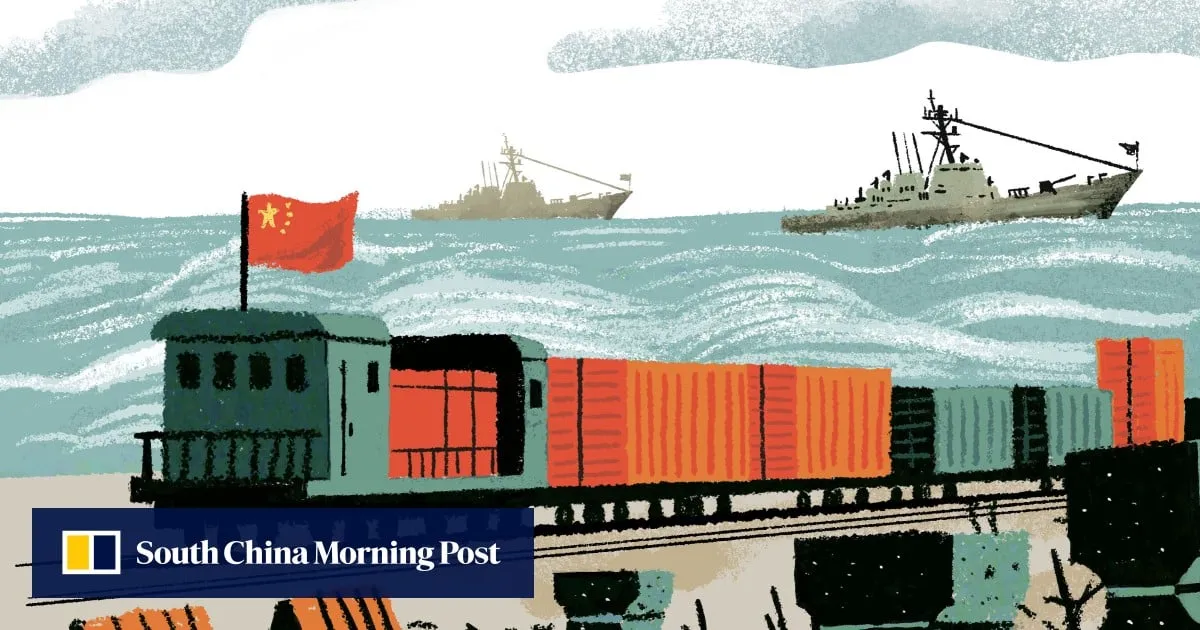
Beijing is doubling down on overland trade routes across Central Asia as continued disruptions in the Strait of Hormuz and the wider region expose the vulnerability of global shipping chokepoints.A new link to Afghanistan via Uzbekistan offers a practical example of this long-term diversification push. However, observers caution that security concerns and capacity constraints could make a meaningful shift away from sea freight difficult.Officially launched in May with pilot shipments, the multi-modal freight corridor allows containers to be moved by rail from China through Kazakhstan into Uzbekistan, and then by road via Turkmenistan to Herat in western Afghanistan.
SRCSouth China Morning Post
LANGEN
LEANCenter-Right
WORDS98
ENT11
FRI · 2026-07-24 · 22:00 GMTBRIEF NSR-2026-0725-95838
NSR-2026-0725-95838News Report·EN·Political Strategy
Amid Hormuz woes, China tests Central Asian land corridors to bypass maritime chokepoints
China is expanding overland trade routes through Central Asia to mitigate risks associated with maritime chokepoints, such as the Strait of Hormuz. A new multi-modal freight corridor, launched in May with pilot shipments, exemplifies this strategy.
Shi JiangtaoSouth China Morning PostFiled 2026-07-24 · 22:00 GMTLean · Center-RightRead · 1 min
South China Morning PostFIG 01
Reading time
1min
Word count
98words
Sources cited
1cited
Entities identified
11entities
Quality score
100%
§ 01
Briefing Summary
AI-generatedNEWSAR · AI
China is expanding overland trade routes through Central Asia to mitigate risks associated with maritime chokepoints, such as the Strait of Hormuz. A new multi-modal freight corridor, launched in May with pilot shipments, exemplifies this strategy. This route transports containers by rail from China through Kazakhstan into Uzbekistan, and then by road via Turkmenistan to Herat, Afghanistan. This development aims to diversify China's trade infrastructure in response to regional shipping vulnerabilities. However, experts note that security concerns and capacity limitations may hinder a significant shift away from sea freight.
Confidence 0.85Sources 1Claims 4Entities 11
§ 02
Article analysis
Model · rule-basedFraming
Political Strategy
Economic Impact
Tone
Measured
AI-assessed
CalmNeutralAlarmist
Factuality
0.70 / 1.00
Factual
LowHigh
Sources cited
1
Limited
FewMany
§ 03
Key claims
4 extracted01
The new link to Afghanistan via Uzbekistan was officially launched in May with pilot shipments.
factual
Confidence
1.00
02
A new multi-modal freight corridor allows containers to be moved by rail from China through Kazakhstan into Uzbekistan, and then by road via Turkmenistan to Herat in Afghanistan.
factual
Confidence
1.00
03
Beijing is developing overland trade routes across Central Asia to bypass maritime chokepoints like the Strait of Hormuz.
factual
Confidence
1.00
04
Observers caution that security concerns and capacity constraints could make a meaningful shift away from sea freight difficult.
quoteobservers
Confidence
0.80
§ 04
Full report
1 min read · 98 words§ 05
Entities
11 identifiedKey playerOppositionContextPositiveNeutralNegative
Locations8
§ 06
Keywords & salience
10 termscentral asian land corridors
1.00
strait of hormuz
0.90
maritime chokepoints
0.80
overland trade routes
0.80
diversification push
0.70
multi-modal freight corridor
0.60
sea freight
0.60
capacity constraints
0.50
security concerns
0.50
afghanistan
0.40
§ 07
Topic connections
Interactive graph Network visualization showing 51 related topics
View Full Graph Person Organization Location Event|Click node to navigate|Edge numbers = shared articles