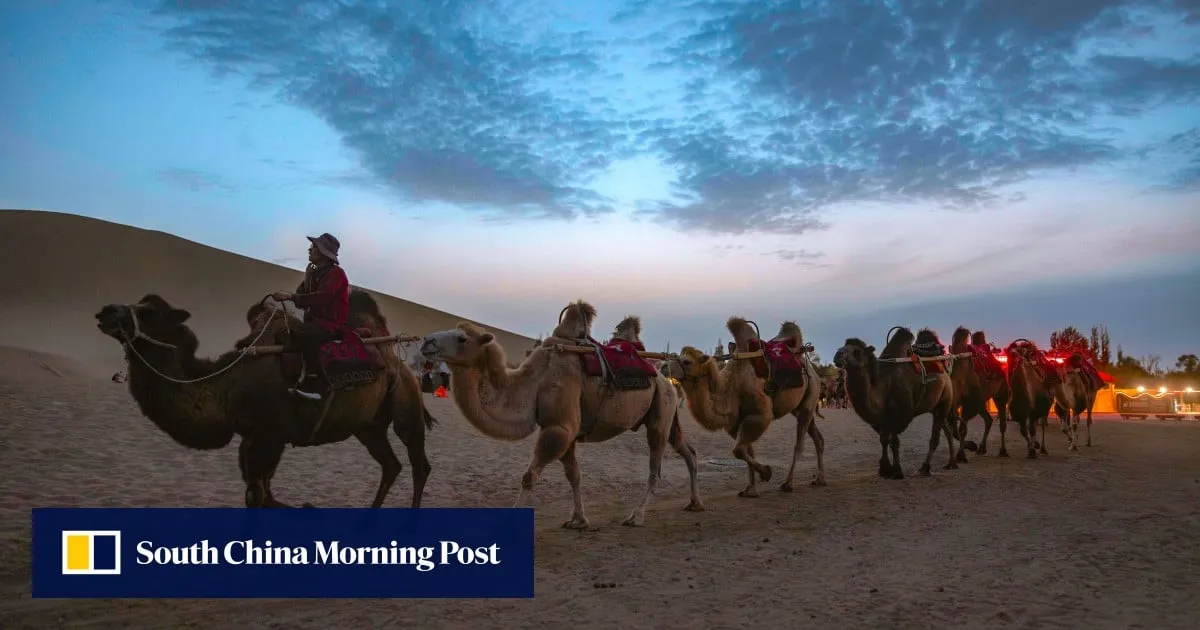
In 138BC, Chinese diplomat and explorer Zhang Qian was sent as an envoy to the western regions.The Han dynasty envoy failed to achieve his emperor’s goal of launching a pincer attack against the Xiongnu nomadic confederation, but he unexpectedly discovered a route.The land route started from Changan, present-day Xian, and passed through Gansu province and the Xinjiang Uygur autonomous region, reaching Central and West Asia, and connecting various countries along the Mediterranean.Among the goods traded along this long route, Chinese silk was the most representative, which was how the Silk Road got its name.Traditional historical scholarship holds that sericulture and silk-reeling technology originated in China 8,500 to 5,000 years ago and spread outward along the Silk Road in the 2nd century BC.Traditional historical scholarship holds that sericulture and silk-reeling technology originated in China 8,500 to 5,000 years ago and spread outward along the Silk Road in the 2nd century BC. Photo: HandoutHowever, a recent archaeological discovery by Chinese scientists in Uzbekistan has revealed that silkworm cocoons and mulberry trees already appeared in the region more than 2,000 years before the Silk Road opened.
SRCSouth China Morning Post
LANGEN
LEANCenter-Right
WORDS183
ENT11
SAT · 2026-07-25 · 02:00 GMTBRIEF NSR-2026-0725-95863
NSR-2026-0725-95863News Report·EN·Technology
Long before the Silk Road, silkworm cocoons already existed in Uzbekistan
Recent archaeological findings by Chinese scientists in Uzbekistan have challenged traditional historical understanding of silk production's origins. While it was believed that sericulture and silk-reeling technology originated in China and spread along the Silk Road starting in the 2nd century BC, the discovery of silkworm cocoons and mulberry trees in Uzbekistan predates the Silk Road's opening by over 2,000 years.
Shi HuangSouth China Morning PostFiled 2026-07-25 · 02:00 GMTLean · Center-RightRead · 1 min
South China Morning PostFIG 01
Reading time
1min
Word count
183words
Sources cited
1cited
Entities identified
11entities
Quality score
100%
§ 01
Briefing Summary
AI-generatedNEWSAR · AI
Recent archaeological findings by Chinese scientists in Uzbekistan have challenged traditional historical understanding of silk production's origins. While it was believed that sericulture and silk-reeling technology originated in China and spread along the Silk Road starting in the 2nd century BC, the discovery of silkworm cocoons and mulberry trees in Uzbekistan predates the Silk Road's opening by over 2,000 years. This suggests that silk production existed in the region long before its documented trade routes. The Silk Road itself was established after Chinese diplomat Zhang Qian's 138 BC mission to the western regions, which inadvertently revealed a land route connecting China to Central and West Asia and the Mediterranean.
Confidence 0.90Sources 1Claims 4Entities 11
§ 02
Article analysis
Model · rule-basedFraming
Technology
Diplomatic
Tone
Measured
AI-assessed
CalmNeutralAlarmist
Factuality
0.80 / 1.00
Factual
LowHigh
Sources cited
1
Limited
FewMany
§ 03
Key claims
4 extracted01
Traditional scholarship states sericulture originated in China 8,500-5,000 years ago and spread in the 2nd century BC.
factualTraditional historical scholarship
Confidence
1.00
02
The Silk Road route started from Changan, passed through Gansu and Xinjiang, reaching Central and West Asia.
factual
Confidence
1.00
03
Zhang Qian was sent as an envoy to the western regions in 138BC.
factual
Confidence
1.00
04
A recent archaeological discovery in Uzbekistan revealed silkworm cocoons and mulberry trees existed there over 2,000 years before the Silk Road.
factualChinese scientists
Confidence
0.90
§ 04
Full report
1 min read · 183 words§ 05
Entities
11 identifiedKey playerOppositionContextPositiveNeutralNegative
Organizations1
Locations7
§ 06
Keywords & salience
8 termssericulture
1.00
silk road
0.90
uzbekistan
0.80
silkworm cocoons
0.70
archaeological discovery
0.60
mulberry trees
0.50
zhang qian
0.40
han dynasty
0.40
§ 07
Topic connections
Interactive graph No topic relationship data available yet. This graph will appear once topic relationships have been computed.