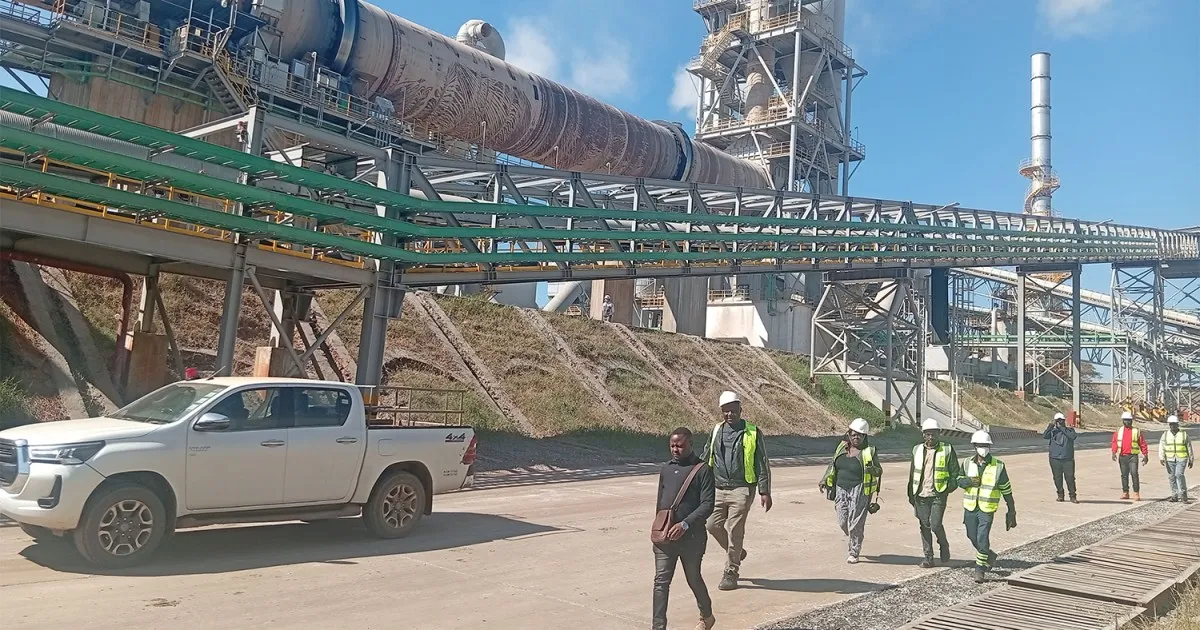
Zimbabwe wants to process more minerals at home, but smaller miners fear being left behind.Journalists walk past lithium-Zimbabwe" class="entity-link entity-organization" data-entity-id="72037" data-entity-type="organization">Prospect lithium Zimbabwe's (PLZ) newly constructed lithium-sulphate" class="entity-link entity-topic" data-entity-id="171400" data-entity-type="topic">lithium sulphate plant during a technical media tour in Goromonzi, Mashonaland East [Enos Denhere/Al Jazeera]Published On 26 Jul 2026Harare, Zimbabwe – Zimbabwe wants to move beyond being a supplier of raw minerals and build industries that process and manufacture from its own resources. But as the government tightens restrictions on unprocessed mineral exports, smaller miners are asking whether they will share in that transformation or be left behind.The government has restricted exports of unprocessed strategic minerals, including lithium, as part of a broader drive to increase domestic beneficiation. Authorities argue that Zimbabwe should capture more value from its mineral wealth instead of exporting raw materials and allowing other countries to profit from refining and manufacturing.The policy has attracted more than $1bn in investment into Zimbabwe’s lithium value chain, according to government officials and industry representatives. But smaller miners warn that the cost of building processing facilities, unreliable electricity supplies and limited access to finance could make it difficult for them to participate in the country’s industrial ambitions.Speaking during a technical media tour of lithium-Zimbabwe" class="entity-link entity-organization" data-entity-id="72037" data-entity-type="organization">Prospect lithium Zimbabwe (PLZ) in Goromonzi, Mashonaland East, on 17 July, Minister of Mines and Mining Development Polite Kambamura said Zimbabwe’s 2022 ban on exports of unbeneficiated lithium ore had encouraged companies to invest in domestic beneficiation.“The construction of the first lithium-sulphate" class="entity-link entity-topic" data-entity-id="171400" data-entity-type="topic">lithium sulphate plant in Africa is behind me, and this was done in Zimbabwe,” Kambamura said.He said Zimbabwe’s ambitions extended beyond lithium-sulphate" class="entity-link entity-topic" data-entity-id="171400" data-entity-type="topic">lithium sulphate and lithium-carbonate" class="entity-link entity-topic" data-entity-id="159743" data-entity-type="topic">lithium carbonate production, with a long-term goal of developing industries capable of manufacturing lithium batteries and solar panels locally.lithium-Zimbabwe" class="entity-link entity-organization" data-entity-id="72037" data-entity-type="organization">Prospect lithium Zimbabwe, owned by China’s Zhejiang Huayou Cobalt, said its lithium-carbonate" class="entity-link entity-topic" data-entity-id="159743" data-entity-type="topic">lithium carbonate plant was about 90 percent complete.PLZ public relations officer Patience Mushore said Huayou’s investments had generated more than $1.1bn in foreign exchange for Zimbabwe while expanding the country’s lithium value chain.Policy shiftSupporters of Zimbabwe’s export restrictions argue that the country can no longer remain a supplier of raw minerals while other nations capture greater profits through refining and manufacturing.Public policy expert Tedious Ncube said Zimbabwe’s lithium sector demonstrated why the government had prioritised beneficiation.Mechanics work on a machine installed at Arcadia lithium in Goromonzi, Zimbabwe [Tafadzwa Ufumeli/Getty Images]He pointed to investments at Arcadia Mine and Bikita Minerals as examples of companies expanding Zimbabwe’s lithium sector.Ncube said domestic processing could create skilled jobs, strengthen local suppliers and allow Zimbabwe to retain a greater share of the income generated from its mineral resources.“The success of Zimbabwe’s lithium industry shows that the right policy can attract investment that builds industries, creates jobs and leaves a bigger share of mineral wealth in Zimbabwe,” he said.Mining concernsFor smaller producers, the debate is not whether Zimbabwe should process its minerals locally, but whether they will have the infrastructure, finance, and market access needed to participate.Shelton Lucas, business development director at Naivo Mining, said the company operates chrome, antimony and tungsten projects in Mashava, Ngezi and Kadoma but faces challenges accessing affordable processing options.Lucas said smaller producers were struggling to access processing capacity, particularly in the chrome sector.“For our raw chrome, we are now forced to sell to local Chinese smelters where they underpay us. For antimony, I have the resources to build the value-addition plant, but for chrome I cannot because the plant is very expensive,” he said.He said he supported domestic processing but warned that smaller miners could be excluded if new requirements were introduced without support mechanisms.Lucas proposed a toll-smelting system, where public institutions or industry bodies invest in shared processing facilities that miners can access at transparent rates while retaining ownership of their minerals.“The challenge is not only building processing plants, but also ensuring smaller producers can access capacity on fair terms,” he said.Without such measures, he warned that a small number of companies could end up controlling processing capacity and market access.“If these companies also hold export rights, they could dictate prices to small-scale miners, creating what could become a predatory market that undermines the very people the mining sector is meant to empower,” he said.Economic constraintsEconomists say Zimbabwe’s processing ambitions will depend on whether the country can overcome longstanding challenges affecting mining and manufacturing.United Kingdom-based Zimbabwean economist Chenayi Mutambasere told Al Jazeera that the policy faced obstacles including power shortages, expensive financing, weak transport infrastructure, foreign exchange constraints and limited access to processing technology.“The ban should be more than a political slogan; it should be an industrial practical strategy,” she said.A worker oversees operations at lithium-Zimbabwe" class="entity-link entity-organization" data-entity-id="72037" data-entity-type="organization">Prospect lithium Zimbabwe’s (PLZ) three-line, single-phase lithium-sulphate" class="entity-link entity-topic" data-entity-id="171400" data-entity-type="topic">lithium sulphate plant in Goromonzi, Mashonaland East [Enos Denhere/Al Jazeera]Mutambasere said the government needed to support the policy with reliable electricity, investor incentives, skills development and clear implementation timelines.She warned that restrictions introduced before the necessary support systems were in place could create unintended consequences.“An abrupt ban where companies have invested in the sector may push the mining sector further underground, which could increase mineral leakage,” she said.Government visionPermanent Secretary in the Ministry of Information, Publicity and Broadcasting Services Nick Mangwana told Al Jazeera that the policy was intended to ensure Zimbabwe gains more from its finite mineral resources.“The government is implementing this beneficiation policy in our minerals for the growth of our economy and to create a lasting legacy that will be witnessed by future generations,” Mangwana said.He said the policy applied not only to lithium but also to other strategic minerals, including platinum group metals such as palladium, rhodium, ruthenium, iridium and osmium.Zimbabwe’s push reflects a wider debate among resource-rich countries: whether restricting raw exports can build domestic industries without concentrating opportunities among a few large companies.For smaller miners, the success of the strategy will depend not only on how much mineral processing takes place inside the country, but whether beneficiation creates broader participation or leaves only the biggest players able to compete.Lucas said the goal should be to ensure that local processing expands opportunities across the mining sector rather than creating new barriers for smaller producers.“Beneficiation should not become a barrier to participation. It should be an enabler of inclusive growth, industrial development and sustainable economic transformation,” Lucas said.
SRCAl Jazeera
LANGEN
LEANCenter
WORDS1 024
ENT12
SUN · 2026-07-26 · 03:21 GMTBRIEF NSR-2026-0726-96007
NSR-2026-0726-96007News Report·EN·Economic Impact
Can Zimbabwe’s mineral ambitions benefit smaller producers?
Zimbabwe aims to increase domestic mineral processing and manufacturing, restricting unprocessed mineral exports to capture more value from its resources. This policy has attracted significant investment, particularly in the lithium sector, with companies like Prospect Lithium Zimbabwe investing in processing plants.
By Enos DenhereAl JazeeraFiled 2026-07-26 · 03:21 GMTLean · CenterRead · 5 min
Al JazeeraFIG 01
Reading time
5min
Word count
1 024words
Sources cited
4cited
Entities identified
12entities
Quality score
100%
§ 01
Briefing Summary
AI-generatedNEWSAR · AI
Zimbabwe aims to increase domestic mineral processing and manufacturing, restricting unprocessed mineral exports to capture more value from its resources. This policy has attracted significant investment, particularly in the lithium sector, with companies like Prospect Lithium Zimbabwe investing in processing plants. However, smaller miners fear being excluded from these ambitions due to the high cost of processing facilities, unreliable electricity, and limited access to finance. They are concerned about their ability to participate in domestic processing and warn that without support mechanisms, a few large companies could control processing capacity and market access, potentially creating a predatory market.
Confidence 0.90Sources 4Claims 5Entities 12
§ 02
Article analysis
Model · rule-basedFraming
Economic Impact
Political Strategy
Tone
Measured
AI-assessed
CalmNeutralAlarmist
Factuality
0.70 / 1.00
Factual
LowHigh
Sources cited
4
Well sourced
FewMany
§ 03
Key claims
5 extracted01
Zimbabwe aims to increase domestic processing and manufacturing of its mineral resources, moving beyond raw material exports.
factual
Confidence
1.00
02
Smaller miners express concerns about the cost of processing facilities, unreliable electricity, and limited access to finance hindering their participation.
factualsmaller miners
Confidence
0.90
03
Zimbabwe's 2022 ban on unbeneficiated lithium ore exports has encouraged investment in domestic beneficiation.
factualMinister of Mines and Mining Development Polite Kambamura
Confidence
0.90
04
Prospect Lithium Zimbabwe (PLZ), owned by China's Zhejiang Huayou Cobalt, has generated over $1.1 billion in foreign exchange for Zimbabwe.
statisticPLZ public relations officer Patience Mushore
Confidence
0.80
05
The policy shift has attracted over $1 billion in investment into Zimbabwe's lithium value chain.
statisticgovernment officials and industry representatives
Confidence
0.80
§ 04
Full report
5 min read · 1 024 words§ 05
Entities
12 identifiedKey playerOppositionContextPositiveNeutralNegative
Organizations3
§ 06
Keywords & salience
10 termsdomestic beneficiation
1.00
mineral processing
0.90
smaller miners
0.80
lithium value chain
0.70
unprocessed mineral exports
0.70
industrial ambitions
0.60
lithium sulphate plant
0.50
prospect lithium zimbabwe
0.50
investment
0.40
zimbabwe
0.40
§ 07
Topic connections
Interactive graph Network visualization showing 22 related topics
View Full Graph Person Organization Location Event|Click node to navigate|Edge numbers = shared articles