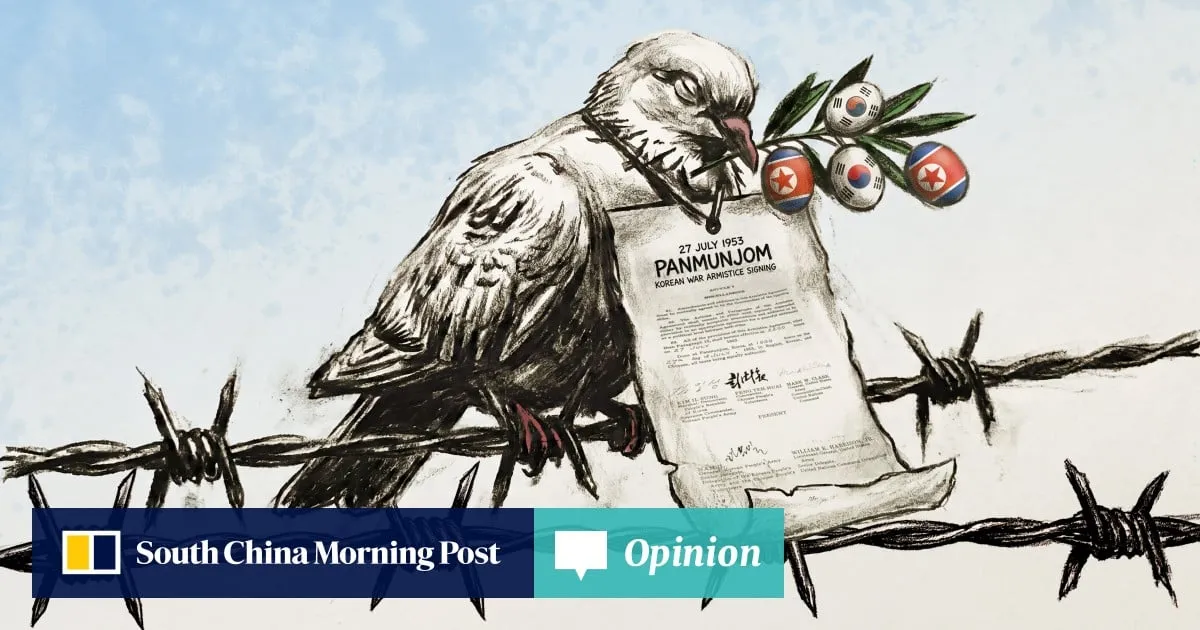
Each year on July 27, North Korea commemorates “Victory Day”, marking what it presents as its triumph in the Korean War. While few outside the country accept that characterisation, the date underscores a reality: the war never formally ended. The 1953 agreement was an armistice that left the peninsula in a state of suspended conflict.Responsibility for the resulting instability is widely distributed. North Korea’s missile tests, expanding nuclear arsenal and escalatory rhetoric have undermined regional security. South Korean administrations have added to tensions, the most recent being the ousted Yoon government, accused of attempting to provoke an attack by Pyongyang to justify its martial law declaration. Russia compounds the picture: its deepening military cooperation has strengthened North Korea’s military and economic resilience.Washington’s approach warrants scrutiny, given its central role in the war and any eventual peace settlement. The armistice was signed by the Korean People’s Army, Chinese forces and the United States representing the UN Command – South Korea refused. Because Beijing’s policy does not constitute the principal obstacle to peace, the core of the impasse rests with Washington and Pyongyang.
SRCSouth China Morning Post
LANGEN
LEANCenter-Right
WORDS181
ENT10
SUN · 2026-07-26 · 12:30 GMTBRIEF NSR-2026-0726-96121
NSR-2026-0726-96121Opinion·EN·Political Strategy
America’s North Korea strategy needs a dose of reality
North Korea annually observes "Victory Day" on July 27, commemorating the Korean War, which never formally ended with a peace treaty, but rather a 1953 armistice. This ongoing state of suspended conflict contributes to regional instability, fueled by North Korea's missile tests, nuclear expansion, and aggressive rhetoric.
Gabriela BernalSouth China Morning PostFiled 2026-07-26 · 12:30 GMTLean · Center-RightRead · 1 min
South China Morning PostFIG 01
Reading time
1min
Word count
181words
Sources cited
0cited
Entities identified
10entities
Quality score
100%
§ 01
Briefing Summary
AI-generatedNEWSAR · AI
North Korea annually observes "Victory Day" on July 27, commemorating the Korean War, which never formally ended with a peace treaty, but rather a 1953 armistice. This ongoing state of suspended conflict contributes to regional instability, fueled by North Korea's missile tests, nuclear expansion, and aggressive rhetoric. The article suggests responsibility for this instability is shared, citing South Korean administrations' actions and Russia's deepening military cooperation with Pyongyang. Washington's strategy is deemed worthy of examination, as the armistice was signed by the US representing the UN Command, and the core impasse for peace is identified as resting between Washington and Pyongyang.
Confidence 0.90Claims 5Entities 10
§ 02
Article analysis
Model · rule-basedFraming
Political Strategy
Conflict
Tone
Measured
AI-assessed
CalmNeutralAlarmist
Factuality
0.40 / 1.00
Mixed
LowHigh
Sources cited
0
No named sources
FewMany
§ 03
Key claims
5 extracted01
The Korean War never formally ended, with the 1953 agreement being an armistice.
factual
Confidence
1.00
02
North Korea's actions (missile tests, nuclear arsenal, rhetoric) undermine regional security.
factual
Confidence
0.90
03
The core of the Korean peninsula impasse rests with Washington and Pyongyang.
factual
Confidence
0.80
04
Russia's deepening military cooperation strengthens North Korea's resilience.
factual
Confidence
0.80
05
The ousted Yoon government was accused of attempting to provoke an attack by Pyongyang.
factual
Confidence
0.70
§ 04
Full report
1 min read · 181 words§ 05
Entities
10 identifiedKey playerOppositionContextPositiveNeutralNegative
Organizations3
Locations6
§ 06
Keywords & salience
8 termsnorth korea strategy
1.00
korean war
0.90
armistice
0.80
regional security
0.70
nuclear arsenal
0.60
russia cooperation
0.50
pyongyang
0.40
washington
0.40
§ 07
Topic connections
Interactive graph Network visualization showing 51 related topics
View Full Graph Person Organization Location Event|Click node to navigate|Edge numbers = shared articles