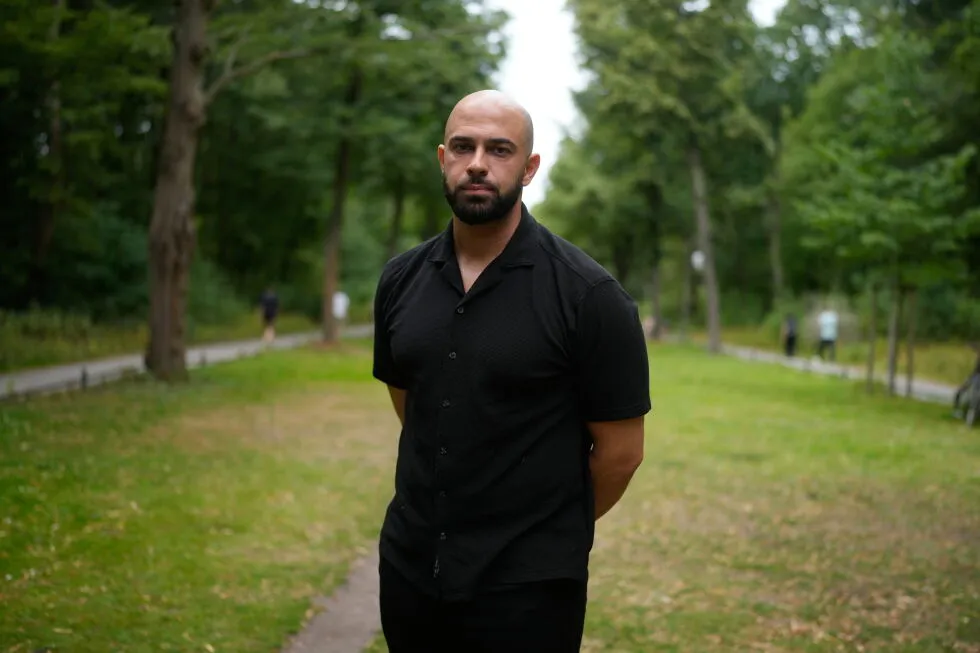
A fatal attack on Berlin’s Pride festival leaves locals wondering how their city will recover 1 of 5 | Police officer Ali Darwich poses for a portrait near the scene where a car rammed into a crowd at the Pride March in Berlin, Germany, Sunday, July 26, 2026. (AP Photo/Markus Schreiber) 2 of 5 | Ashley Jump lays flowers near the scene where a car rammed into a crowd near the Pride March in Berlin, Germany, Sunday, July 26, 2026. (AP Photo/Markus Schreiber) 3 of 5 | Two people hug at the memorial site commemorating the victims near the scene where a car rammed into a crowd at the Pride March in Berlin, Germany, Sunday, July 26, 2026. (AP Photo/Markus Schreiber) 4 of 5 | People attend the memorial site commemorating the victims near the scene where a car rammed into a crowd near the Pride March in Berlin, Germany, Sunday, July 26, 2026. (AP Photo/Markus Schreiber) 5 of 5 | People gather outside the Brandenburg Gate for a demonstration in support of LGBTQ+ after a car rammed into a crowd at the Pride March in Berlin, Sunday, July 26, 2026. (AP Photo/Ebrahim Noroozi) By KIRSTEN GRIESHABER Updated 5:21 PM MESZ, July 26, 2026 Add AP News on Google Add AP News as your preferred source to see more of our stories on Google. Share Share Facebook Copy Link copied Print Email X LinkedIn Bluesky Flipboard Pinterest Reddit Berlin (AP) — For Ali Darwich, the deadly attack on the Berlin Pride Festival was an attack on the city of Berlin and everything it stands for: its diversity, its tolerance and its belief in freedom. On a personal level, it also was an attack on everything the Berliner embodies. “Born a Muslim, living as a gay man, working as a police officer,” Darwich said, as he tried holding back the tears, “this terror attack touches so many aspects of who I am.” Saturday night’s van ramming and stabbing near Berlin’s Pride festival that left one person dead and many others wounded is believed to have been an Islamic extremist terror attack, authorities say. The suspect in the attack remains at large. Authorities issued a wanted notice and warned people against approaching Abdul Ballout, a 21-year-old German citizen with Lebanese roots, saying that he may be armed and dangerous. “Born a Muslim, living as a gay man, working as a police officer,” Darwich said, as he tried holding back the tears, “this terror attack touches so many aspects of who I am.” On Sunday, Darwich, 34, watched sadly as more and more members of the LGBTQ+ community came to Tiergarten park, where the attack took place. They put down flowers, hugged each other and looked in disbelief at the crashed van, which still stood cordoned off behind dozens of police officers. People attend the memorial site commemorating the victims near the scene where a car rammed into a crowd near the Pride March in Berlin, Germany, Sunday, July 26, 2026. (AP Photo/Markus Schreiber) Two people hug at the memorial site commemorating the victims near the scene where a car rammed into a crowd at the Pride March in Berlin, Germany, Sunday, July 26, 2026. (AP Photo/Markus Schreiber) Like Darwich, many of them had been celebrating life and love just hours earlier, protesting for equality and warning of an increase of hate crimes against their community. “I was wearing my rainbow-colored shirt, carried a banner at the parade saying ‘why are some people afraid of love but not of hate?,’ and was about to go to an afterparty last night, when friends started calling me to check if I was OK,” he said. When he understood that there had been an attack, he canceled the party and went home filled with sorrow. But it was only after he woke up on Sunday morning that he truly grasped the significance of the attack. “I asked myself, why as a police officer I did not run to the scene of the crash to help my colleagues. I asked myself as a gay if we will have to live with more fear now even though we are already experiencing bullying and hatred. I asked myself as a Muslim if our community will be exposed to even more racism now.” People gather outside the Brandenburg Gate for a demonstration in support of LGBTQ+ after a car rammed into a crowd at the Pride March in Berlin, Sunday, July 26, 2026. (AP Photo/Ebrahim Noroozi) Ashley Jump lays flowers near the scene where a car rammed into a crowd near the Pride March in Berlin, Germany, Sunday, July 26, 2026. (AP Photo/Markus Schreiber) Darwich, who was born in Berlin and has Lebanese and Palestinian roots, expressed worry that the attack would polarize German society even more. “I’m actually feeling desperate this morning,” said Darwich, who also works as a gay Muslim influencer and posts many videos on social media that usually try to strike a positive note. “We can’t get rid of the hatred some people feel, and it’s just getting worse and worse.” But at the same time, he said he did not want to let hate win and that deep inside he still hoped that “the people of Berlin will make the best of it, that they will work together, and that, hopefully, all of this will lead to an even better Berlin.” “the people of Berlin will make the best of it, that they will work together, and that, hopefully, all of this will lead to an even better Berlin.” Others, who had come to the impromptu vigil at Tiergarten, also expressed anger and shock, but also resilience. “We are simply stunned by what happened yesterday,” said Andre Lehmann, a top official with the main national LGBTQ+ association, LSVD+. “This suspected attack hits the heart of the queer community.” The attack “affects people who took to the street in Berlin this weekend to fight for their rights, their diversity and their rights, and of course with that it is a political act and does not just affect people celebrating,” he said. Lehmann said that there has been “a tenfold increase of anti-queer hate crime in Germany within a few years.” He added that “for years, to be honest, nothing has happened and also, to be honest, for years there has been no outcry from society.” Ashley Jump, a 26-year-old U.K. resident, had traveled to Berlin for Saturday’s Pride parade but had left the celebrations before the attack. Jump, still in shock, returned Sunday to leave flowers at a memorial near the crime scene. “They’ll never erase us, we’ll never be gone,” they said, their voice shivering from pain. “As long as humanity has existed, we’ve existed. And as long as humanity exists, we will exist. We will not be removed.” KIRSTEN GRIESHABER Grieshaber is a Berlin-based reporter covering Germany and Austria for The Associated Press. She covers general news as well as migration, populism and religion. mailto
SRCAssociated Press (AP)
LANGEN
LEANCenter
WORDS1 161
ENT11
SUN · 2026-07-26 · 15:23 GMTBRIEF NSR-2026-0726-96130
NSR-2026-0726-96130News Report·EN·Human Interest
A fatal attack on Berlin’s Pride festival leaves locals wondering how their city will recover
A fatal van ramming and stabbing attack occurred near Berlin's Pride festival on Saturday night, leaving one person dead and several others wounded. Authorities believe the incident was an Islamic extremist terror attack, and the suspect, 21-year-old Abdul Ballout, remains at large.
Associated Press (AP)Filed 2026-07-26 · 15:23 GMTLean · CenterRead · 5 min
Associated Press (AP)FIG 01
Reading time
5min
Word count
1 161words
Sources cited
1cited
Entities identified
11entities
Quality score
100%
§ 01
Briefing Summary
AI-generatedNEWSAR · AI
A fatal van ramming and stabbing attack occurred near Berlin's Pride festival on Saturday night, leaving one person dead and several others wounded. Authorities believe the incident was an Islamic extremist terror attack, and the suspect, 21-year-old Abdul Ballout, remains at large. The attack has deeply affected Berliners, including police officer Ali Darwich, who expressed that it targeted the city's values of diversity and tolerance. Community members gathered at the scene to mourn and show solidarity, while also expressing concern over rising anti-queer hate crimes. Despite the sorrow and fear, some attendees, like Darwich, voiced a hope for unity and resilience in the face of such violence.
Confidence 0.90Sources 1Claims 5Entities 11
§ 02
Article analysis
Model · rule-basedFraming
Human Interest
Social Justice
Tone
Mixed Tone
AI-assessed
CalmNeutralAlarmist
Factuality
0.70 / 1.00
Factual
LowHigh
Sources cited
1
Limited
FewMany
§ 03
Key claims
5 extracted01
The attack is seen as an assault on Berlin's diversity, tolerance, and freedom.
quoteAli Darwich
Confidence
1.00
02
The suspect, Abdul Ballout, a 21-year-old German citizen with Lebanese roots, is at large and may be armed.
factualauthor
Confidence
1.00
03
A fatal attack occurred at Berlin's Pride festival, resulting in one death and multiple injuries.
factualauthor
Confidence
1.00
04
Authorities believe the attack was an Islamic extremist terror attack.
factualauthor
Confidence
0.90
05
The event has left locals wondering how the city will recover.
factualauthor
Confidence
0.80
§ 04
Full report
5 min read · 1 161 words§ 05
Entities
11 identifiedKey playerOppositionContextPositiveNeutralNegative
Locations4
§ 06
Keywords & salience
8 termspride festival attack
1.00
berlin
0.90
terror attack
0.90
lgbtq+ community
0.80
diversity and tolerance
0.70
islamic extremism
0.60
city recovery
0.50
police officer
0.40
§ 07
Topic connections
Interactive graph Network visualization showing 51 related topics
View Full Graph Person Organization Location Event|Click node to navigate|Edge numbers = shared articles