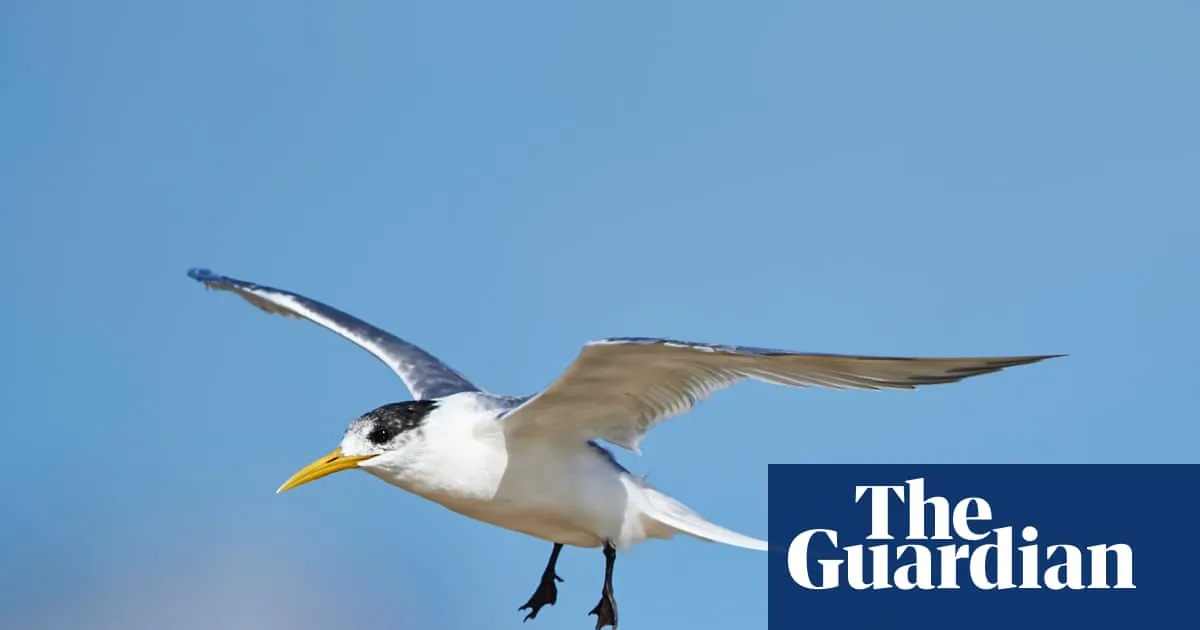
Greater crested terns nest in large colonies, making them particularly vulnerable to Bird flu. Seven new suspected cases have been detected in Australia" class="entity-link entity-location" data-entity-id="210" data-entity-type="location">South Australia. Photograph: David & Micha Sheldon/Getty Images/imageBROKER View image in fullscreen Greater crested terns nest in large colonies, making them particularly vulnerable to Bird flu. Seven new suspected cases have been detected in Australia" class="entity-link entity-location" data-entity-id="210" data-entity-type="location">South Australia. Photograph: David & Micha Sheldon/Getty Images/imageBROKER Seven suspected new Bird flu cases are ‘evidence of spread’ into Australian wildlife, experts warn Australia" class="entity-link entity-organization" data-entity-id="172026" data-entity-type="organization">BirdLife Australia says discoveries of sick and dead local seabirds in Australia" class="entity-link entity-location" data-entity-id="210" data-entity-type="location">South Australia show outbreak is ‘taking hold’ Follow our Australia news live blog for latest updates Get our breaking news email, free app or daily news podcast Australia" class="entity-link entity-location" data-entity-id="210" data-entity-type="location">South Australia has reported seven new suspected cases of deadly H5 Bird flu, with experts warning it could be a sign the disease has begun spreading through local bird populations. All seven birds are Greater crested terns – a common local seabird – and were found on the Limestone Coast in south-eastern SA, with one found at Cape Jaffa, five around Southend Jetty near Beachport and one at Port MacDonald, just over 20km from the Victorian border. Australia" class="entity-link entity-organization" data-entity-id="172026" data-entity-type="organization">BirdLife Australia’s chief executive, Kate Millar, said the discovery showed the outbreak was “now taking hold and is evidence of spread”. “If we were in a bushfire scenario, those subantarctic birds that arrived with the disease initially were like the embers,” she said. “Now having it in crested terns, that’s the smoke. “Governments have been saying it hasn’t spread – this is evidence of spread.” The development follows two other confirmed cases of the disease in Greater crested terns in Australia" class="entity-link entity-location" data-entity-id="210" data-entity-type="location">South Australia at the weekend, including the first positive detection in metropolitan Adelaide. If the CSIRO verifies the seven suspected cases, it will take the total number of cases in SA to 14 – 10 of those in local Greater crested terns. Of the five birds collected from Southend Jetty, four were sick and one was dead. The birds found at Cape Jaffa and Port MacDonnell were also dead. Australia" class="entity-link entity-location" data-entity-id="210" data-entity-type="location">South Australia’s primary industries minister, Clare Scriven, told reporters on Monday the development was concerning. The government said analysis of samples sent to CSIRO would help determine whether the disease was spreading locally. The state’s chief veterinary officer, Dr Skye Fruean, said it was too early to say whether the five birds found around Southend Jetty were part of a cluster of infections. Scriven said: “It is worth noting that these are in wild seabirds, and all the detections so far have been in wild seabirds. We don’t have any detections in poultry or the broader agricultural industry, which is encouraging.” Fruean said the government was “stepping up monitoring” despite “already doing a huge amount of surveillance”. This would include targeted surveillance of areas frequented by Greater crested terns. “We continue to do our surveillance,” she said. “Until we get to the point of [it] being confirmed that we have spread through local birds spreading it between each other, then the situation doesn’t change.” Millar said there would be additional concern as the spring breeding season approached. Some species would return to nesting sites, which are coastal breeding grounds where many birds gather in large groups. “That’s when you get a real engine room of viral spread,” she said. “As increasing numbers of sick individuals come into contact with other types of birds, the disease can spread into other habitats, particularly wetlands.” BirdLife said Greater crested terns nested in colonies and roosted in large flocks, making them particularly vulnerable to H5 Bird flu. They also interacted with other coastal and wetland species. The organisation said the suspected SA cases were not far from colonies of endangered fairy terns that local communities and Australia" class="entity-link entity-organization" data-entity-id="172026" data-entity-type="organization">BirdLife Australia teams had worked to protect. The federal agriculture minister, Julie Collins, said samples “have now been raced off to the CSIRO laboratory in terms of determining … whether or not that means that we have local transmission here in Australia”. She reiterated: “At this time there are no mass mortalities.” She added: “There is no evidence of any H5 Bird flu in our poultry or agricultural systems, and the risk to human health remains low.” Collins said it was “critically important not to pre-empt any of the data that we get from the CSIRO lab”. The Invasive Species Council’s policy director, Carol Booth, said if the suspected cases represented local transmission, “we’re entering a very different phase of this outbreak”. “Instead of isolated infected birds arriving on our shores, we’re potentially seeing the virus spreading through Australian wildlife,” she said. The SA government urged anyone who saw a sick or dead bird to avoid touching the animal, record its location and report it to the Emergency Animal Disease Hotline on 1800 675 888. Explore more on these topics Australia" class="entity-link entity-location" data-entity-id="210" data-entity-type="location">South Australia Bird flu Birds Rural and regional Australia Wildlife South Australian politics Australian politics news Share Reuse this content
SRCThe Guardian - World News
LANGEN
LEANCenter-Left
WORDS825
ENT12
MON · 2026-07-27 · 05:30 GMTBRIEF NSR-2026-0727-96271
NSR-2026-0727-96271News Report·EN·Public Health
Seven suspected new bird flu cases are ‘evidence of spread’ into Australian wildlife, experts warn
Seven suspected new cases of H5 bird flu have been detected in greater crested terns on South Australia's Limestone Coast. Experts from BirdLife Australia warn this indicates the disease is spreading within local wildlife populations, a concern particularly with the upcoming spring breeding season.
Lisa Cox Climate and environment reporterThe Guardian - World NewsFiled 2026-07-27 · 05:30 GMTLean · Center-LeftRead · 4 min
The Guardian - World NewsFIG 01
Reading time
4min
Word count
825words
Sources cited
4cited
Entities identified
12entities
Quality score
100%
§ 01
Briefing Summary
AI-generatedNEWSAR · AI
Seven suspected new cases of H5 bird flu have been detected in greater crested terns on South Australia's Limestone Coast. Experts from BirdLife Australia warn this indicates the disease is spreading within local wildlife populations, a concern particularly with the upcoming spring breeding season. These suspected cases follow two confirmed detections in greater crested terns over the weekend, including one in metropolitan Adelaide. While analysis by CSIRO is pending to confirm local transmission, authorities are increasing monitoring of areas frequented by these birds. The government emphasizes that all detections so far have been in wild seabirds, with no evidence of the virus in poultry or agricultural systems, and the risk to human health remains low.
Confidence 0.90Sources 4Claims 5Entities 12
§ 02
Article analysis
Model · rule-basedFraming
Public Health
Environmental
Tone
Mixed Tone
AI-assessed
CalmNeutralAlarmist
Factuality
0.70 / 1.00
Factual
LowHigh
Sources cited
4
Well sourced
FewMany
§ 03
Key claims
5 extracted01
South Australia's primary industries minister states there are no detections in poultry or the broader agricultural industry, which is encouraging.
quoteClare Scriven
Confidence
0.90
02
BirdLife Australia states the discoveries show the outbreak is 'taking hold' and is 'evidence of spread'.
quoteBirdLife Australia
Confidence
0.90
03
Seven new suspected cases of H5 bird flu have been detected in greater crested terns in South Australia.
factual
Confidence
0.90
04
If verified, the seven suspected cases would bring the total in SA to 14, with 10 in local greater crested terns.
statistic
Confidence
0.80
05
Experts warn these suspected cases are evidence of the disease spreading into Australian wildlife populations.
quoteexperts
Confidence
0.80
§ 04
Full report
4 min read · 825 words§ 05
Entities
12 identifiedKey playerOppositionContextPositiveNeutralNegative
Organizations1
Locations6
§ 06
Keywords & salience
9 termsbird flu
1.00
australian wildlife
0.90
disease spread
0.80
greater crested terns
0.70
south australia
0.70
outbreak
0.60
h5 bird flu
0.50
seabirds
0.50
birdlife australia
0.40
§ 07
Topic connections
Interactive graph Network visualization showing 23 related topics
View Full Graph Person Organization Location Event|Click node to navigate|Edge numbers = shared articles