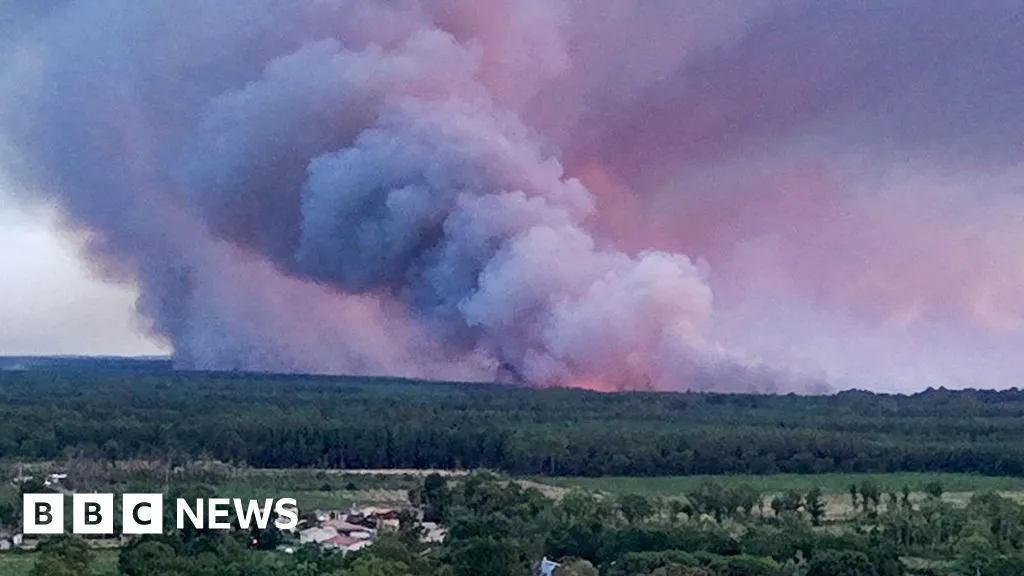
While once seen as fairly rare events, a similar example was seen during the 2019-2020 Black Summer bushfires in Australia, which created extreme "firestorms" that made its own weather.The event was one of the most intense and catastrophic fire seasons for the country, with at least 33 people killed - including four firefighters - and more than 11 million hectares (110,000 sq km or 27.2 million acres) of bush, forest and parks across Australia burnt.Fire officials in New South Wales reported that embers from the storm were landing 18 miles (30km) ahead of the front which was three times more than the usual distance.At the time, Nasa described pyrocumulonimbus as "the fire-breathing dragon of clouds" as they funnelled smoke like chimney into the earth's atmosphere while hurling thunderbolts, wind and rain.Getty ImagesA pyrocumulonimbus cloud generated by the Orroral Valley bushfire to the south of the Australian capital Canberra in January 2020Similarly in California through the summer of 2021, the intense fires raging across the western United States generated pyrocumulonimbus.Smoky clouds towered a mile (1.6km) and rose over the blaze in California and surrounding states.California firefighting officials said at the time the season saw more than 7,300 wildfires burning across 1 million hectares (2.5 million acres) and at least three firefighters killed.
SRCBBC News - World
LANGEN
LEANCenter
WORDS211
ENT11
MON · 2026-07-27 · 11:11 GMTBRIEF NSR-2026-0727-96398
NSR-2026-0727-96398News Report·EN·Environmental
How 'fire-generated thunderstorms' make wildfires more deadly
Severe wildfires can create pyrocumulonimbus clouds, described by NASA as "fire-breathing dragons of clouds." These events, once considered rare, were observed during Australia's 2019-2020 Black Summer bushfires and California's 2021 wildfire season. These "firestorms" generate their own weather, including thunderbolts, wind, and rain, and can propel embers much further than usual, making wildfires more dangerous.
50 minutes agoBBC News - WorldFiled 2026-07-27 · 11:11 GMTLean · CenterRead · 1 min
BBC News - WorldFIG 01
Reading time
1min
Word count
211words
Sources cited
3cited
Entities identified
11entities
Quality score
100%
§ 01
Briefing Summary
AI-generatedNEWSAR · AI
Severe wildfires can create pyrocumulonimbus clouds, described by NASA as "fire-breathing dragons of clouds." These events, once considered rare, were observed during Australia's 2019-2020 Black Summer bushfires and California's 2021 wildfire season. These "firestorms" generate their own weather, including thunderbolts, wind, and rain, and can propel embers much further than usual, making wildfires more dangerous. During the Australian fires, embers were reported to land 18 miles ahead of the fire front, and in California, smoky clouds towered over the blazes. These intense fire events have resulted in significant loss of life and widespread land destruction.
Confidence 0.90Sources 3Claims 5Entities 11
§ 02
Article analysis
Model · rule-basedFraming
Environmental
Human Interest
Tone
Mixed Tone
AI-assessed
CalmNeutralAlarmist
Factuality
0.80 / 1.00
Factual
LowHigh
Sources cited
3
Well sourced
FewMany
§ 03
Key claims
5 extracted01
Nasa described pyrocumulonimbus as 'the fire-breathing dragon of clouds'.
quoteNasa
Confidence
1.00
02
The 2019-2020 Black Summer bushfires in Australia resulted in at least 33 deaths and over 11 million hectares of burnt land.
statistic
Confidence
0.95
03
During Australia's 2019-2020 Black Summer bushfires, pyrocumulonimbus clouds caused embers to land 18 miles ahead of the fire front.
statisticFire officials in New South Wales
Confidence
0.95
04
California experienced pyrocumulonimbus events during its 2021 wildfire season, with smoky clouds towering over blazes.
factual
Confidence
0.90
05
Fire-generated thunderstorms, known as pyrocumulonimbus, can create extreme weather events that intensify wildfires.
factual
Confidence
0.90
§ 04
Full report
1 min read · 211 words§ 05
Entities
11 identifiedKey playerOppositionContextPositiveNeutralNegative
Organizations1
Locations5
§ 06
Keywords & salience
9 termspyrocumulonimbus
1.00
fire-generated thunderstorms
1.00
wildfires
0.90
black summer bushfires
0.80
firestorms
0.70
australia
0.60
california
0.50
embers
0.40
smoke
0.40
§ 07
Topic connections
Interactive graph No topic relationship data available yet. This graph will appear once topic relationships have been computed.