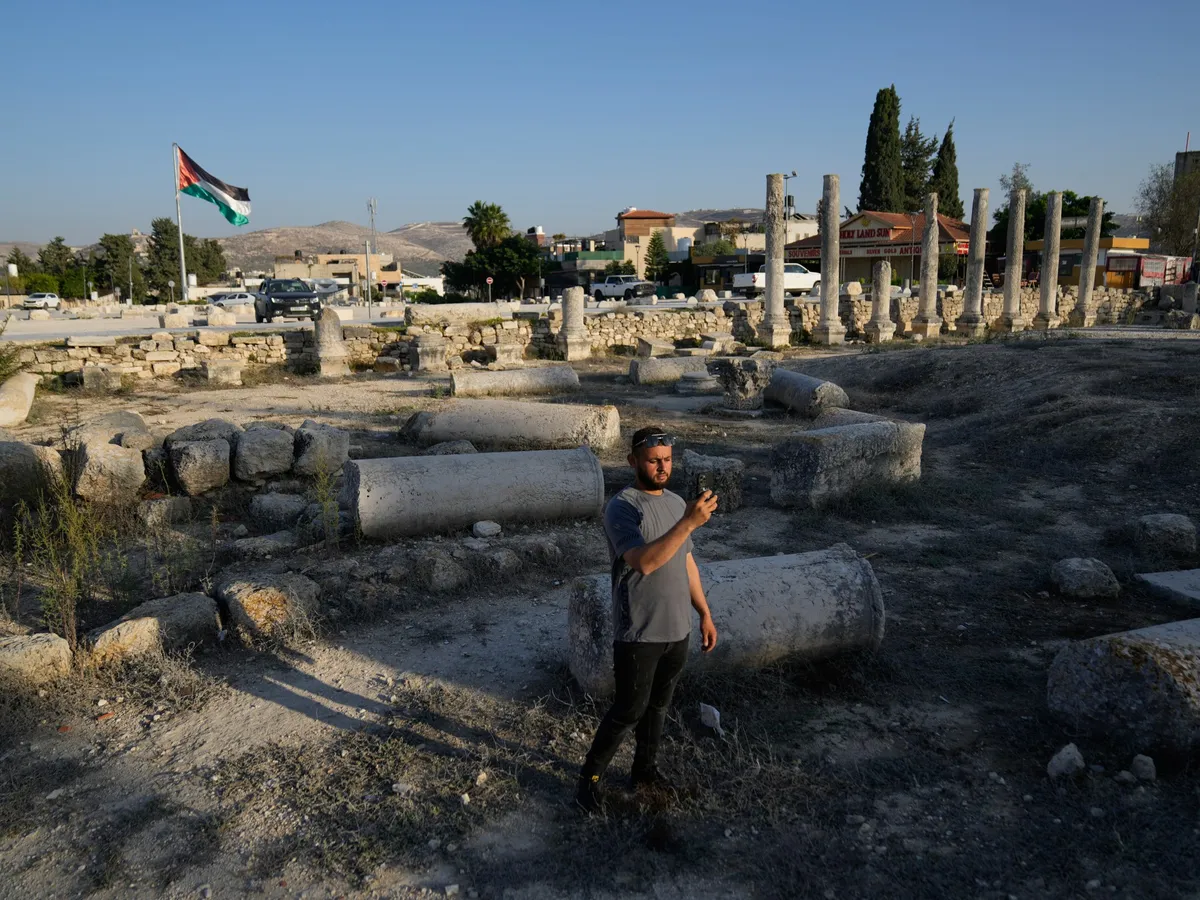
Sebastia, a 3,000-year-old site, faces threats as Israel intensifies plans for land seizures and settlement expansions.Sebastia in the occupied West Bank [File: AP]Published On 27 Jul 2026Palestinian officials have welcomed UNESCO’s decision to add Sebastia in the occupied West Bank to both the World Heritage list and its list of World Heritage in danger in the hope that it will prevent Israel from extending its control over the Palestinian village and its archaeological site. Israel, meanwhile, has denounced the decision and described it as political.Nizar Kayed, deputy mayor of Sebastia, explained in comments to the Reuters news agency that he hoped the decision would help preserve its ancient city.Recommended Stories list of 3 itemslist 1 of 3How Israel uses settler-soldier terror to colonise the West Banklist 2 of 3What is happening in the Occupied West Bank?list 3 of 3UNESCO places occupied West Bank, Lebanon sites on endangered heritage listend of list“This decision came after the confiscation order issued by the Israeli occupation authorities, which destroys this area from a cultural and historical standpoint and also destroys people’s livelihoods. It is part of the settlement expansion project in this area,” Kayed said.Olive trees surround the archaeological site, which is dotted with Roman columns, ancient walls, stone steps and an amphitheatre.Many residents of the nearby Palestinian village, which shares the name Sebastia with the ancient site, depend on tourism for their livelihoods. They are facing land confiscations after the Israeli authorities announced a plan to seize about 180 hectares (445 acres) at and around the archaeological site, saying the aim was the “preservation and development” of the area.Palestinian officials have also expressed concern over a new Israeli bill that, if passed, would expand Israeli control over archaeological sites in the West Bank.In practice, this would strip the Palestinian Authority, which exercises limited self-rule in parts of the West Bank under the Oslo peace agreements signed in the 1990s, of oversight over archaeological sites in the areas under its administrative control.What do we know about the village of Sebastia?Sebastia is one of the most important archaeological sites in the West Bank. Its origins date back more than 3,000 years.It is believed to be the site of Samaria, the capital of the ancient Israel" class="entity-link entity-location" data-entity-id="170752" data-entity-type="location">Kingdom of Israel.The city flourished in the Roman era when Herod the Great rebuilt it and expanded it lavishly, naming it Sebaste in honour of Emperor Augustus. It became a model Roman city with a temple, stadium, a long colonnaded street and other structures.It also contains remains from the Hellenistic and Byzantine periods and is considered a sacred site by Christians and Muslims because of its association with the tomb of the Prophet Yahya, or John the Baptist.The antiquities discovered in Sebastia – such as the city walls, the royal palace, a famous ivory collection and large Roman buildings – stand as living testimony to the succession of civilisations there: Canaanite, Israelite, Assyrian, Persian, Greek, Roman, Byzantine and Islamic through to the Crusader and Ottoman periods.Threats to SebastiaPalestinian Minister of Tourism and Antiquities Hani al-Hayek said the World Heritage Committee on Friday approved the Palestinian nomination, recognising the site as a unique witness to the succession of civilisations and cultures that have inhabited the area.“In its decision, the committee affirmed that Sebastia is distinguished by the multiplicity of its archaeological layers and the clarity of its historical sequence, reflecting the continuous development of an urban, political and religious centre for more than 2,000 years,” al-Hayek said. “This gives it outstanding universal value that deserves protection under the World Heritage Convention.”Al-Hayek explained: “The committee also decided to place the site on the list of World Heritage in danger because of the threats it faces as a result of the Israeli occupation, including plans to confiscate land, alter the site’s historical and archaeological character, and impose restrictions on protection, management and conservation efforts.”The official stressed that his ministry will work with local and international partners to implement the recommendations of the World Heritage Committee, including updating the site management plan and strengthening protection and monitoring measures to ensure that its outstanding universal value is preserved for future generations.The addition of Sebastia to UNESCO’s World Heritage list does not, however, mean that Israel will relinquish its control over the site.Israel has increasingly shown that it is willing to ignore international decisions related to its illegal occupation of Palestinian land. And there are past examples of Israel specifically ignoring UNESCO, such as a 2017 decision by the United Nations agency to add Hebron’s Old City to the World Heritage list. That has not stopped Israel from continuing the presence of Israeli settlers in the heart of the Palestinian city and recently taking over the administration of Hebron’s Ibrahimi Mosque, ignoring Palestinian objections.Israel has also repeatedly ignored UNESCO protestations for it to stop excavation work around the Old City in occupied East Jerusalem.
SRCAl Jazeera
LANGEN
LEANCenter
WORDS807
ENT12
MON · 2026-07-27 · 17:36 GMTBRIEF NSR-2026-0727-96532
NSR-2026-0727-96532News Report·EN·Political Strategy
Will UNESCO’s heritage listing halt Israeli plans for West Bank’s Sebastia?
UNESCO has added Sebastia, a 3,000-year-old archaeological site in the occupied West Bank, to its World Heritage list and list of World Heritage in danger. Palestinian officials welcomed the decision, hoping it will protect the site from Israeli land seizures and settlement expansions, which they argue threaten its historical character and local livelihoods.
Al Jazeera StaffAl JazeeraFiled 2026-07-27 · 17:36 GMTLean · CenterRead · 4 min
Al JazeeraFIG 01
Reading time
4min
Word count
807words
Sources cited
2cited
Entities identified
12entities
Quality score
100%
§ 01
Briefing Summary
AI-generatedNEWSAR · AI
UNESCO has added Sebastia, a 3,000-year-old archaeological site in the occupied West Bank, to its World Heritage list and list of World Heritage in danger. Palestinian officials welcomed the decision, hoping it will protect the site from Israeli land seizures and settlement expansions, which they argue threaten its historical character and local livelihoods. Israeli authorities have denounced the listing as political. The site, believed to be the ancient capital of the Kingdom of Israel and a significant Roman city, faces potential Israeli expansion and a new bill that could increase Israeli control over West Bank archaeological sites, diminishing Palestinian Authority oversight. Despite the listing, Israel has previously ignored UNESCO decisions regarding occupied territories.
Confidence 0.90Sources 2Claims 5Entities 12
§ 02
Article analysis
Model · rule-basedFraming
Political Strategy
Conflict
Tone
Mixed Tone
AI-assessed
CalmNeutralAlarmist
Factuality
0.70 / 1.00
Factual
LowHigh
Sources cited
2
Limited
FewMany
§ 03
Key claims
5 extracted01
Sebastia is a 3,000-year-old archaeological site in the occupied West Bank, believed to be the ancient capital of the Kingdom of Israel.
factual
Confidence
1.00
02
Israeli authorities announced a plan to seize about 180 hectares at and around the archaeological site for 'preservation and development'.
factualIsraeli authorities
Confidence
1.00
03
Israel denounced the UNESCO decision, describing it as political.
quoteIsrael
Confidence
1.00
04
Palestinian officials hope the UNESCO decision will prevent Israel from extending control over Sebastia.
quotePalestinian officials
Confidence
1.00
05
UNESCO added Sebastia in the occupied West Bank to its World Heritage list and list of World Heritage in danger.
factualUNESCO
Confidence
1.00
§ 04
Full report
4 min read · 807 words§ 05
Entities
12 identifiedKey playerOppositionContextPositiveNeutralNegative
Organizations5
Locations4
§ 06
Keywords & salience
10 termssebastia
1.00
unesco world heritage
0.90
west bank
0.90
israeli plans
0.80
land seizures
0.70
settlement expansion
0.70
archaeological site
0.60
cultural heritage
0.50
palestinian authority
0.40
oslo peace agreements
0.40
§ 07
Topic connections
Interactive graph No topic relationship data available yet. This graph will appear once topic relationships have been computed.