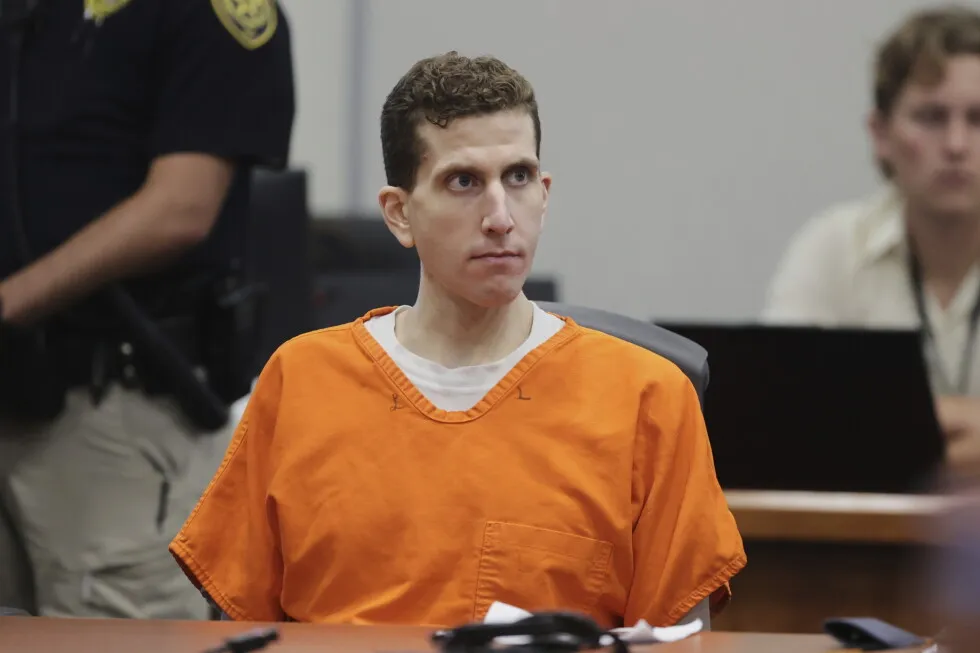
By REBECCA BOONE Updated 1:01 AM MESZ, July 28, 2026 Add AP News on Google Add AP News as your preferred source to see more of our stories on Google. Share Share Facebook Copy Link copied Print Email X LinkedIn Bluesky Flipboard Pinterest Reddit BOISE, Idaho (AP) — The man convicted of murdering four Idaho" class="entity-link entity-organization" data-entity-id="118099" data-entity-type="organization">University of Idaho students is asking a court to let him withdraw his guilty plea and go to trial, saying his attorneys manipulated him into making the deal by promising him better prison conditions and scaring him about the quality of life on death row. Bryan Kohberger, 31, filed the hand-written petition on Monday from the Idaho-maximum-security-penitentiary" class="entity-link entity-location" data-entity-id="172796" data-entity-type="location">Idaho Maximum Security Penitentiary where he is serving four consecutive life sentences for the murders of Kaylee Goncalves, Ethan Chapin, Xana Kernodle and Madison Mogen in a rental home near campus in 2022. It’s been just over one year since he pleaded guilty to the stabbing deaths that scarred the close-knit community of Moscow, Idaho. In his request, Kohberger said his attorneys didn’t adequately represent him and that his guilty plea wasn’t knowingly or voluntarily entered because it “was induced by unkept promises” and threats. He offered only a few details in elaboration, saying they failed to disclose or review evidence that might have helped his case during plea discussions, like an “unknown hair in Chapin’s hand.” He also wrote that the attorneys insisted that his plea “need not be truthful, despite petitioner’s vehement denial of actual guilt,” that they promised life in prison would come with “immediate contact visits, freedom of movement, employment” and that they told him “elaborate lies of DR (death row) life.” That’s the opposite of what Kohberger told 4th District Judge Steven Hippler on July 2, 2025, when he confirmed that he was pleading guilty “freely and voluntarily” because he was, in fact, guilty, and not because he had some other incentive. As part of that process, he had to agree to waive his rights to appeal, confirm that he understood the punishments on the table for the crimes and assure the court that he wasn’t coerced by his attorneys or anyone else to make the plea. Those and other questions were posed to Kohberger more than once — first in a nine-page legal document that Kohberger filled out, initialed and signed, and later in direct questioning by the judge — all in an effort to ensure that his plea would hold up. In exchange for his plea, prosecutors agreed they would not seek the death penalty, and instead would recommend that he be sentenced to four back-to-back life sentences without the possibility of parole, plus an additional 10 years. “Have any other promises been made to you that have influenced your decision to plead guilty?” Kohberger was asked on the plea agreement document. He checked the the box indicating “no.” “Are you pleading guilty because you are guilty?” Hippler asked him in court a few days later. Once a defendant has been sentenced, Idaho law requires them to show that they experienced “manifest injustice” in order to withdraw a guilty plea. That is a tough legal standard, but it can be met if a defendant convinces a judge that they made the plea involuntarily or that other serious constitutional errors were made in the case. For Kohberger’s team of four court-appointed attorneys, the plea deal was a way to save his life. Over two years of hearings, they tried multiple times to get capital punishment off the table. They challenged the legitimacy of DNA evidence, argued that Kohberger’s autism diagnosis made him less culpable, suggested there might be another unknown suspect to be found, and said the death penalty violates international standards of decency. But none of the arguments worked, and Kohberger’s trial was just a month away when he reached the plea agreement. The lead defense attorney on the case, Anne Taylor, is one of the most highly regarded capital defenders in the state, with nearly three decades of experience, more than half of it as a death-penalty-qualified defender. A person who answered the phone at her office on Monday immediately said “no comment” and hung up before she could be asked if it was Kohberger’s case or another matter on which she was declining to comment. REBECCA BOONE Boone is a correspondent who covers breaking news, the courts, accountability issues and more for The Associated Press. She is based in Boise, Idaho. twitter mailto
SRCAssociated Press (AP)
LANGEN
LEANCenter
WORDS742
ENT12
MON · 2026-07-27 · 23:23 GMTBRIEF NSR-2026-0728-96580
NSR-2026-0728-96580News Report·EN·Legal & Judicial
Bryan Kohberger asks to withdraw his guilty plea in the University of Idaho murders case
Bryan Kohberger, convicted of murdering four University of Idaho students, has filed a handwritten petition asking to withdraw his guilty plea. He claims his attorneys manipulated him into the plea deal by promising better prison conditions and exaggerating the harshness of death row.
Associated Press (AP)Filed 2026-07-27 · 23:23 GMTLean · CenterRead · 3 min
Associated Press (AP)FIG 01
Reading time
3min
Word count
742words
Sources cited
1cited
Entities identified
12entities
Quality score
100%
§ 01
Briefing Summary
AI-generatedNEWSAR · AI
Bryan Kohberger, convicted of murdering four University of Idaho students, has filed a handwritten petition asking to withdraw his guilty plea. He claims his attorneys manipulated him into the plea deal by promising better prison conditions and exaggerating the harshness of death row. Kohberger alleges his attorneys failed to present evidence and insisted his plea need not be truthful, despite his denial of guilt. He previously told a judge his plea was voluntary and truthful, and he waived his right to appeal as part of the agreement. Prosecutors had agreed not to seek the death penalty in exchange for his guilty plea, recommending life sentences without parole. Kohberger's attorneys had previously attempted various strategies to avoid capital punishment.
Confidence 0.90Sources 1Claims 5Entities 12
§ 02
Article analysis
Model · rule-basedFraming
Legal & Judicial
Human Interest
Tone
Measured
AI-assessed
CalmNeutralAlarmist
Factuality
0.80 / 1.00
Factual
LowHigh
Sources cited
1
Limited
FewMany
§ 03
Key claims
5 extracted01
In exchange for his plea, prosecutors agreed not to seek the death penalty and recommended four consecutive life sentences without parole.
factual
Confidence
1.00
02
Kohberger previously told the court he was pleading guilty 'freely and voluntarily' because he was guilty.
quote4th District Judge Steven Hippler
Confidence
1.00
03
Kohberger stated his attorneys failed to disclose or review evidence, citing an 'unknown hair in Chapin’s hand'.
factualBryan Kohberger
Confidence
1.00
04
Kohberger claims his attorneys manipulated him into the plea deal by promising better prison conditions and scaring him about death row.
factualBryan Kohberger
Confidence
1.00
05
Bryan Kohberger is asking a court to withdraw his guilty plea in the University of Idaho murders case.
factualBryan Kohberger
Confidence
1.00
§ 04
Full report
3 min read · 742 words§ 05
Entities
12 identifiedKey playerOppositionContextPositiveNeutralNegative
People6
§ 06
Keywords & salience
10 termsguilty plea withdrawal
1.00
bryan kohberger
0.90
university of idaho murders
0.90
legal representation
0.80
plea deal manipulation
0.70
prison conditions
0.60
death row conditions
0.60
involuntary plea
0.50
legal petition
0.40
evidence disclosure
0.40
§ 07
Topic connections
Interactive graph Network visualization showing 9 related topics
View Full Graph Person Organization Location Event|Click node to navigate|Edge numbers = shared articles